We're loading the full news article for you. This includes the article content, images, author information, and related articles.
Injured ten-year-old Palestinian Khalil Islam Abou Dagga arrived in Tunis on Sunday morning to receive treatment at the Mohamed Kassab Institute of Orthopaedics.

In a poignant display of humanitarian solidarity, Tunisia has officially welcomed ten-year-old Khalil Islam Abou Dagga, a Palestinian child severely injured in the ongoing conflict, providing him with specialized life-saving medical treatment in Tunis.
Amidst the deafening roar of geopolitics and the cold calculations of military strategy, the human cost of the Middle East conflict often becomes a mere statistic. However, the arrival of a young, wounded boy on Tunisian soil has sharply humanized the devastating reality of the war.
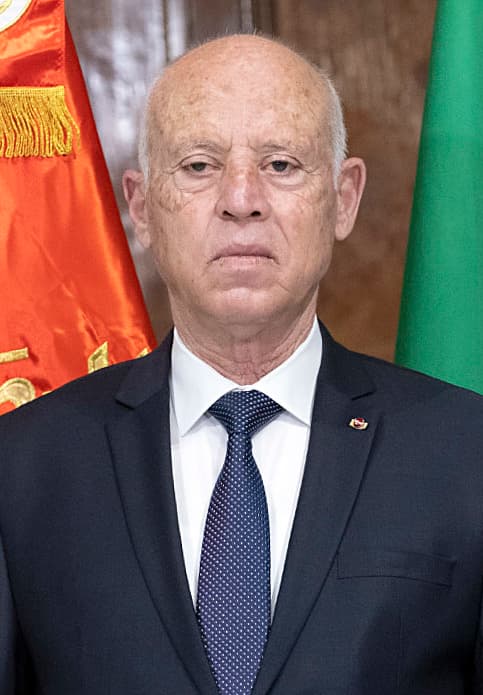
Following direct executive orders from President Kais Saied, the Tunisian government mobilized diplomatic and medical resources to evacuate Khalil Islam Abou Dagga from the warzone, offering a glimmer of hope amidst overwhelming despair.
The complex logistical operation involved intense coordination between the Tunisian Embassy in Cairo, the Egyptian authorities facilitating border crossings, and international humanitarian organizations operating on the ground in Gaza.
Khalil arrived in Tunis early Sunday morning via a specially equipped medical transport. He was immediately transferred to the prestigious Mohamed Kassab Institute of Orthopaedics, a facility renowned across North Africa for its advanced trauma care and reconstructive surgery capabilities.
While specific medical details remain protected for privacy, authorities confirmed that the ten-year-old suffered catastrophic orthopedic injuries resulting from explosive ordnance. His treatment plan is expected to be grueling, involving multiple reconstructive surgeries and extensive physical rehabilitation.
The intervention is not merely a random act of charity; it is a profound reflection of Tunisia’s official state policy regarding the Palestinian crisis. President Kais Saied has consistently mandated that the nation’s medical infrastructure be made available to the victims of the conflict whenever logistically possible.
This humanitarian diplomacy serves as a powerful contrast to the ongoing violence, demonstrating that state resources can be utilized for healing rather than destruction. It also deeply resonates with the Tunisian public, who have staged numerous demonstrations in solidarity with the Palestinian people.
While Khalil’s arrival is a victory for humanitarian effort, it also highlights the catastrophic medical collapse within the conflict zones. With hospitals destroyed, supply lines cut, and medical personnel overwhelmed, thousands of children like Khalil face agonizing delays in receiving critical care.
Tunisia continues to call upon the international community to establish secure, permanent medical evacuation corridors to save the most vulnerable victims of the war.
“Today, we are not just treating a child’s physical wounds; we are attempting to restore a fraction of the humanity that this brutal conflict has stolen from him,” stated a senior medical official at the Kassab Institute.
Keep the conversation in one place—threads here stay linked to the story and in the forums.
Sign in to start a discussion
Start a conversation about this story and keep it linked here.
Other hot threads
E-sports and Gaming Community in Kenya
Active 9 months ago
The Role of Technology in Modern Agriculture (AgriTech)
Active 9 months ago
Popular Recreational Activities Across Counties
Active 9 months ago
Investing in Youth Sports Development Programs
Active 9 months ago
Key figures and persons of interest featured in this article