We're loading the full news article for you. This includes the article content, images, author information, and related articles.
President Trump directs ICE agents to secure US airports as the DHS shutdown stalls screening operations, raising critical security and legal questions.
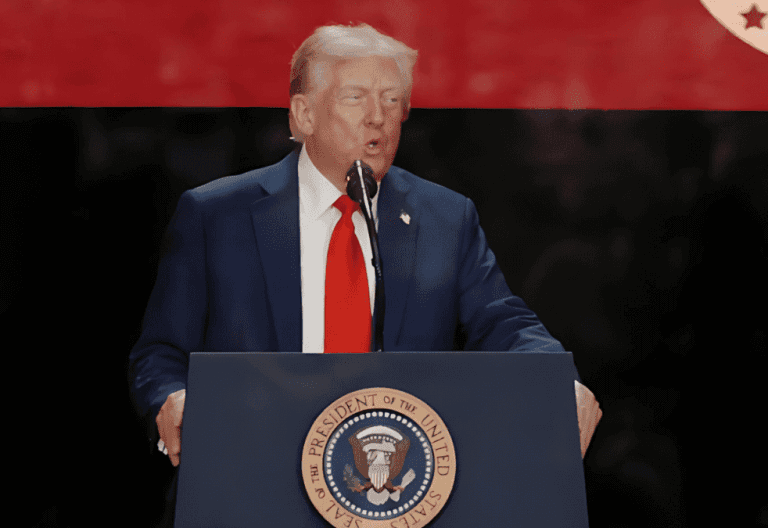
Travelers arriving at major international terminals across the United States this morning were met with a stark visual departure from standard aviation protocol. Instead of the familiar blue uniforms of Transportation Security Administration officers, passengers faced heavily armed agents wearing the distinct tactical insignia of Immigration and Customs Enforcement. This unprecedented deployment, authorized by President Donald Trump late Sunday, aims to bridge the security gap created by the ongoing, total shutdown of the Department of Homeland Security.
The move marks a profound escalation in the executive branch's response to the current federal appropriations crisis, which has crippled normal civil service functions for nearly two weeks. While the administration frames the move as a necessary measure to prevent a total collapse of the aviation network, constitutional scholars, airline executives, and aviation security experts warn that substituting immigration enforcement personnel for dedicated screening officers creates a dangerous, untested security paradigm that jeopardizes both constitutional privacy rights and international flight safety standards.
At the heart of the crisis lies a fundamental mismatch in mission profiles. TSA officers are extensively trained in civil aviation security, explosive detection, and the nuances of the Fourth Amendment as it applies to administrative searches at checkpoints. ICE personnel, by contrast, are federal law enforcement officers whose primary mandates are criminal investigation, detention, and deportation. They are not trained in the specific protocols of passenger screening, baggage x-ray analysis, or the management of high-volume passenger throughput.
Aviation security analysts note that moving from administrative screening to law enforcement-led checkpoints alters the legal status of the security encounter. While TSA interactions are generally administrative, ICE engagement could trigger law enforcement-led interactions that lack the clear-cut protocols governing aviation security. This could lead to a surge in detention-related delays, as agents potentially divert resources from screening to performing immigration status checks, a prospect that has alarmed civil liberties groups and international aviation regulatory bodies alike.
For international travelers, the chaos at American hubs is not a localized inconvenience it is a global disruption. Airlines operating long-haul routes, including those departing from Jomo Kenyatta International Airport for connections in New York, Atlanta, or Washington, have begun issuing guidance to passengers to arrive at airports eight to ten hours before departure. The operational strain on international flights is compounding, as incoming aircraft are held on tarmacs due to the inability of the security checkpoints to process arriving passengers quickly enough to clear the sterile areas.
In Nairobi, business travelers and members of the Kenyan diaspora planning travel to the United States are facing a climate of acute uncertainty. Beyond the logistical delays, there is growing apprehension regarding the potential for heightened profiling. With ICE now overseeing entry points, concerns about the arbitrary exercise of authority have moved from the border to the airport terminal, casting a shadow over the ease of movement that underpins the robust trade and tourism relationship between Kenya and the United States.
At John F. Kennedy International Airport, the confusion was palpable. A traveler attempting to board a flight to Nairobi expressed the frustration shared by many. The agents, armed with sidearms and tactical gear, appeared ill-equipped to manage the serpentine lines, often lacking the interpersonal training that allows TSA personnel to de-escalate stressful interactions. The result was not a smoother security process, but a more tense, confrontational environment where travelers were unsure of their rights.
Furthermore, union representatives for federal employees have filed emergency injunctions, arguing that the reassignment of ICE agents violates the Civil Service Reform Act and bypasses critical labor safety standards. The administration, however, maintains that the President has the Article II authority to deploy federal assets to maintain national security in the face of a legislative stalemate. As the standoff between the White House and Capitol Hill persists, the nation’s airports are effectively functioning as a laboratory for this unprecedented security experiment.
With no sign of a breakthrough in budget negotiations, the reliance on ICE personnel is unlikely to be a short-term measure. The question remains whether the domestic and international aviation sector can endure the operational paralysis, or if the federal government will be forced to prioritize the restoration of civil service functions over political maneuvering. For now, the checkpoints remain under the control of agents whose mandate is meant for the border, not the boarding gate, leaving passengers to navigate an increasingly uncertain path through the skies.
Keep the conversation in one place—threads here stay linked to the story and in the forums.
Sign in to start a discussion
Start a conversation about this story and keep it linked here.
Other hot threads
E-sports and Gaming Community in Kenya
Active 10 months ago
Popular Recreational Activities Across Counties
Active 10 months ago
The Role of Technology in Modern Agriculture (AgriTech)
Active 10 months ago
Investing in Youth Sports Development Programs
Active 10 months ago
Key figures and persons of interest featured in this article



