We're loading the full news article for you. This includes the article content, images, author information, and related articles.
Hours after the US Supreme Court struck down his initial sweeping trade levies, President Donald Trump invoked a new law to impose a 10% global tariff, triggering severe economic anxiety across East African markets.
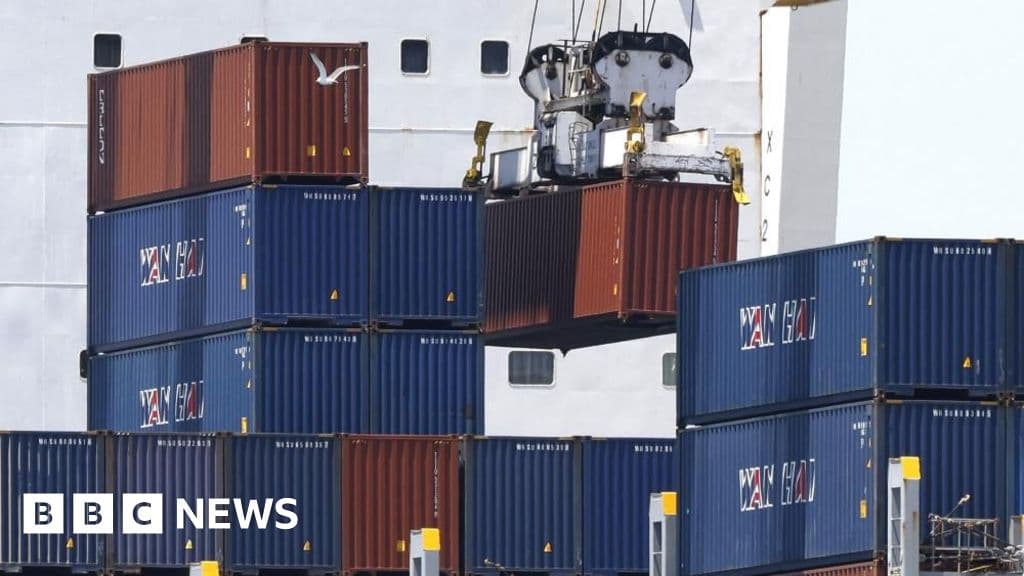
In a breathtaking display of executive defiance, US President Donald Trump has unilaterally imposed a blanket 10% global tariff, sparking immediate fears of deep economic destabilization across East Africa's fragile export sectors.
In a breathtaking display of executive defiance, US President Donald Trump has slapped a 10% tariff on virtually all global imports, mere hours after the Supreme Court invalidated his previous trade offensive.
For East Africa, this rapid-fire policy pivot threatens to completely upend carefully negotiated trade balances. The region's vital agricultural, apparel, and manufacturing sectors now face an existential, immediate threat of radically reduced demand and escalated costs in the crucial American consumer market.
The chaos in global trade markets began when the US Supreme Court delivered a stunning 6-3 verdict against the Trump administration. The justices unequivocally ruled that the President had grossly overstepped his constitutional authority by using the International Emergency Economic Powers Act (IEEPA)—a 1977 law designed for acute national security crises—to levy massive taxes on imports from nearly every country on earth.
Labeling the judicial decision a complete "disgrace," Trump refused to concede defeat. Within hours of the ruling, he pivoted to an alternative legal mechanism, signing a presidential proclamation under Section 122 of the 1974 Trade Act. This obscure provision grants the executive branch the unilateral power to impose a temporary 10% import duty for up to 150 days to address "fundamental international payment problems" without requiring immediate congressional approval.
To understand the sheer magnitude of this policy, one must understand the basic mechanics of international tariffs. A tariff is not a tax paid by the foreign exporting nation; it is a direct financial penalty collected by US Customs and Border Protection from American importing companies. These domestic businesses, faced with sudden margin compression, inevitably pass these exacted costs directly onto the American consumer.
By artificially inflating the price of imported goods by a flat 10%, the Trump administration aims to coerce American buyers into purchasing domestically manufactured alternatives. However, for products that simply cannot be sourced within the United States—such as East African specialty coffee or distinct cultural handicrafts—the tariff acts as a blunt instrument of demand destruction.
The geopolitical ramifications for the East African Community (EAC) are exceptionally severe. In recent years, U.S. goods imports from the EAC reached staggering heights, totaling over $1.3 billion annually. Much of this economic momentum was fostered by the African Growth and Opportunity Act (AGOA), a vital piece of legislation designed to provide sub-Saharan African nations with crucial, duty-free access to the immense US market.
Trump's blanket 10% global tariff effectively neutralizes the core competitive advantage of AGOA. By applying this new duty indiscriminately, the United States is abruptly pulling the rug out from beneath millions of African workers whose entire livelihoods depend on frictionless access to American retail chains and industrial buyers.
The knock-on effects of these sudden tariffs will ruthlessly trickle down the Kenyan supply chain, devastating both large-scale exporters and rural producers.
The International Trade Union Confederation-Africa (ITUC-Africa) has vehemently condemned the tariffs, warning of severe economic damage, escalating production costs, and imminent, widespread job losses across the continent. This aggressive American protectionism is forcing African policymakers to fundamentally reassess their long-term economic strategies.
Instead of relying on the unpredictable whims of Washington politics, there is now an urgent, renewed imperative to accelerate the full implementation of the African Continental Free Trade Area (AfCFTA). By looking inward and dismantling intra-African trade barriers, the continent can begin to insulate itself from the volatile weaponization of the US dollar and American market access.
As Washington aggressively redraws the architecture of global commerce through unapologetic protectionism, East Africa must rapidly and decisively pivot from reliance on American markets to the robust, untapped potential of its own continental integration.
Keep the conversation in one place—threads here stay linked to the story and in the forums.
Sign in to start a discussion
Start a conversation about this story and keep it linked here.
Other hot threads
E-sports and Gaming Community in Kenya
Active 9 months ago
The Role of Technology in Modern Agriculture (AgriTech)
Active 9 months ago
Popular Recreational Activities Across Counties
Active 9 months ago
Investing in Youth Sports Development Programs
Active 9 months ago