We're loading the full news article for you. This includes the article content, images, author information, and related articles.
Nancy Akinyi, stranded in Cambodia with over 100 Kenyans, warns of sex trafficking and cyber-slavery after a cosmetology job scam turned into a nightmare.
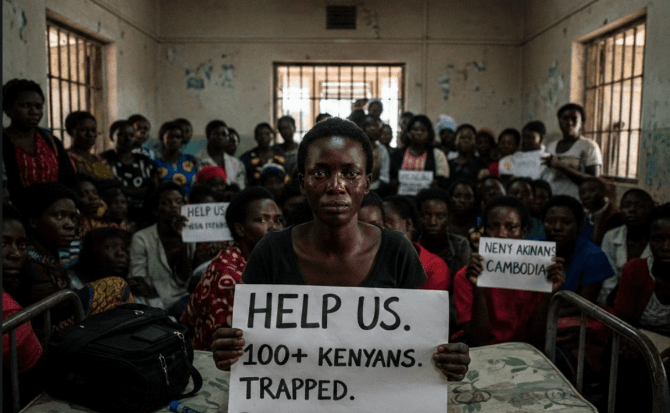
"They told me I would be doing makeup. Now they say if I don't work, they will sell me." These are the chilling words of Nancy Akinyi, a Kenyan woman currently held captive in Cambodia, exposing a terrifying human trafficking ring targeting young East Africans.
From a hidden location in Phnom Penh, Akinyi (not her real name) sent a distress signal that has sent shockwaves through Nairobi’s Kibra estate. She is among more than 100 Kenyans reportedly stranded in Southeast Asia, lured by the promise of lucrative jobs in the cosmetology and hospitality sectors, only to be forced into cyber-slavery and threatened with sex trafficking.
Akinyi left Kenya in May 2025, clutching a visit visa and a heart full of hope. An agency in Nairobi had promised her a salary of KES 80,000 a month working in a high-end salon. Upon arrival, her passport was confiscated. She was driven to a compound guarded by armed men and told her "debt" for the travel expenses was KES 500,000.
“We are prisoners here,” Akinyi whispered in a voice note verified by family members. “We work 16 hours a day scamming people online. If you refuse, they beat you with electric batons. They have told the women that if we don't meet our targets, we will be sold to brothels in Sihanoukville. Please, tell President Ruto to get us out.”
This is not the first time Kenyans have been ensnared in the "Golden Triangle" trafficking crisis. In 2022 and 2023, hundreds were rescued from Myanmar and Laos under similar circumstances. Yet, the ban on recruitment for domestic work in the Middle East seems to have pushed desperate job seekers toward these new, deadlier markets in Asia.
Human rights activist Boniface Mwangi termed the situation a "national disgrace." “How many more daughters must we lose before the Ministry of Foreign Affairs takes this seriously?” he posed. “These are not criminals; they are economic refugees betrayed by their own government.”
For Akinyi’s mother in Kibra, the wait is agonizing. “I sold my land to send her there because she wanted to build me a house,” she weeps. “Now I just want her alive. I don't want the house anymore. I just want my child.”
As the clock ticks, the threat of being "sold" hangs over the 100 Kenyans. Their plea is simple and desperate: they don't want money, they don't want justice—they just want to come home.
Keep the conversation in one place—threads here stay linked to the story and in the forums.
Sign in to start a discussion
Start a conversation about this story and keep it linked here.
Other hot threads
E-sports and Gaming Community in Kenya
Active 9 months ago
The Role of Technology in Modern Agriculture (AgriTech)
Active 9 months ago
Popular Recreational Activities Across Counties
Active 9 months ago
Investing in Youth Sports Development Programs
Active 9 months ago
Key figures and persons of interest featured in this article