We're loading the full news article for you. This includes the article content, images, author information, and related articles.
In the high-stakes theatre of Kenyan politics, the threat of self-imposed exile has become a recurring motif, a rhetorical device used to signal deep ideological incompatibility. This week, Cabinet Secretary Moses Kuria reignited this well-worn trope, declaring he would relocate to Afghanistan should Kalonzo Musyoka ascend to the presidency.

In the high-stakes theatre of Kenyan politics, the threat of self-imposed exile has become a recurring motif, a rhetorical device used to signal deep ideological incompatibility. This week, Cabinet Secretary Moses Kuria reignited this well-worn trope, declaring he would relocate to Afghanistan should Kalonzo Musyoka ascend to the presidency. The statement, delivered with the characteristic bluntness that has defined Kuria’s public persona, was quickly amplified across digital platforms, serving as the latest tremor in an increasingly unstable pre-election landscape.
For the average Kenyan, grappling with the KES 500 billion fiscal adjustments and the persistent anxieties surrounding the cost of living, the exchange offers little in terms of policy direction. Instead, it underscores a critical juncture in the road to the 2027 General Election. As political alliances begin to fracture and reconfigure, the resort to hyperbolic ultimatums suggests that the upcoming campaign season will be fought not on the bedrock of economic reform or institutional stability, but on the shifting sands of personality-driven antagonism.
The strategic use of extreme language by figures like Kuria is rarely accidental. In a crowded political marketplace, attention is the most valuable currency. By adopting a posture of uncompromising opposition, Kuria ensures his visibility remains high among a base that values perceived authenticity over diplomatic nuance. This tactic, while effective for audience capture, carries significant systemic risks.
Political scientists observing the Kenyan landscape note that the normalization of doomsday rhetoric—the framing of an opponent’s victory as a national catastrophe—functions as a barrier to democratic consolidation. When leaders frame their political rivals as an existential threat, they effectively dehumanize the opposition, making the eventual necessity of political compromise more difficult to sell to their respective electorates.
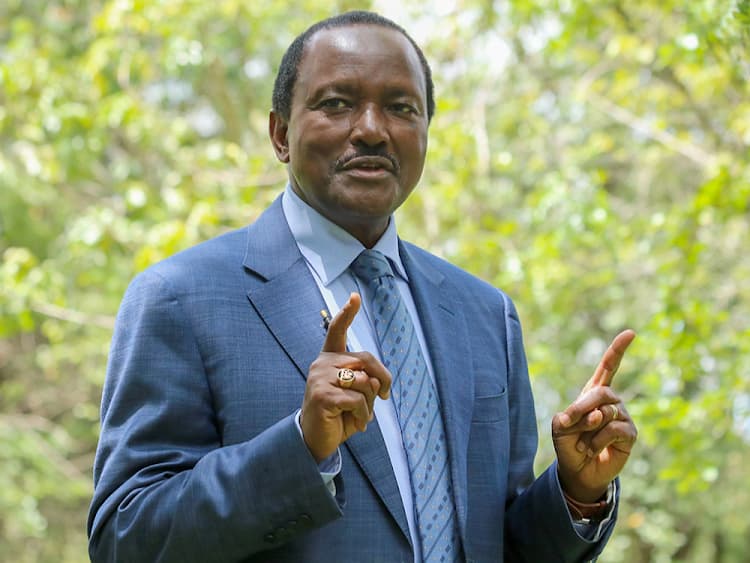
Kalonzo Musyoka, the leader of the Wiper Democratic Movement, remains a central figure in the opposition architecture. His persistence as a perennial presidential aspirant, and his history of shifting coalition allegiances, makes him a consistent target for those aligned with the current administration. Kuria’s specific fixation on Musyoka speaks to a strategic anxiety: the fear that the veteran politician could coalesce the fragmented opposition into a unified front capable of mounting a serious challenge in 2027.
Analysts at the University of Nairobi suggest that the ruling coalition’s preoccupation with Musyoka’s potential candidacy is a symptom of a broader strategic vulnerability. If the government’s performance in critical sectors—such as the KES 120 billion allocated for infrastructure development—fails to yield immediate relief for the populace, the political class needs a boogeyman to galvanize their base. Musyoka, with his long, complex history in Kenyan government, serves as a convenient focal point for this narrative.
The Kenyan voter is currently navigating a period of profound economic recalibration. With the government striving to narrow the fiscal deficit, every policy move—from the implementation of the Finance Act to the management of sovereign debt—demands rigorous public debate. When the public discourse is dominated by announcements of intended migration to foreign nations, the machinery of governance operates without the friction of meaningful civic oversight.
This disconnect is not merely a matter of political style it is an economic issue. When foreign investors and international lenders assess the stability of the Kenyan market, they look for predictable, policy-driven discourse. High-decibel, inflammatory rhetoric creates a perception of instability. While the reality on the ground may be far more tempered, the global image of Kenya as a volatile political theatre can impact the cost of borrowing and the flow of foreign direct investment, which remains crucial for the nation’s development goals.
As the country edges closer to the 2027 ballot, the nature of political communication will inevitably intensify. The challenge for the Kenyan public is to separate the theatrics of the podium from the substance of national governance. The danger of treating elections as a conflict between survival and extinction is that it leaves no room for the necessary, albeit difficult, work of coalition-building and consensus-seeking.
Ultimately, the threat to move to Afghanistan, or any other destination, is a performative act that reveals more about the speaker’s desperation to retain relevance than it does about the state of the nation. As the political calendar advances, the electorate would do well to demand that those who seek to lead offer something more substantial than travel plans—perhaps a vision for a country where political disagreement is viewed not as a reason for exile, but as a standard feature of a functioning, healthy democracy.
Keep the conversation in one place—threads here stay linked to the story and in the forums.
Sign in to start a discussion
Start a conversation about this story and keep it linked here.
Other hot threads
E-sports and Gaming Community in Kenya
Active 10 months ago
The Role of Technology in Modern Agriculture (AgriTech)
Active 10 months ago
Popular Recreational Activities Across Counties
Active 10 months ago
Investing in Youth Sports Development Programs
Active 10 months ago
Key figures and persons of interest featured in this article