We're loading the full news article for you. This includes the article content, images, author information, and related articles.
The supremacy battle between Rigathi Gachagua and Kithure Kindiki is reshaping Mt. Kenya politics, forcing the region to choose between populism and administration.
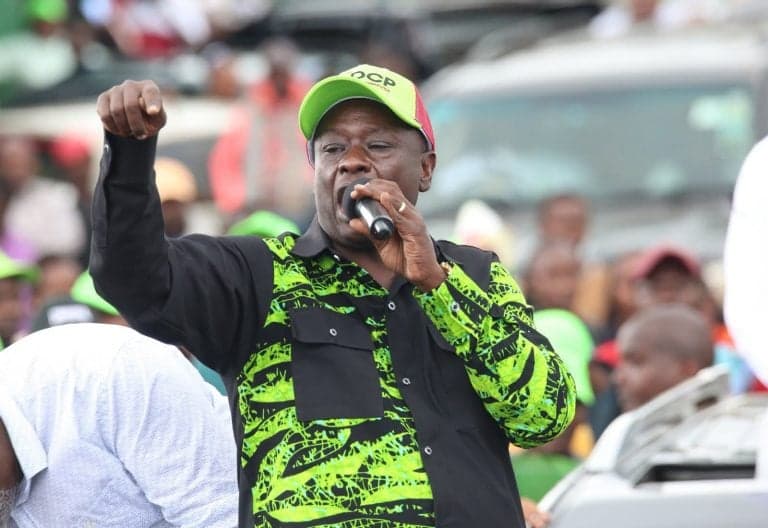
The battle for political hegemony in Kenya’s most influential region intensifies as Rigathi Gachagua and Kithure Kindiki vie for the loyalty of the Mt. Kenya electorate.
In the high-stakes theater of Kenyan politics, the Mt. Kenya region has long served as the ultimate kingmaker. For decades, it has functioned as a monolithic voting bloc, swaying national elections with surgical precision. However, in the post-2024 political landscape, a significant fissure has emerged. The fallout between former Deputy President Rigathi Gachagua and his successor, Kithure Kindiki, has turned the region into a battleground of competing ideologies, political styles, and visions for the future.
The current struggle is not merely about personal ambition; it represents a fundamental clash between grassroots populism and establishment-aligned administration. As both leaders court the hearts and minds of the central region, the nation watches, aware that the victor in this internal "tangle" will likely hold the keys to the 2027 electoral outcome.
Rigathi Gachagua, often characterized by his abrasive, uncompromising, and highly effective "ground-up" communication style, has managed to retain a dedicated base of support. His supporters view him as the authentic voice of the smallholder farmer and the marginalized entrepreneur, often positioning himself against the perceived elitism of the political center. His strategy is one of direct confrontation, framing his political exile as a persecution of the region at large.
Conversely, Kithure Kindiki represents the intellectual, administrative wing of the current government. His rise to the Deputy Presidency was marked by a quiet, methodical consolidation of support among the region’s technocrats and political elites. Kindiki’s supporters argue that the region requires steady hands and a seat at the high table of national policy to secure development projects and economic stability, rather than the perpetual combat favored by his predecessor.
The Mt. Kenya region, which traditionally prides itself on a unified political agenda, finds itself deeply polarized. This division is evident in the current local government dynamics, where county assemblies and grassroots organizations are being forced to declare allegiances.
The challenge for both men is the danger of alienating the youth vote. Gen Z and millennial voters in Mt. Kenya have expressed fatigue with the personality-driven nature of current politics. They are increasingly focused on jobs, digital economy infrastructure, and agricultural value addition. If Gachagua and Kindiki remain locked in a zero-sum game of supremacy, they risk ignoring this swelling demographic, which may ultimately reject both in favor of an untainted third-party candidate.
Furthermore, the 2027 General Election is rapidly approaching. The political "tangle" is forcing local MPs and Governors to choose sides. This selection process is perilous; backing the wrong horse could result in political irrelevance, yet failing to take a stand is increasingly viewed as weakness by an electorate that demands clear leadership. The national government, meanwhile, is watching closely, wary that a fractured Mt. Kenya could lead to lower voter turnout, which historically favors the opposition.
As the narrative unfolds, the "Gachagua vs. Kindiki" affair is far more than a personal feud. It is a microcosm of a broader national struggle: how does a region transition from the era of "ethnic kingpins" to an era of issue-based politics? The answer will define not just the fate of the two protagonists, but the trajectory of Kenyan democracy for the next decade.
Ultimately, the victor of the Mt. Kenya supremacy tangle will be decided not by rhetoric alone, but by who can successfully bridge the gap between historical sentiment and the urgent, modern economic needs of the electorate.
Keep the conversation in one place—threads here stay linked to the story and in the forums.
Sign in to start a discussion
Start a conversation about this story and keep it linked here.
Other hot threads
E-sports and Gaming Community in Kenya
Active 9 months ago
The Role of Technology in Modern Agriculture (AgriTech)
Active 9 months ago
Popular Recreational Activities Across Counties
Active 9 months ago
Investing in Youth Sports Development Programs
Active 9 months ago
Key figures and persons of interest featured in this article