We're loading the full news article for you. This includes the article content, images, author information, and related articles.
Teachers are escalating protests against the Social Health Authority (SHA) as high-level government mediation with KUPPET leaders begins.

A school teacher in a remote sub-county in Kakamega walks into a pharmacy with a prescription, only to be turned away because the digital claims system fails to recognize their employer-subsidized status. This scene, increasingly common across Kenya, is the epicenter of a widening rift between the Kenya Union of Post Primary Education Teachers (KUPPET) and the government regarding the implementation of the Social Health Authority (SHA). What began as a technical glitch in transitioning from the dedicated teachers' medical scheme to the national universal health coverage model has hardened into a full-blown industrial dispute, drawing in top-tier executive mediation.
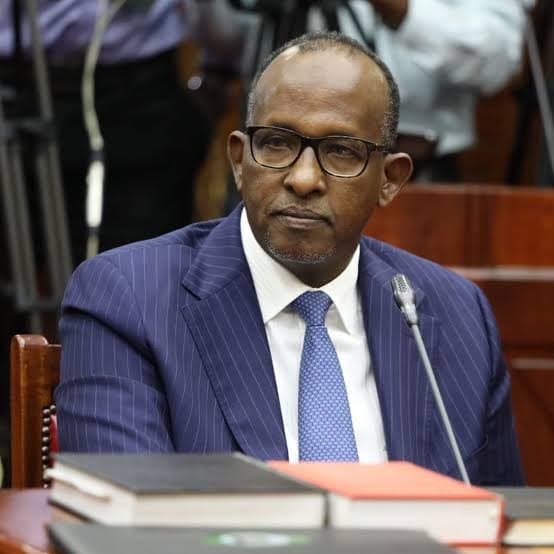
The stakes of this conflict extend far beyond a single pharmacy counter. At the core of the grievance is the perceived degradation of healthcare access for the nation's teaching workforce, who previously enjoyed a robust, tailor-made medical cover. As the government pivots toward the universal Social Health Insurance Fund, teachers contend that the new framework fails to match the comprehensiveness of their previous benefits. With KUPPET leadership escalating the rhetoric, the meeting between senior government officials and union representatives—spearheaded by Cabinet Secretary Aden Duale—marks a desperate attempt to stave off a nationwide classroom walkout that would paralyze learning institutions across the country.
For years, teachers under the Teachers Service Commission (TSC) navigated a medical scheme that was distinct, well-funded, and highly responsive to their specific needs. It was an arrangement that set a benchmark for public sector employee benefits. The transition to the Social Health Authority, while theoretically designed to achieve universal equity, has stumbled under the weight of implementation complexities. Educators report that the SHA infrastructure lacks the specialized coverage tiers that teachers had negotiated through years of collective bargaining agreements.
Data points currently under scrutiny by union economists include the following metrics of concern:
These issues are not merely administrative they are existential for families relying on these medical covers. When the system fails, teachers are forced to pay out-of-pocket, creating an immediate liquidity crisis for households already struggling with the rising cost of living in Kenya. Economists at the University of Nairobi note that whenever a specialized benefit scheme is folded into a broad national fund, the dilution of value is almost inevitable unless the national fund is significantly over-capitalized to handle the transition.
The involvement of Aden Duale, a seasoned political operator and current Cabinet Secretary, signals that the Executive branch views this dispute as a high-risk flashpoint. Duale, known for his direct approach to mediation, faces the challenge of placating an angry labor force while maintaining the government's commitment to the Social Health Authority mandate. This strategy of high-level engagement is a classic move to localize grievances, preventing them from metastasizing into broader anti-government protests that could paralyze the public service.
However, KUPPET officials remain skeptical. In briefings following the meeting, union leaders emphasized that they are not against universal health coverage in principle, but they are vehemently opposed to sacrificing their negotiated benefits on the altar of bureaucratic convenience. The union argues that the government has failed to provide a transition period that guarantees continuity of care. They are demanding a legal guarantee that their previous benefit levels will be protected, regardless of the broader national roll-out of the SHA.
Kenya is not the only nation grappling with the painful shift to universal health models. Across Europe and North America, similar efforts to consolidate public sector health funds often result in labor disputes. In the United Kingdom, for instance, the reform of the National Health Service (NHS) pension and benefit schemes triggered years of friction with teachers' unions. The difference, however, lies in the social safety net available during the transition. In more established economies, supplemental private insurance is common and affordable in Kenya, for the average secondary school teacher, the employer-provided scheme is often the only shield against medical bankruptcy.
The government's insistence on the current SHA roll-out is driven by the necessity of broadening the tax base and achieving the national objective of Universal Health Coverage (UHC). Yet, by alienating one of the most organized and vocal labor sectors, the administration risks a feedback loop. If teachers disengage or strike, the impact on the education sector will be instantaneous, leading to lost instruction time for millions of students. The Ministry of Education has remained largely quiet, placing the burden of resolution on the Ministry of Health and the mediation team.
As the clock ticks toward the next payroll cycle, the question is not just about medical cards or hospital systems it is about the fundamental trust between the Kenyan worker and the state. Unless the government can produce a concrete, audited plan to restore the parity of benefits lost in this transition, the handshake between Aden Duale and the KUPPET leadership may prove to be merely a pause in an inevitable confrontation.
Keep the conversation in one place—threads here stay linked to the story and in the forums.
Sign in to start a discussion
Start a conversation about this story and keep it linked here.
Other hot threads
E-sports and Gaming Community in Kenya
Active 9 months ago
The Role of Technology in Modern Agriculture (AgriTech)
Active 9 months ago
Popular Recreational Activities Across Counties
Active 9 months ago
Investing in Youth Sports Development Programs
Active 9 months ago
Key figures and persons of interest featured in this article