We're loading the full news article for you. This includes the article content, images, author information, and related articles.
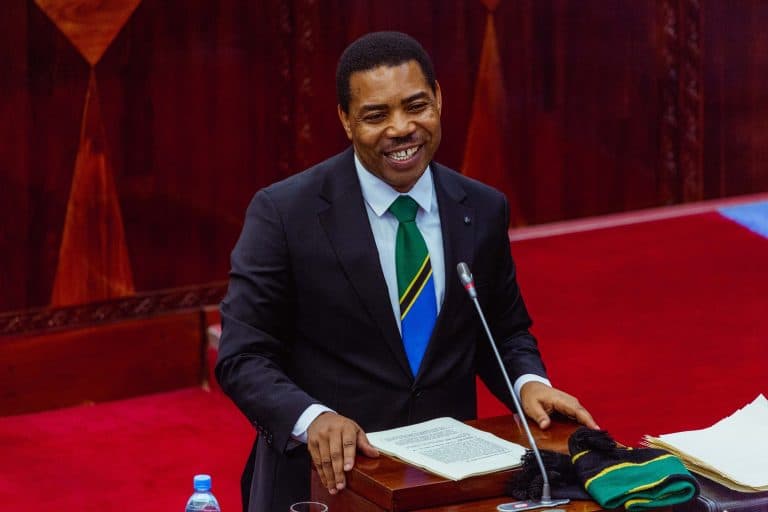
DODOMA: PRIME Minister Mwigulu Nchemba has called on Tanzanians to continue praying for the late William Lukuvi, a veteran minister and parliamentarian.

The political corridors of Dodoma fell into a somber, uncharacteristic silence on Thursday as government officials and grieving citizens gathered to pay their final respects to William Vangimembe Lukuvi. The passing of the veteran minister and parliamentarian, who died on March 25, 2026, at Benjamin Mkapa Hospital following a sudden heart attack, marks the end of a political era that spanned more than three decades.
For the administration of President Samia Suluhu Hassan, the loss of Lukuvi is not merely the departure of a dedicated public servant it is the excision of a vital institutional memory from the heart of the ruling Chama Cha Mapinduzi party. As Prime Minister Mwigulu Nchemba visited the late minister's residence in the Area D district of the capital to comfort the family, the palpable weight of the moment underscored the fragility of the current political transition. Lukuvi, a figure whose influence shaped land policy and parliamentary coordination for a generation, leaves behind a vacuum that risks destabilizing an administration already navigating complex domestic and regional pressures.
To understand the magnitude of Lukuvi's departure, one must look at his tenure as the Minister for Lands, Housing and Human Settlements Development from 2015 to 2022. It was in this role that Lukuvi transformed from a standard party cadre into a transformative technocrat. He inherited a sector defined by opacity, chronic disputes, and archaic manual record-keeping—a landscape that stifled both economic growth and social security for millions of Tanzanians.
Under his command, the ministry pursued an aggressive, at times confrontational, strategy to formalize land ownership. His signature policy—the mass digitization of land titles—was designed to dismantle the corruption that had plagued the ministry for decades. By integrating the national land registry with digital systems, he sought to bring order to the chaos of property titling, directly impacting the ability of smallholder farmers and urban homeowners to secure credit and defend their property rights. Analysts estimate that his reforms unlocked property values totaling billions of shillings, facilitating a more streamlined path for private sector participation in the economy.
Beyond his technical achievements, Lukuvi was a master of the Tanzanian political apparatus. Having represented the Isimani constituency in Iringa continuously since 1995, he possessed an uncanny ability to survive the high-stakes churn of cabinet reshuffles and factional realignments. Within the Chama Cha Mapinduzi party, he was widely regarded as a "fixer"—the man sent to de-escalate internal disputes or manage difficult legislative agendas.
This role was never more critical than in his position as the Minister of State in the Prime Minister’s Office for Policy, Parliament, and Coordination. In this capacity, he functioned as the primary interface between the executive branch and the legislature. His death leaves the administration without one of its most capable mediators at a time when the government is under intense scrutiny regarding its handling of post-election grievances and economic reforms. Political observers warn that without Lukuvi’s ability to build consensus across the party’s disparate camps, the government may struggle to maintain the cohesion required to pass controversial legislation in the coming fiscal year.
The shockwaves of Lukuvi’s death extend far beyond the borders of Tanzania. As a central figure in the East African Community (EAC), Tanzania serves as a critical trade conduit. Kenyan and Ugandan investors, who rely on the port of Dar es Salaam and the trans-border logistics corridors, have long viewed the stability of the Tanzanian cabinet as a key indicator of regional predictability.
Lukuvi’s work on land policy was often cited in regional trade forums as a model for creating the legal certainty required for cross-border investment. With the region currently grappling with fluctuating trade volumes and infrastructure development challenges, the sudden absence of such a senior and experienced policy lead introduces a layer of uncertainty that neighboring capitals will be watching closely. Kenya, as Tanzania’s largest trading partner in the region, shares a particular interest in the continuity of these administrative reforms, as any regression in bureaucratic efficiency could lead to increased costs for regional businesses.
As the nation prepares for his funeral, the immediate question facing the political class is one of succession and stability. Prime Minister Nchemba’s appeal for prayer is not merely a spiritual request it is a signal to a nervous public that the government remains intact despite the loss of a pillar. The inclusion of senior figures like Minister of State Hamad Masauni and Minister Ridhiwani Kikwete at the condolence visit serves as a public demonstration of unity.
However, the structural challenges remain. Tanzania is currently at a crossroads, balancing the potential for rapid economic growth against the risks of political fragmentation. The institutions Lukuvi helped build—the land registries, the parliamentary coordination mechanisms, and the party’s own dispute-resolution frameworks—now face their most rigorous test. Whether the government can uphold the standards he set or whether his departure leads to a drift back toward inefficiency and internal friction will define the final chapters of the current administration.
William Lukuvi leaves behind a country that is, in many ways, more administratively sophisticated than the one he inherited upon entering parliament three decades ago. His life serves as a testament to the idea that real political power lies not in titles, but in the enduring systems built to serve the common citizen. The challenge for those left in the halls of Dodoma is to ensure that this progress does not perish with him.
Keep the conversation in one place—threads here stay linked to the story and in the forums.
Sign in to start a discussion
Start a conversation about this story and keep it linked here.
Other hot threads
E-sports and Gaming Community in Kenya
Active 10 months ago
The Role of Technology in Modern Agriculture (AgriTech)
Active 10 months ago
Popular Recreational Activities Across Counties
Active 10 months ago
Investing in Youth Sports Development Programs
Active 10 months ago
Key figures and persons of interest featured in this article