We're loading the full news article for you. This includes the article content, images, author information, and related articles.
A collision was avoided by just 200 meters, but experts warn that a lack of coordination between superpowers puts global connectivity—including Kenya’s digital backbone—at risk.
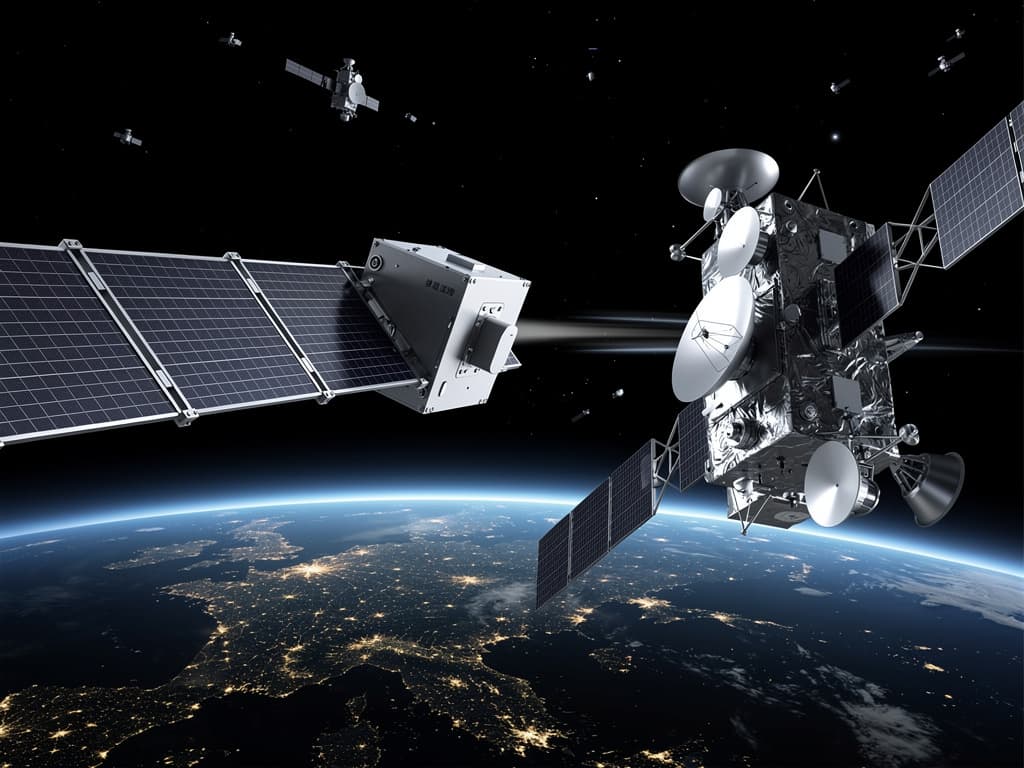
A potential orbital disaster was averted by a razor-thin margin last week as a Starlink satellite narrowly dodged a Chinese spacecraft, missing a high-speed collision by mere seconds.
The near-miss, occurring 560 kilometers above Earth, exposes a dangerous gap in global space traffic control. For Kenyans increasingly reliant on satellite internet for business, education, and healthcare in remote counties, this orbital game of chicken poses a direct threat to digital stability.
The drama unfolded following the launch of a Chinese Kinetica 1 rocket on Tuesday, December 9, from the Jinquan Satellite Launch Center in the Gobi Desert. While the rocket successfully deployed nine satellites, one of them drifted dangerously close to an existing Starlink unit.
According to Michael Nicolls, Vice President of Starlink Engineering, the two objects passed within 200 meters (655 feet) of each other. In the vacuum of space, where objects travel at roughly 28,000 kilometers per hour, that distance is effectively zero. A collision would not only have destroyed both assets but likely generated a cloud of debris capable of taking out neighboring satellites.
Nicolls took to X (formerly Twitter) to express frustration, noting that the risk was exacerbated by a lack of data sharing. “When satellite operators do not share ephemeris [trajectory data] for their satellites, dangerously close approaches can occur in space,” he warned.
The incident has sparked a public dispute regarding who is responsible for keeping Low-Earth Orbit (LEO) safe. Starlink’s engineering team alleges that the Chinese operator failed to take necessary precautions or communicate the trajectory of their payload.
However, CAS Space—the commercial company operating the Kinetica 1—pushed back against the narrative. In a statement, the company claimed:
Despite the conflicting timelines, CAS Space acknowledged the severity of the situation, stating, “This calls for re-establishing collaborations between the two New Space ecosystems.”
While this event happened hundreds of kilometers overhead, the repercussions are local. Kenya has seen a rapid uptake of Starlink services to bridge the digital divide in areas where fiber optic cables cannot reach. A collision in LEO does not just mean the loss of one satellite; it risks the "Kessler Syndrome"—a chain reaction where debris destroys other satellites, potentially rendering entire orbits unusable.
“Most of the risk of operating in space comes from the lack of coordination between satellite operators—this needs to change,” Nicolls emphasized.
As the skies become more crowded with competing constellations, the margin for error shrinks. Without a unified, global traffic management system, the question is not if a collision will happen, but when—and whether our connectivity will survive the impact.
Keep the conversation in one place—threads here stay linked to the story and in the forums.
Sign in to start a discussion
Start a conversation about this story and keep it linked here.
Other hot threads
E-sports and Gaming Community in Kenya
Active 10 months ago
Popular Recreational Activities Across Counties
Active 10 months ago
The Role of Technology in Modern Agriculture (AgriTech)
Active 10 months ago
Investing in Youth Sports Development Programs
Active 10 months ago



