We're loading the full news article for you. This includes the article content, images, author information, and related articles.
Spiro raises over Ksh.6.4B ($50M) to expand its electric motorbike infrastructure across Africa.
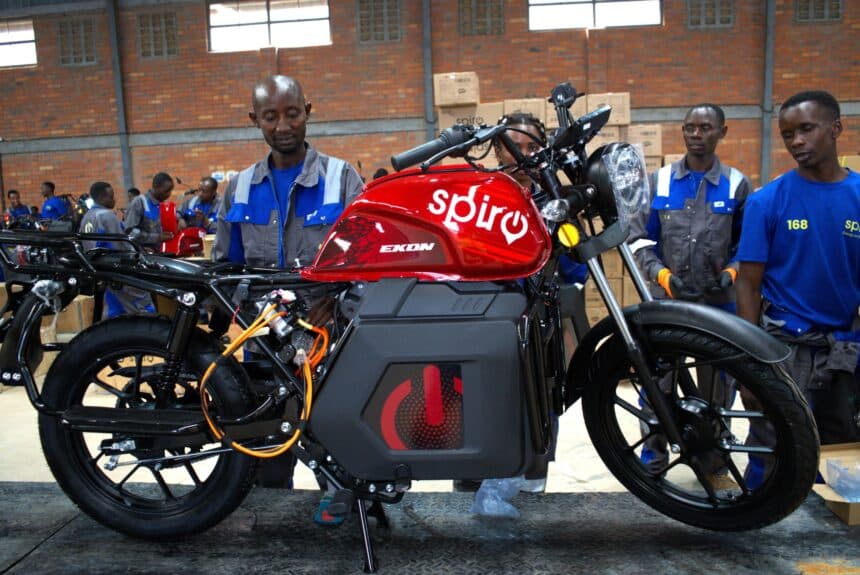
Spiro has secured an unprecedented Ksh 6.45 billion ($50 million) in debt financing from Afreximbank and leading green energy funds to rapidly accelerate the deployment of its electric motorbike infrastructure across the African continent.
The electric mobility landscape in Africa has received a monumental financial injection as Spiro successfully closes a massive and highly strategic debt financing round. The capital, sourced from institutional heavyweights like Afreximbank, Nithio, and the Cygnum Capital-managed Africa Go Green Fund, signals a definitive and irreversible market shift toward sustainable, scalable transport solutions.
This immense investment represents a critical turning point for the East African economy, particularly the ubiquitous and economically vital 'boda boda' sector. By actively transitioning millions of traditional internal combustion engine motorcycles to clean electricity, the continent can simultaneously tackle severe urban air pollution while drastically reducing its systemic reliance on expensive, imported fossil fuels. This financial maneuver matters now more than ever, because the global push for net-zero emissions has finally aligned perfectly with the harsh economic realities of everyday African commuters.
The Ksh 6.45 billion (approx. $50 million) facility is not merely a corporate vote of confidence in Spiro; it is a sweeping validation of the entire African e-mobility investment thesis. CEO Kaushik Burman has clearly articulated a bold vision where this fresh capital will directly fund the aggressive expansion of Spiro's proprietary, cutting-edge battery-swapping networks. Unlike traditional electric vehicles that infuriatingly require hours of stationary charging time, this battery swapping technology allows riders to exchange a depleted battery for a fully charged unit in under three minutes, flawlessly mimicking the speed and convenience of a standard petrol station.
This rapid turnaround capability is absolutely essential for commercial motorcycle operators whose daily livelihoods depend strictly on maximizing their active time on the road. The robust financial backing of Afreximbank is particularly noteworthy in this context, as it underscores the strategic, long-term importance of intra-African trade and localized industrial development in the global green energy transition.
In Kenya alone, the bustling boda boda sector directly employs over 1.5 million youth and circulates millions of shillings daily within the micro-economy. However, highly volatile global oil prices have severely squeezed operational profit margins for these hardworking operators. The deliberate transition to electric motorbikes offers a tangible, immediate economic lifeline. With commercial electricity prices generally proving more stable than imported petroleum, Spiro's innovative model promises to lower baseline operational costs by up to forty percent for the average daily rider.
Furthermore, the environmental impact of this shift cannot be overstated. Nairobi's air quality routinely suffers from the dense exhaust fumes of thousands of inefficient two-stroke and four-stroke engines. The mass, coordinated adoption of electric motorcycles will inevitably lead to a measurable, scientifically proven reduction in localized respiratory illnesses and oppressive urban noise pollution. The strategic integration of renewable energy sources, such as abundant solar and geothermal power, into the battery charging grid ensures that the mobility solution is genuinely green from start to finish.
Founded relatively recently in 2022, Spiro's operational ascent has been nothing short of meteoric. The company's core strategy involves deep, intentional localization, ensuring that the hardware is robustly engineered enough to handle the notoriously challenging and diverse African road conditions. Founder Gagan Gupta heavily emphasizes that these are strictly "Made-in-Africa, for-Africa" solutions. This local focus extends seamlessly to manufacturing and localized assembly, which promises to systematically create thousands of high-skilled green economy jobs across the continent.
The primary challenge moving forward will be skillfully navigating the varying, often contradictory regulatory landscapes of different African nations. While progressive countries like Kenya and Rwanda have already implemented highly favorable tax incentives for electric vehicles, other regions still lag significantly behind in modern policy formulation. Spiro's massive capital reserves will not only fund physical infrastructure but also provide the essential leverage needed to actively lobby for supportive, continent-wide government policies.
The road ahead is fully electrified, and Africa is aggressively taking the steering wheel in the global green energy transition.
Keep the conversation in one place—threads here stay linked to the story and in the forums.
Sign in to start a discussion
Start a conversation about this story and keep it linked here.
Other hot threads
E-sports and Gaming Community in Kenya
Active 9 months ago
The Role of Technology in Modern Agriculture (AgriTech)
Active 9 months ago
Popular Recreational Activities Across Counties
Active 9 months ago
Investing in Youth Sports Development Programs
Active 9 months ago