We're loading the full news article for you. This includes the article content, images, author information, and related articles.
A theology expert has testified that Paul Mackenzie manipulated scripture to lead followers to their deaths, as the prosecution builds its case on radicalization and organized crime in one of Kenya's worst tragedies.
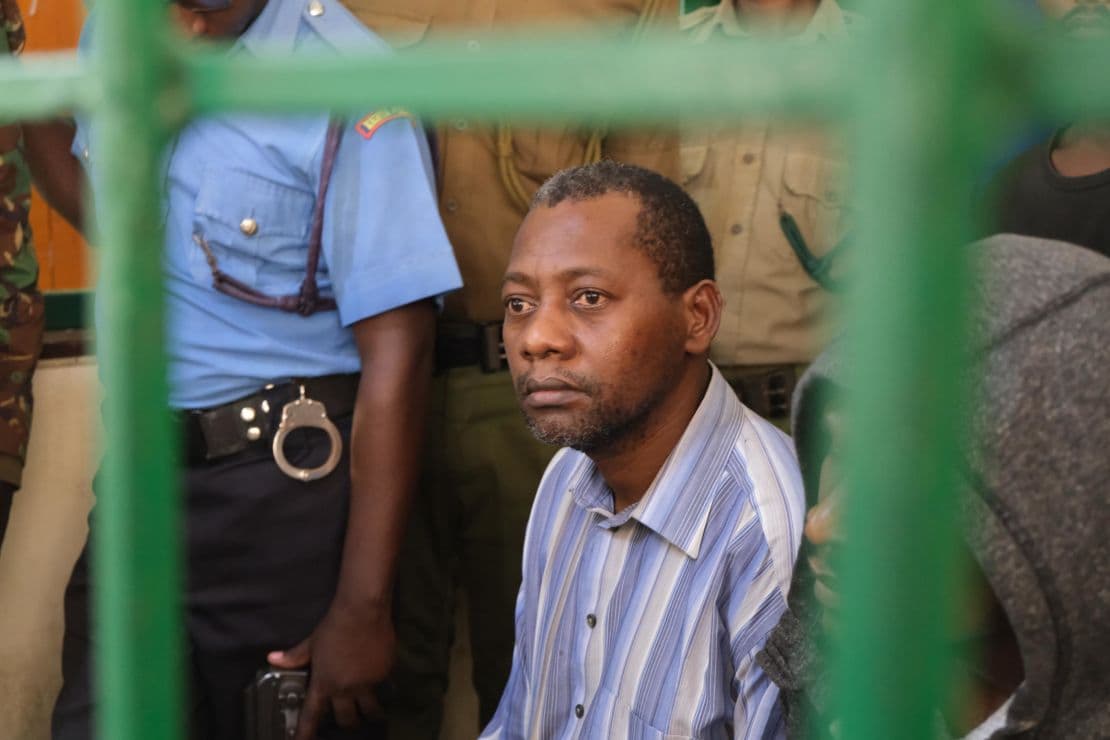
MOMBASA – An expert witness provided critical testimony in the ongoing Shakahola massacre trial on Tuesday, 28 October 2025, detailing how controversial preacher Paul Nthenge Mackenzie allegedly misinterpreted biblical scripture to orchestrate the starvation and deaths of hundreds of his followers. Dr. Stephen Anyenda, the Chief Executive Officer of the Coast Interfaith Council of Clerics, told the Shanzu Law Courts that Mackenzie's teachings distorted core Christian tenets, particularly on fasting, to create a dangerous cult.
Appearing as an expert witness for the Director of Public Prosecutions (DPP), Dr. Anyenda submitted a comprehensive report analyzing the theological doctrines of Mackenzie’s Good News International Church. He testified that fasting, as portrayed in the Bible, is a spiritual discipline and not a pathway to heaven as Mackenzie allegedly preached. "Misinterpretation of the Bible can lead to dangerous consequences, including the rise of religious cults and unbiblical practices," Dr. Anyenda stated before the court. His testimony is central to the prosecution's argument that Mackenzie deliberately radicalized his followers, leading to the mass deaths discovered in Shakahola forest, Kilifi County, beginning in April 2023.
The case has gripped Kenya since the discovery of mass graves on Mackenzie's 800-acre property. To date, more than 429 bodies have been exhumed, with many victims, including children, found to have died from starvation, strangulation, or suffocation. Autopsies revealed that some victims, particularly children, were beaten or smothered to death, allegedly if they refused to fast. The horrific findings prompted a nationwide outcry and raised serious questions about the regulation of religious organizations and the state's failure to act on earlier warnings about Mackenzie's extremist teachings.
Mackenzie, a former taxi driver, and 94 co-accused face a battery of charges across multiple trials, including terrorism, murder, manslaughter, radicalization, child torture, and engaging in organized criminal activity. In one of the most significant cases at the Malindi High Court, Mackenzie and 30 others are specifically charged with the murder of 191 children. All accused have pleaded not guilty to the charges.
The expert testimony builds on harrowing accounts from survivors. In a previous hearing in August 2025, a protected witness, who was a minor at the time, recounted Mackenzie's teachings against formal education and healthcare, which he labeled as satanic. The witness described how Mackenzie declared that Jesus had commanded followers to begin fasting to death, starting with children, who were told they would “wed Jesus.” These chilling testimonies provide a direct link between the preacher's doctrines and the subsequent deaths.
The Shakahola tragedy has become a catalyst for a national conversation on religious freedom versus state oversight. In response to the massacre, President William Ruto established a Presidential Taskforce to review the legal framework governing religious bodies. In July 2025, the Cabinet approved the taskforce's recommendations, which include enacting new laws, establishing a Religious Affairs Commission, and strengthening self-regulation among faith organizations to prevent extremism.
However, the proposed regulations, outlined in the Draft Religious Organisations Bill, have faced opposition from some established religious groups. Organizations like the Deliverance Church International and the Supreme Council of Kenya Muslims (Supkem) have argued that the proposed laws could infringe on constitutional freedoms and that existing legislation like the Societies Act is sufficient if properly enforced. This ongoing debate highlights the delicate balance the government must strike between preventing future tragedies and protecting the right to worship.
As the trial continues, with the prosecution planning to call hundreds of witnesses, the testimony of experts like Dr. Anyenda will be crucial in establishing the ideological foundation of the Shakahola massacre. For a nation still seeking answers, the legal proceedings are not only a quest for justice for the over 429 known victims but also a critical test of Kenya's ability to prevent such atrocities from happening again.
Keep the conversation in one place—threads here stay linked to the story and in the forums.
Sign in to start a discussion
Start a conversation about this story and keep it linked here.
Other hot threads
E-sports and Gaming Community in Kenya
Active 9 months ago
The Role of Technology in Modern Agriculture (AgriTech)
Active 9 months ago
Popular Recreational Activities Across Counties
Active 9 months ago
Investing in Youth Sports Development Programs
Active 9 months ago