We're loading the full news article for you. This includes the article content, images, author information, and related articles.
A feud between Saudi Arabia and the United Arab Emirates across the Horn of Africa is overshadowing this weekend's African Union summit.
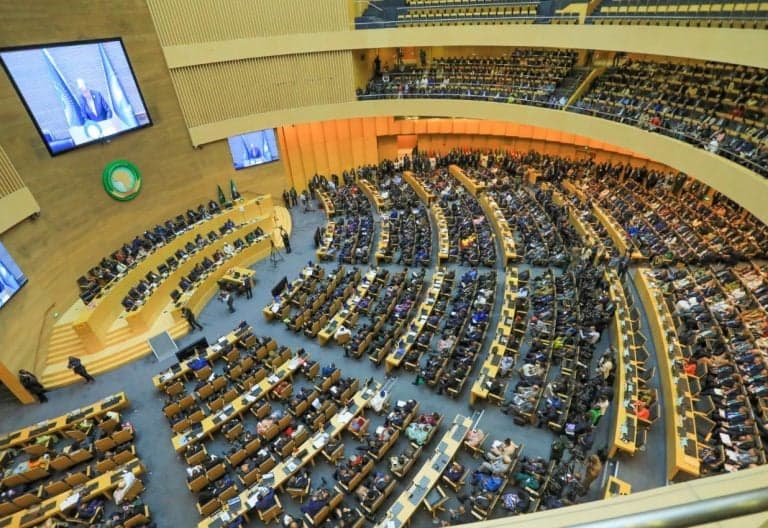
The African Union’s 39th Summit in Addis Ababa was meant to be a coronation of reform. Instead, it has become a containment zone for the proxy battles of the Persian Gulf, as the escalating feud between Saudi Arabia and the United Arab Emirates threatens to tear the Horn of Africa apart.
The corridors of the African Union headquarters have long been accustomed to the hushed tones of diplomatic horse-trading, but this weekend, the silence is heavy with unease. As heads of state gather for the 39th Ordinary Session, the ostensible agenda—institutional reform and peace funding—is being aggressively sidelined by a geopolitical reality that few are willing to name publicly but none can ignore: the importation of the Gulf’s bitterest rivalry onto African soil.
The "Seven Peace and Security Priorities for Africa in 2026" report, released just days ago by the International Crisis Group (ICG), reads less like a policy briefing and more like an autopsy of the continent’s security architecture. It paints a stark picture of an organization paralyzed by what it terms a "deep malaise," unable to mediate conflicts because the puppet masters reside not in African capitals, but in Riyadh and Abu Dhabi. From the burning streets of Khartoum to the fractious politics of Mogadishu, the divergence between Saudi Arabia and the UAE is no longer a diplomatic footnote; it is the primary driver of instability in East Africa.
The rivalry is most visceral in Sudan. What began as a power struggle between two generals has metastasized into a proxy war, with the UAE widely accused of backing the Rapid Support Forces (RSF) to secure gold supply lines and Red Sea access, while Saudi Arabia, positioning itself as the elder statesman of the Arab world, backs the traditional state apparatus. The AU’s silence on this foreign interference is deafening.
Burundi’s President Évariste Ndayishimiye, who assumes the AU chairmanship this weekend, faces an impossible task. He inherits a seat that demands neutrality in a region where neutrality is increasingly purchased. His own troops are currently bogged down fighting M23 rebels in the eastern DRC—another conflict with complex external webs. The fear in Addis Ababa is that the AU is becoming a spectator in its own stadium, watching as non-African powers carve up spheres of influence with checkbook diplomacy.
Into this vacuum steps Kenyan President William Ruto, who has been anointed by the ICG and western observers as the continent’s "indispensable reformer." Ruto has arrived in Addis with a bold, almost audacious proposal: a $1 billion (approx. KES 130bn) peace fund financed entirely by member states. The logic is sound—he who pays the piper calls the tune. By weaning the AU off European Union and United Nations funding, Ruto hopes to restore African agency.
However, the timing could not be worse. The "Great African Unravelling," as some analysts call it, means that member states are more fiscally constrained than ever. Asking treasuries to cough up millions for a centralized fund, when they are simultaneously being wooed by bilateral Gulf aid packages, is a political high-wire act. "Ruto is trying to build a fire station while the neighborhood is already burning," noted one diplomat on the sidelines of the summit.
The Saudi-UAE split represents a shift from the "Scramble for Africa" of the 19th century. This is not about planting flags; it is about planting logistical hubs, controlling data cables, and securing food supplies. The Horn of Africa is no longer the periphery of the Middle East; it is its new frontline. The ICG report warns that if the AU does not find its voice this weekend, it risks obsolescence, replaced by ad-hoc coalitions and transactional alliances dictated by the highest bidder.
As the limousines glide through Addis Ababa, the question is not whether the AU can solve the Sudan crisis or the Somali fracture. The question is whether the African Union can survive the ambition of its "friends" across the Red Sea.
"We are witnessing the privatization of African sovereignty," warned a senior AU official, speaking on condition of anonymity. "If we do not fund our own peace, we will be forced to lease it from those who profit from our war."
Keep the conversation in one place—threads here stay linked to the story and in the forums.
Sign in to start a discussion
Start a conversation about this story and keep it linked here.
Other hot threads
E-sports and Gaming Community in Kenya
Active 9 months ago
The Role of Technology in Modern Agriculture (AgriTech)
Active 9 months ago
Popular Recreational Activities Across Counties
Active 9 months ago
Investing in Youth Sports Development Programs
Active 9 months ago