We're loading the full news article for you. This includes the article content, images, author information, and related articles.
A Korean firm sues KURA to stop the award of the Sh7.6 billion BRT Line 5 tender, citing procurement irregularities and delaying the Outer Ring Road project.
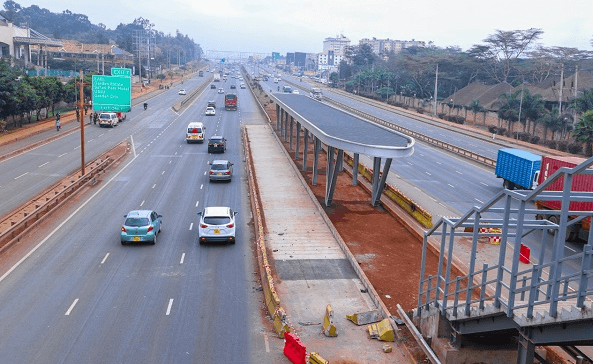
A legal challenge has emerged around the Sh7.6 billion Bus Rapid Transit (BRT) Line 5 planned for Nairobi’s Outer Ring Road corridor, with a bidder-linked dispute now before the High Court. What is firmly verifiable is the project scope, its financing structure, and the existence of an active court process; what remains unproven (at least publicly) are the allegations of rigging and “unconstitutional procurement.”
1) The project is real, priced, and clearly scoped.
BRT Line 5 is a 10.5km project along/linked to the Outer Ring Road corridor, with works that include a two-lane dedicated BRT line, 13 BRT stations, and associated structures such as bridges and supporting road infrastructure.
2) It is financed via South Korea’s development funding, through Korea Exim Bank/EDCF.
The tender is linked to a $59 million (about Sh7.6bn) facility funded through the Export-Import Bank of Korea (KEXIM) under the Economic Development Cooperation Fund (EDCF) framework.
3) There is an active court process, with the next step dated.
Business Daily reports that the matter is in court and that January 27, 2026 has been scheduled for further directions in the case.
4) The “Korean firm” angle is present, but the courtroom face is a local contractor.
The court push described in Business Daily is anchored by Beyond Trading Company Limited (a Nairobi contractor), and the dispute history includes CK Solution Co. Ltd as part of a joint-bid context referenced in the procurement challenge trail.
These are claims attributed to the petitioner(s), not findings:
“Flawed, opaque, unconstitutional” procurement / rigging to favour a rival — presented as allegations by Beyond Trading in its court challenge.
Unfair disqualification and value-for-money loss — framed as “irreparable harm” and a lost business opportunity if the tender is concluded before the petition is heard.
The article you shared states the project is “effectively frozen.” What the verifiable reporting shows is this: the petitioner is seeking conservatory orders to stop award/finalisation pending the court’s determination. Whether procurement is actually paused depends on court orders and administrative decisions; those orders being granted are not confirmed in the Business Daily extract available.
KURA and the PPARB are reported to oppose the application, saying they complied with procurement law and warning that halting the project would disrupt infrastructure delivery.
This tender dispute lands on a corridor where congestion is not an inconvenience—it is a daily economic penalty for Eastlands and the wider Nairobi commuter belt. If the court challenge succeeds, it could force a re-run, re-evaluation, or tighter scrutiny of the procurement steps. If it fails, the project could proceed but under a cloud of public suspicion that often follows contested mega-tenders—raising the political and accountability temperature around delivery timelines and quality.
Keep the conversation in one place—threads here stay linked to the story and in the forums.
Sign in to start a discussion
Start a conversation about this story and keep it linked here.
Other hot threads
E-sports and Gaming Community in Kenya
Active 9 months ago
The Role of Technology in Modern Agriculture (AgriTech)
Active 9 months ago
Popular Recreational Activities Across Counties
Active 9 months ago
Investing in Youth Sports Development Programs
Active 9 months ago