We're loading the full news article for you. This includes the article content, images, author information, and related articles.
The ruling party rolls out a multi-million shilling grassroots election plan to install loyalists and lock out allies of former Deputy President Rigathi Gachagua ahead of 2027.
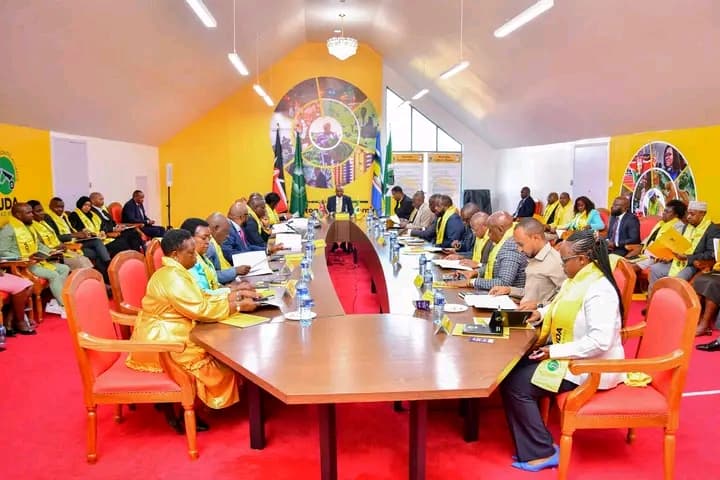
The United Democratic Alliance (UDA) has deployed a staggering Sh180 million war chest to finalize its grassroots elections, a high-stakes exercise designed to cleanse the ruling party of internal dissent and solidify President William Ruto’s machinery for the 2027 general election.
With the final phase of polling scheduled for January 10, 2026, the objective is clear: replace the lingering shadows of impeached Deputy President Rigathi Gachagua with a fresh crop of unquestioning loyalists. For the common mwananchi, this is not merely internal party housekeeping; it is the taxpayer-funded assembly of the vehicle that intends to drive the next government.
In an exclusive interview with the Daily Nation, UDA National Elections Board (NEB) Chairman Anthony Mwaura revealed the party has earmarked Sh180 million to conclude the exercise. The funds will cover procurement of ballot materials, transport, and logistics for the polls that will culminate in a National Delegates Convention (NDC) in April 2026.
Crucially, Mr. Mwaura confirmed that a significant portion of this budget is drawn from the Political Parties Fund—money that comes directly from the Exchequer. In a country grappling with the high cost of living, the expenditure of nearly Sh200 million on party rituals raises inevitable questions about the priorities of Kenya's political elite.
The elections are set against a backdrop of deep political fracturing. Following the impeachment of Rigathi Gachagua in October 2024 and his subsequent formation of the Democracy for the Citizens Party (DCP), UDA is moving swiftly to ensure his allies do not capture party positions.
Mr. Mwaura issued a stern warning to elected members who have publicly sided with the former Deputy President. "Those associating with other political parties should do the honourable thing and resign," he asserted. "We do not expect those who have publicly declared support for Mr. Gachagua to seek UDA party positions."
This directive effectively bars figures like Embakasi North MP James Gakuya—a vocal Gachagua ally who had eyed the Nairobi branch chairmanship—from contesting. The message from Pangani headquarters is unequivocal: you cannot serve two masters.
The road to these elections has been rocky. The ruling party initially launched the exercise in April 2024 but was forced to abort after the historic Gen Z protests in June paralyzed the country. At the time, polls had only been concluded in Busia and Homa Bay counties.
Since then, the party has managed to conduct elections in 27 counties. The upcoming January phase is the final lap, intended to bring the remaining regions into the fold and harmonize the party's leadership structure with the new political reality—one where President Ruto sits alone at the top, unburdened by a rival deputy.
"The President has instructed us to conclude the exercise so that we can have officials elected by the people in office," Mwaura noted, signaling that the delays are no longer acceptable to the Head of State.
As the January 10 date approaches, the political temperature is set to rise. For UDA, this is more than a ballot; it is a loyalty test that will define who sits at the high table when the 2027 campaigns officially begin.
Keep the conversation in one place—threads here stay linked to the story and in the forums.
Sign in to start a discussion
Start a conversation about this story and keep it linked here.
Other hot threads
E-sports and Gaming Community in Kenya
Active 9 months ago
The Role of Technology in Modern Agriculture (AgriTech)
Active 9 months ago
Popular Recreational Activities Across Counties
Active 9 months ago
Investing in Youth Sports Development Programs
Active 9 months ago
Key figures and persons of interest featured in this article