We're loading the full news article for you. This includes the article content, images, author information, and related articles.
A Moroccan judicial tribunal has handed down harsh prison sentences to eighteen Senegalese football supporters, demonstrating a zero-tolerance policy towards stadium violence that carries urgent lessons for East African nations preparing to host major continental tournaments.
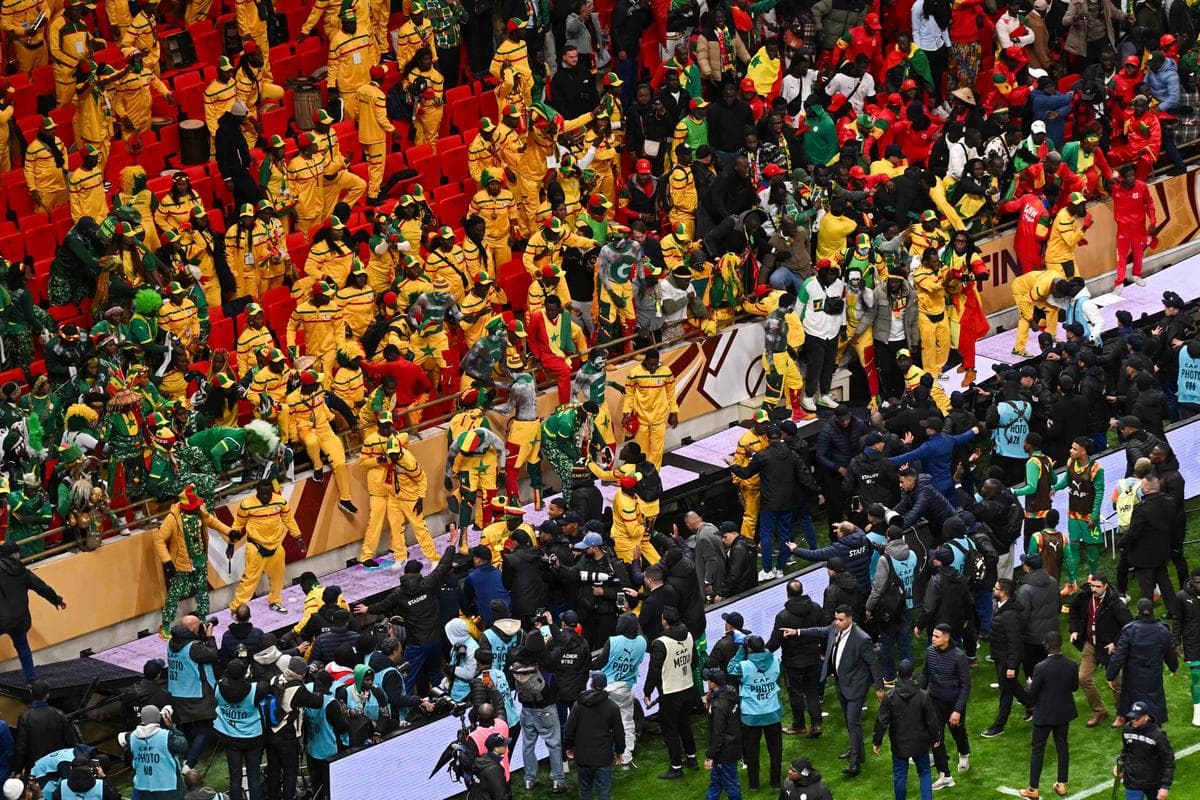
A Moroccan judicial tribunal has handed down harsh prison sentences to eighteen Senegalese football supporters, demonstrating a zero-tolerance policy towards stadium violence that carries urgent lessons for East African nations preparing to host major continental tournaments.
The explosive passion of continental football has culminated in severe judicial consequences as a Moroccan court decisively sentenced eighteen Senegalese nationals to prison terms following a chaotic outbreak of hooliganism. The severe legal crackdown stems from the intense fallout of the Africa Cup of Nations final last month, where the host nation suffered a bitter defeat to Senegal on their home turf.
For East African football administrators, currently engaged in frantic infrastructural upgrades and security overhauls ahead of the eagerly anticipated AFCON 2027 co-hosted by Kenya, Uganda, and Tanzania, the Moroccan response is highly instructive. It signals a continent-wide shift towards the absolute criminalization of crowd disorder, replacing previous eras of lenient administrative fines with the terrifying reality of lengthy incarceration in foreign penitentiaries.
The condemned supporters had been languishing in pre-trial detention since the middle of January, arrested in the immediate aftermath of a highly volatile championship match that ended in a one-nil victory for Senegal. The Moroccan prosecution pursued the maximum possible penalties, asserting that the defendants actively and deliberately sought to destroy the security architecture of the sporting event and disrupt the live global television broadcast.
The tribunal handed down a tiered structure of punishments based on the severity of the alleged involvement. Nine prominent instigators were slapped with the maximum sentence of a full year behind bars, coupled with substantial financial penalties. Six others received six-month sentences, while the remaining three were ordered to serve three months in a Moroccan correctional facility.
The evidentiary foundation for these convictions rested heavily on modern stadium technology, including:
The legal team representing the Senegalese fans reacted with furious indignation to the sweeping verdict. Lead defense attorney Patrick Kabou publicly labeled the outcome as utterly incomprehensible, arguing that his clients were innocent bystanders caught in the crossfire of a poorly managed crowd control operation. Another prominent member of the defense team, Naima El Guellaf, challenged the technological evidence, insisting that the generalized surveillance footage lacked the granular resolution required to irrefutably prove that any specific defendant had struck a security officer.
Despite the vigorous defense, the Moroccan judiciary remained immovable. This unyielding stance is inextricably linked to the broader geopolitical ambitions of the North African nation. As Morocco prepares to co-host the monumental 2030 FIFA World Cup alongside Spain and Portugal, the state is under immense pressure from global football governing bodies to prove that its domestic security apparatus can effortlessly suppress fan violence and guarantee the safety of international tourists.
The repercussions of the chaotic final extended beyond the criminal courts. The Confederation of African Football swiftly intervened, imposing devastating financial sanctions amounting to hundreds of thousands of dollars on both the Senegalese and Moroccan football federations for catastrophic breaches of fair play and unsporting behavior.
As the convicted fans begin their sentences far from home, the message echoing across the continent is unmistakable. The era of dismissing stadium violence as mere emotional exuberance has ended. Football authorities and judicial systems are now working in tandem to ruthlessly excise hooliganism, ensuring that the beautiful game does not devolve into a theater of criminal destruction.
Keep the conversation in one place—threads here stay linked to the story and in the forums.
Sign in to start a discussion
Start a conversation about this story and keep it linked here.
Other hot threads
E-sports and Gaming Community in Kenya
Active 9 months ago
The Role of Technology in Modern Agriculture (AgriTech)
Active 9 months ago
Popular Recreational Activities Across Counties
Active 9 months ago
Investing in Youth Sports Development Programs
Active 9 months ago