We're loading the full news article for you. This includes the article content, images, author information, and related articles.
President William Ruto has announced a landmark $1 billion (approx. KES 162 billion) debt-for-food security swap with the United States, a strategic move set to ease Kenya's debt burden and unlock significant investment in critical infrastructure projects, including highways, ports, and energy.
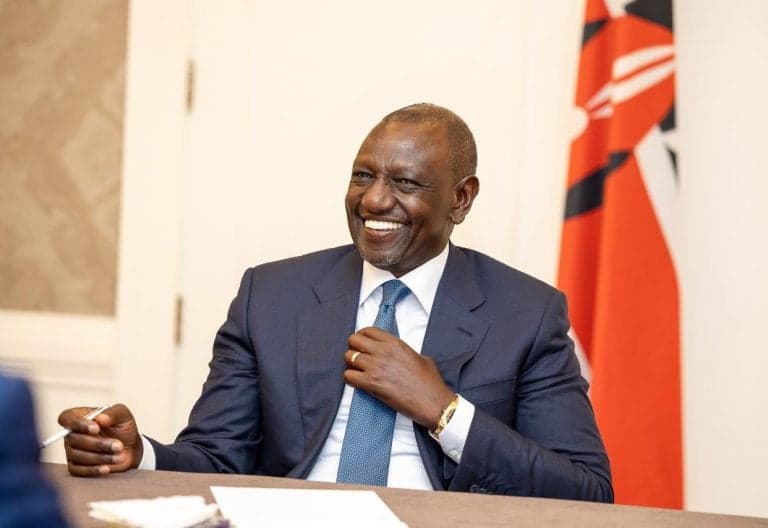
President William Ruto has secured a pivotal financial agreement with the United States that will see Washington's development finance arm purchase a portion of Kenya's high-cost commercial debt. This debt-for-food security swap, valued at $1 billion (approx. KES 162 billion), is designed to provide Kenya with significant fiscal breathing room by replacing expensive loans with more affordable, long-term financing.
The deal, confirmed by the President following high-level talks in Washington, D.C., with Ben Black, the Chief Executive Officer of the U.S. International Development Finance Corporation (DFC), represents a major step in the government's efforts to manage its debt portfolio. The core of the agreement lies in redirecting the savings from lower interest payments towards vital food security programmes, a move President Ruto lauded as a "smart and sustainable approach." These initiatives will include investments in agricultural infrastructure, climate-smart farming, and nutrition management.
Beyond the debt swap, the partnership with the DFC signals a deeper collaboration on Kenya's long-term development goals, closely aligning with the Vision 2030 blueprint. The DFC has expressed strong interest in backing several transformative infrastructure projects. Key areas of focus include:
This expanded engagement underscores a significant vote of confidence in Kenya's economic trajectory. To facilitate these ambitious plans, the DFC will establish a permanent presence in the region, stationing a representative in Nairobi from January 2026. This move is expected to streamline U.S. investments and solidify Kenya's position as a key regional hub for development financing.
For the average Kenyan, these agreements promise tangible benefits. The focus on food security aims to directly address the cost of living by investing in agricultural productivity and resilience against climate shocks. Modernising roads, ports, and JKIA is not merely about large-scale construction; it is about creating jobs, easing the movement of goods to market, and ultimately, lowering business costs that are often passed on to the consumer. The investment in green energy aligns with reducing reliance on expensive fossil fuels, potentially leading to more stable and affordable power in the long run.
The President's discussions in Washington also extended to collaborations with the International Monetary Fund (IMF) to ensure the reform agenda maintains its momentum, built on a foundation of transparency and sound economic governance. While the full impact of these partnerships will unfold over the coming years, the immediate outcome is a strategic realignment of Kenya's debt and a clear pipeline for transformative investments. As President Ruto noted, this partnership supports Kenya's agenda for "inclusive, sustainable growth."
Keep the conversation in one place—threads here stay linked to the story and in the forums.
Sign in to start a discussion
Start a conversation about this story and keep it linked here.
Other hot threads
E-sports and Gaming Community in Kenya
Active 9 months ago
The Role of Technology in Modern Agriculture (AgriTech)
Active 9 months ago
Popular Recreational Activities Across Counties
Active 9 months ago
Investing in Youth Sports Development Programs
Active 9 months ago
Key figures and persons of interest featured in this article



