We're loading the full news article for you. This includes the article content, images, author information, and related articles.
Fresh off decisive by-election victories, Kenya's ruling Broad-Based Government is moving to discipline influential MPs who defied party lines, a move that could reshape parliamentary leadership and deepen political fault lines ahead of 2027.
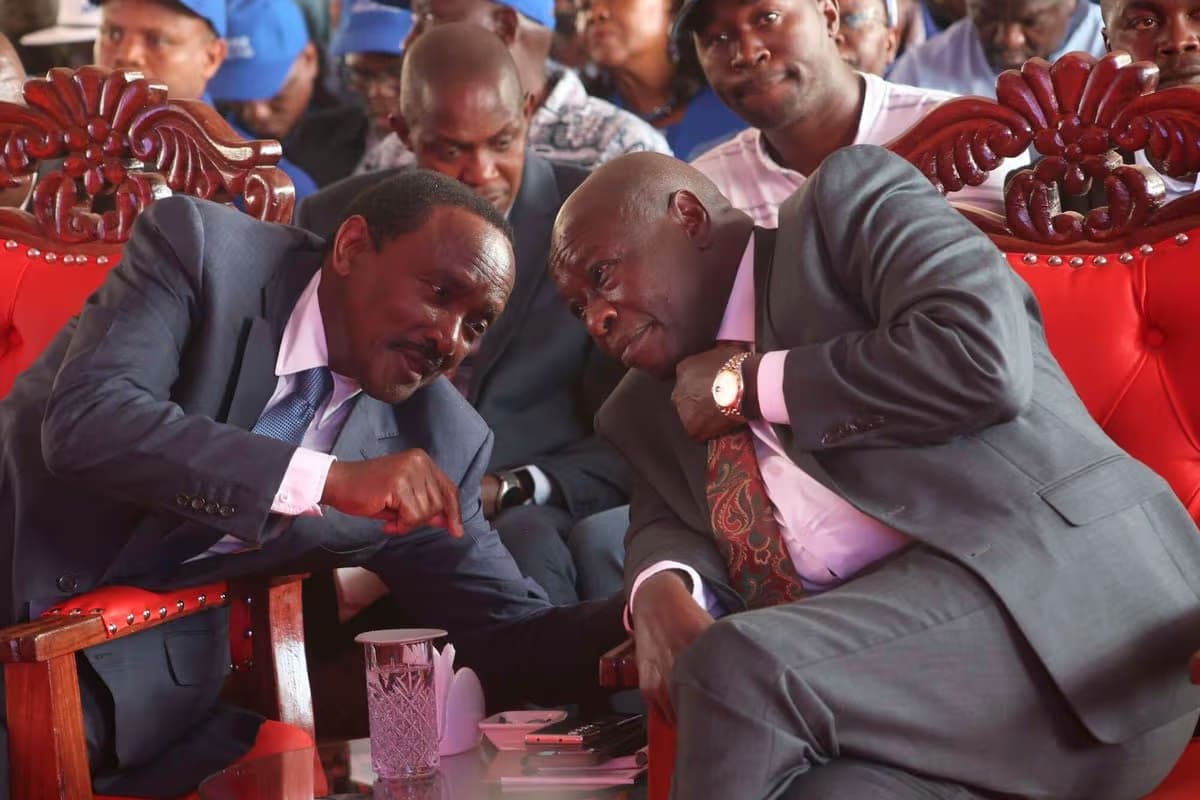
Kenya’s ruling political alliance is set to crack down on several of its own influential lawmakers, initiating a purge that promises to send shockwaves through the corridors of Parliament. The move follows a commanding performance by the United Democratic Alliance (UDA) and its partner, the Orange Democratic Movement (ODM), in the hotly contested by-elections of November 27.
This disciplinary action is not merely about party loyalty; it's a calculated power play to enforce order and signal the high stakes of dissent within the Broad-Based Government. For the average Kenyan, such high-level political infighting raises concerns that leaders are focused on power struggles rather than tackling the rising cost of living, a distraction that analysts warn could slow economic activity and deter investment.
Buoyed by their success at the polls, the two parties are now targeting MPs and Senators who actively campaigned for rival candidates. Among those in the crosshairs are Nyamira Senator Okong'o Omogeni (ODM) and Nyali MP Mohamed Ali (UDA), both of whom could be ousted from their powerful positions in the Parliamentary Service Commission (PSC), which oversees the operations of the legislature. Kakamega Senator Boni Khalwale, the Senate Majority Whip, also faces removal after defying UDA to back an opponent.
The leadership has been unequivocal. UDA Secretary-General Hassan Omar insisted that members who backed rival candidates should resign from the positions they hold courtesy of their sponsor parties. "These people should give up these positions and seek fresh mandate; they can't have their cake and eat it," Omar stated, specifically calling on Senator Omogeni and MP Ali to vacate their PSC roles. His sentiments were echoed by National Assembly Minority Leader Junet Mohamed, who confirmed the impending changes would affect various parliamentary committees.
The targeted lawmakers, however, are not staying silent. Senator Khalwale has mounted a spirited defense, framing his decision as a matter of local principle and accusing his party of double standards. He noted he supported Seth Panyako of DAP-K in the Malava by-election as payback after the UDA ticket was not given to the son of the late area MP.
"I thought you would allow him to serve as MP, but just as you denied Ryan Malulu Injendi that opportunity... I have also declared that we will decide who we will vote for," Khalwale explained, directing his remarks at the presidency. He further argued that many UDA leaders had openly campaigned for ODM candidates, questioning why his support for an individual was being singled out. "If the issue is campaigning for another party, it is on record that many UDA members... campaigned for ODM candidates and even promoted the party," Khalwale told the Nation.
While the political drama unfolds in Nairobi, its implications stretch across the country. The stability of parliamentary leadership is crucial for oversight on national spending and the passage of laws that directly affect citizens' wallets. Any disruption, such as the removal of key figures, can divert focus from critical issues.
Political analysts warn that prolonged internal party conflicts create an environment of uncertainty. This instability can be detrimental to the economy, which is already facing challenges. According to the Kenya Private Sector Alliance (KEPSA), political instability can cost the economy billions of shillings daily by disrupting trade and scaring off investors, ultimately impacting job creation and the price of essential goods.
The coming weeks will reveal the full extent of the purge. Whether it results in a more disciplined, cohesive ruling alliance or triggers a full-blown rebellion that could birth new political formations remains the critical question as the nation inches closer to the 2027 general election.
Keep the conversation in one place—threads here stay linked to the story and in the forums.
Sign in to start a discussion
Start a conversation about this story and keep it linked here.
Other hot threads
E-sports and Gaming Community in Kenya
Active 9 months ago
The Role of Technology in Modern Agriculture (AgriTech)
Active 9 months ago
Popular Recreational Activities Across Counties
Active 9 months ago
Investing in Youth Sports Development Programs
Active 9 months ago
Key figures and persons of interest featured in this article