We're loading the full news article for you. This includes the article content, images, author information, and related articles.
A fatal incident at a 13th-century Rome landmark highlights the universal risks facing heritage sites and labourers, a pertinent issue for Kenya's own preservation efforts.
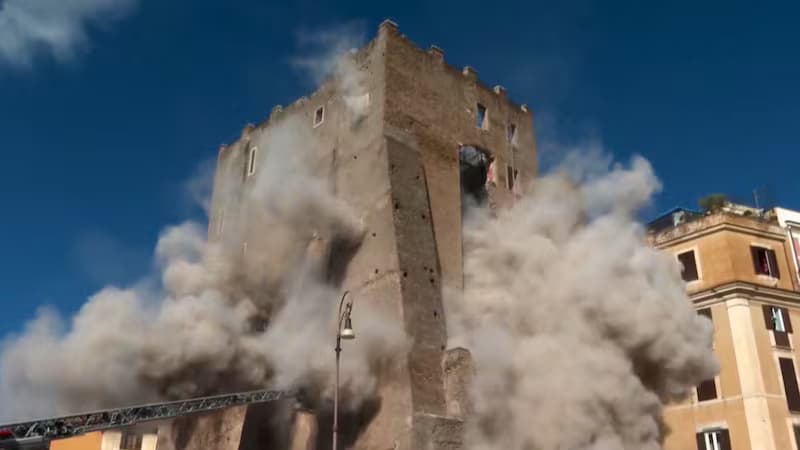
ROME, ITALY – A Romanian construction worker was killed and three others were injured after the historic Torre dei Conti, a medieval tower near the Colosseum, partially collapsed during restoration work on Monday, 3rd November 2025. The deceased has been identified as Octay Stroici. The incident, which occurred around 11:30 AM EAT (10:30 AM local time), triggered a complex and lengthy rescue operation that was hampered by a second collapse approximately 90 minutes later.
Firefighters worked for hours to free Mr. Stroici, who was trapped under the rubble but initially conscious. Despite their efforts, he was pronounced dead at a hospital shortly after midnight on Tuesday, 4th November, according to Italian news agency ANSA and hospital sources. Another worker, a 64-year-old man, was hospitalized in critical condition with head injuries, while two others sustained minor injuries and declined hospital treatment.
The Torre dei Conti, or 'Tower of the Counts', was built in 1238 by Pope Innocent III for his family as a fortified residence. Originally standing between 50 and 60 metres tall, it was dubbed 'Torre Maggiore' (Major Tower) for its imposing size and was admired by the poet Petrarch as unique in the world. The tower has a long history of structural problems, having been severely damaged by an earthquake in 1349, which rendered it uninhabitable for centuries. Subsequent earthquakes and collapses led to restorations in the 17th century, which included the addition of large buttresses to support the structure. Today, it stands at a reduced height of 29 metres.
The latest restoration was a major project funded by the European Union's post-pandemic National Recovery and Resilience Plan, intended to consolidate the ancient structure for its eventual use as a museum and conference space. Rome's Directorate of Cultural Heritage stated that safety checks conducted before the work began in June 2025 had not revealed any major risks. An investigation into the cause of the collapse, focusing on potential negligence, has been opened by the Rome public prosecutor's office.
While no Kenyan nationals have been reported among the casualties, the collapse in Rome resonates with challenges facing the preservation of heritage sites in Kenya and across East Africa. Landmarks such as Fort Jesus in Mombasa, the Ruins of Gedi, and the Lamu Old Town are also centuries-old structures that require constant and meticulous maintenance to ensure their stability and safety. This incident serves as a stark reminder of the inherent dangers in preserving ancient architecture and the critical importance of ensuring worker safety during such delicate operations.
The EU's funding of the Rome project also draws parallels with international support for heritage preservation in Kenya. The European Union and other international partners are key allies in providing the financial and technical resources needed to maintain Kenya’s historical sites, which are vital for both cultural identity and the tourism economy. The tragedy at Torre dei Conti underscores the high stakes involved in these globally supported conservation efforts.
The incident also sparked a minor diplomatic incident after Russia's foreign ministry spokesperson, Maria Zakharova, linked the collapse to Italy's financial support for Ukraine, a comment Italy's Foreign Minister Antonio Tajani condemned as "shameful and unacceptable". This adds a layer of geopolitical tension to a local tragedy, illustrating how even cultural events can be drawn into wider international conflicts.
For a global audience, and particularly for nations like Kenya that are custodians of their own significant historical monuments, the loss of life at the Torre dei Conti is a moment for reflection. It highlights a shared global responsibility to protect not only our collective heritage but, most importantly, the lives of those who work to preserve it. As Italian authorities investigate the precise cause, the lessons learned in Rome will be watched closely by cultural heritage authorities worldwide.
Keep the conversation in one place—threads here stay linked to the story and in the forums.
Sign in to start a discussion
Start a conversation about this story and keep it linked here.
Other hot threads
E-sports and Gaming Community in Kenya
Active 9 months ago
The Role of Technology in Modern Agriculture (AgriTech)
Active 9 months ago
Popular Recreational Activities Across Counties
Active 9 months ago
Investing in Youth Sports Development Programs
Active 9 months ago