We're loading the full news article for you. This includes the article content, images, author information, and related articles.
Addressing a critical accommodation shortage within the Kenya Defence Forces, President William Ruto has officially opened the 500-unit Roysambu Military Housing Project.
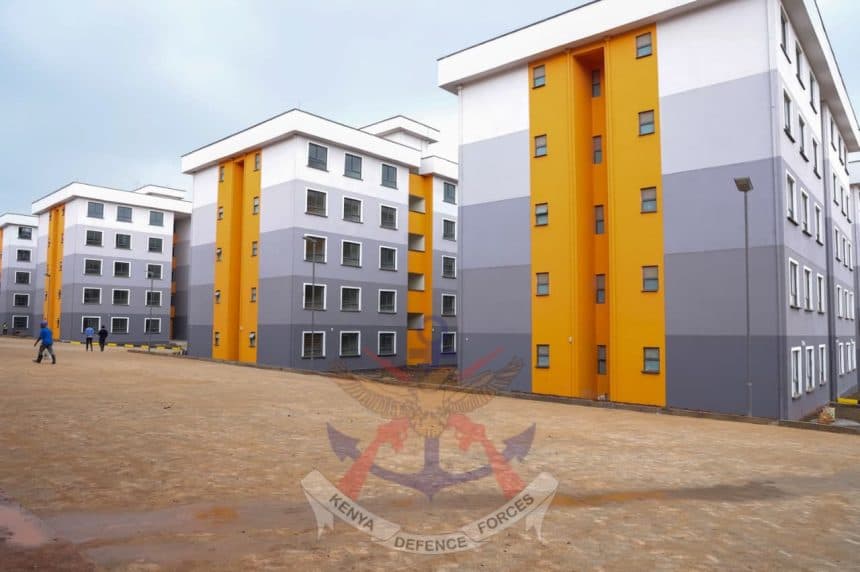
In a massive stride toward resolving the acute accommodation crisis within the armed forces, President William Ruto has officially inaugurated the first phase of the Roysambu Military Housing Project in Nairobi County.
The flagship development delivers 500 modern housing units to the Kenya Defence Forces (KDF), significantly elevating the living standards and welfare of service members who have long endured severe housing deficits.
This initiative represents a critical moment in Kenya's national security and social welfare strategy. By aggressively tackling the housing backlog through innovative Public-Private Partnerships, the government is not only boosting military morale but also injecting billions of shillings into the local construction sector, creating vital employment opportunities during a period of economic tightening.
For decades, the Kenya Defence Forces have grappled with an acute shortage of decent housing for their personnel. This deficit frequently forced service members to seek off-base accommodation, posing logistical nightmares and potential security vulnerabilities. The Roysambu Military Housing Project, meticulously designed and executed, serves as a direct, robust intervention to this longstanding crisis, ensuring that those who protect the nation are adequately housed.
President Ruto, serving as the Commander-in-Chief of the Armed Forces, spearheaded the commissioning ceremony, accompanied by key defense stakeholders including Defence Cabinet Secretary Soipan Tuya and the Chief of the Defence Forces, General Charles Kahariri. Their collective presence underscored the strategic importance the current administration places on military welfare and operational readiness.
The newly unveiled 500-unit estate constitutes just the first phase of a highly ambitious, nationwide housing master plan. The complex is intelligently organized into 26 distinct blocks, deliberately catering to the diverse demographic needs of the military by providing both single quarters for unmarried personnel and spacious married quarters for those with families, thereby fostering a supportive community environment within the barracks.
The successful delivery of the Roysambu project highlights the profound efficacy of the Public-Private Partnership (PPP) model in executing capital-intensive state infrastructure projects. Given the immense fiscal constraints facing the national exchequer, the Ministry of Defence strategically leveraged private sector capital and construction efficiency to expedite the delivery of these homes without entirely depleting immediate public funds.
This specific project is a cornerstone of a much broader nationwide intervention that aims to deliver a total of 3,069 housing units across various military installations through the PPP framework. By partnering with private developers, the government ensures that the construction adheres to modern architectural standards, incorporates sustainable building materials, and is completed within rigorous timelines, bypassing traditional bureaucratic delays.
Furthermore, the ripple effects of such massive construction undertakings are felt deeply across the Kenyan economy. The projects demand extensive local supply chains—from cement and steel manufacturers to local artisans and construction laborers—thereby stimulating domestic economic growth and aligning perfectly with the administration's bottom-up economic transformation agenda.
While the Roysambu commissioning is a monumental achievement, it is merely the opening salvo in a comprehensive campaign to completely eradicate the military housing deficit. The Ministry of Defence has already initiated Phase Two of the KDF housing program, a colossal undertaking designed to construct and deliver an astonishing 10,000 additional houses.
This aggressive expansion is currently underway across several critical military nerve centers, including the Embakasi, Kahawa, and Lang’ata Garrisons. The scale of this subsequent phase demonstrates a relentless commitment to totally transforming the domestic landscape of the Kenyan military, ensuring that every soldier, regardless of rank or station, has access to a secure, modern, and dignified living space.
The provision of adequate housing is intrinsically linked to military discipline, focus, and overall operational efficiency. By alleviating the stress of inadequate housing, the government is making a direct investment in the psychological well-being and combat readiness of its defense forces.
"This project aims at providing service members with decent and modern homes that fundamentally enhance their welfare," noted a KDF spokesperson, reaffirming the state's commitment to those who put their lives on the line for Kenya.
Keep the conversation in one place—threads here stay linked to the story and in the forums.
Sign in to start a discussion
Start a conversation about this story and keep it linked here.
Other hot threads
E-sports and Gaming Community in Kenya
Active 9 months ago
The Role of Technology in Modern Agriculture (AgriTech)
Active 9 months ago
Popular Recreational Activities Across Counties
Active 9 months ago
Investing in Youth Sports Development Programs
Active 9 months ago
Key figures and persons of interest featured in this article