We're loading the full news article for you. This includes the article content, images, author information, and related articles.
A mounting political crisis in Laikipia County as MCAs allege executive interference in legislative leadership, threatening the balance of power.
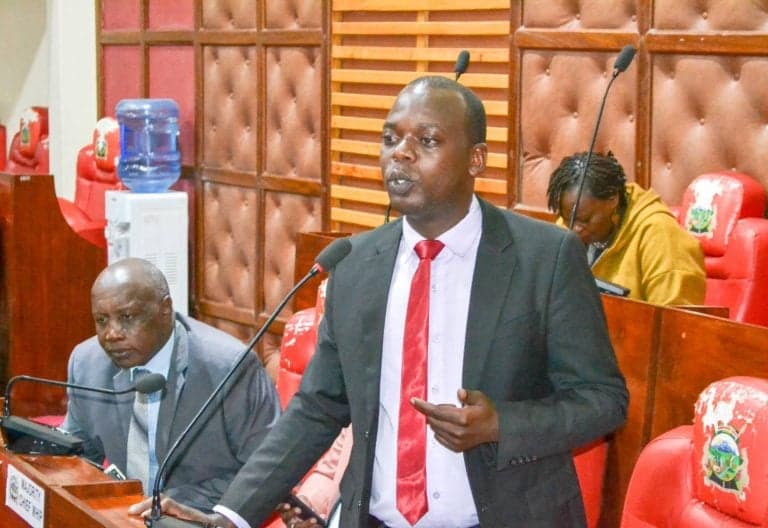
A mounting political crisis in Laikipia County as Members of the County Assembly (MCAs) allege executive interference in legislative leadership, threatening the established balance of power in the devolved government.
The simmering standoff in Laikipia County has reached a boiling point, with Gitahi Macharia, a vocal member of the County Assembly, publicly accusing Governor Joshua Irungu of orchestrating undue interference within the legislative arm of the county government. This confrontation marks a significant escalation in local governance friction, raising questions about the separation of powers and the operational autonomy of the assembly, which is intended to serve as a check on executive authority.
The "So What?" of this unfolding drama lies in the potential paralysis of service delivery. When the legislative arm—responsible for budget approval, legislative oversight, and policy ratification—becomes entangled in executive disputes, the primary casualty is often the electorate. With the Public Accounts Committee (PAC) already under the microscope, any instability in the leadership hierarchy risks stalling crucial financial audits and development projects that the citizens of Laikipia rely upon for economic stability.
At the core of the conflict is the delicate architecture of the Kenyan devolved system. The County Assembly is mandated to operate as an independent entity, free from the influence of the Governor's office, which manages the executive functions. However, political realities often blur these lines. When an MCA accuses the Governor of meddling in House leadership, it implies that the executive is attempting to install loyalists to control the narrative, block investigations, or facilitate budget allocations without rigorous scrutiny.
The accusations are multifaceted. Reports suggest that the push for leadership changes within the assembly is less about administrative efficiency and more about consolidating political influence. For a county like Laikipia, which has faced historical challenges with security and agricultural productivity, this infighting acts as a severe distraction. The disruption of assembly operations could lead to a legislative gridlock, delaying the passage of critical county bills that are essential for the region's economic growth.
While the political rhetoric is heated, the financial implications are tangible. In a decentralized framework, the county assembly controls the purse strings. Should the leadership tussle result in a vote of no confidence or a boycott of sessions, the economic impact could run into millions of shillings. For instance, an audit of county departments, if stalled, prevents the release of funds for urgent development projects, potentially costing the county tens of millions of KES in delayed procurement and service delivery penalties.
Furthermore, this discord comes at a time when Laikipia is attempting to position itself as an agricultural hub. Investors, both local and international, require a stable political environment to commit capital. Persistent headlines regarding governance struggles are rarely conducive to attracting the kind of sustainable investment the region requires to transform from a pastoralist-heavy economy into a more diversified industrial and commercial powerhouse.
The solution, according to constitutional experts, lies in a rigid adherence to the Standing Orders of the County Assembly. The legislative body must reclaim its autonomy by following due process for any leadership changes. Attempts to bypass established democratic procedures only serve to weaken the institution. Civil society groups in Laikipia are already calling for mediation, urging both the Governor and the MCAs to focus on their mandate—ensuring that the county resources serve the people, not the political ambitions of the few.
Ultimately, the citizens of Laikipia are the primary stakeholders. As this power struggle continues, the demand for accountability becomes more urgent. The voters are watching, and with electoral cycles looming in the background, the political cost of this interference may be higher than either the Governor or the MCAs currently anticipate.
"The integrity of our devolved units rests entirely on the ability of our leaders to respect the separation of powers. Without it, we are merely repeating the failures of the past," noted a local governance analyst, signaling the need for an immediate cooling of political temperatures.
Keep the conversation in one place—threads here stay linked to the story and in the forums.
Sign in to start a discussion
Start a conversation about this story and keep it linked here.
Other hot threads
E-sports and Gaming Community in Kenya
Active 9 months ago
The Role of Technology in Modern Agriculture (AgriTech)
Active 9 months ago
Popular Recreational Activities Across Counties
Active 9 months ago
Investing in Youth Sports Development Programs
Active 9 months ago
Key figures and persons of interest featured in this article