We're loading the full news article for you. This includes the article content, images, author information, and related articles.
Police in Samburu County have stopped a suspected raiding attempt in a joint operation conducted by officers from the General Service Unit and Anti-Stock Theft Unit.
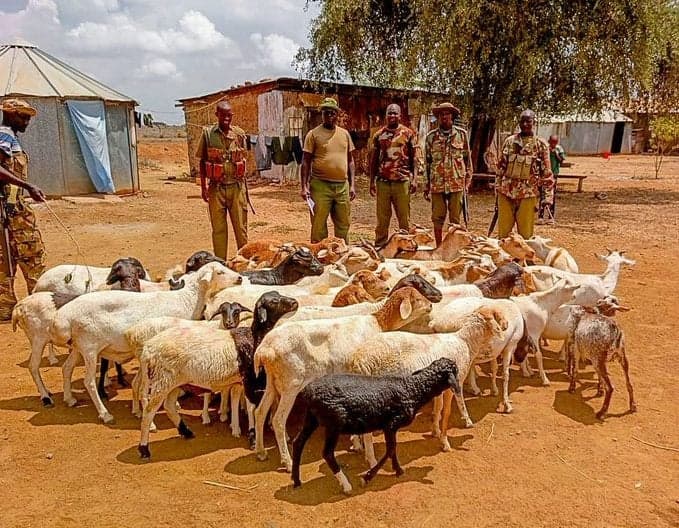
A potential bloodbath was averted in the arid plains of Samburu County yesterday as a multi-agency security team intercepted a heavily armed gang attempting to drive away hundreds of livestock. The operation, executed with military precision, underscores the shifting tides in the war against banditry in Kenya’s volatile North, where cattle are currency and the bullet is often the broker.
Police reports indicate that the raiders, estimated to number over 50, descended upon a grazing area near Baragoi at dawn. Their target: a herd of over 300 Zebu cattle belonging to local herders. However, unlike previous incidents where response times were measured in hours, the security forces were lying in wait. Acting on intelligence provided by community scouts, a joint unit of the General Service Unit (GSU) and the Anti-Stock Theft Unit (ASTU) ambushed the raiders, forcing them to scatter into the rocky outcrops of the Suguta Valley.
This success is significant. For years, cattle rustling has been dismissed as a "cultural practice," a harmless rite of passage for young warriors. But the reality is far darker. It has evolved into a commercialized criminal enterprise, funded by urban cartels and executed by desperate youth. The "So What?" here is the restoration of state authority in a region that has long felt abandoned.
The operation highlights a new tactical approach by the Ministry of Interior. Rather than reactive pursuits, the focus has shifted to intelligence-led pre-emption. By integrating local reservists—who know the terrain better than any GPS—with the firepower of the GSU, the government is slowly closing the operational space for bandits.
The recovered weaponry points to the transnational nature of the threat. The AK-47s are often smuggled across porous borders from unstable neighbours, turning Samburu into a theatre of war. The successful repulsion of this raid saves not just property, but livelihoods. In the pastoralist economy, a herd is a bank account, a dowry, and a pension plan all in one. To lose it is to face destitution.
While the tactical victory is celebrated, the underlying drivers remain. The severe drought of early 2026 has exacerbated resource competition. Water points are drying up, and pasture is scarce, pushing herders into conflict zones. The raiders are often motivated by sheer survival as much as greed.
Local leaders have lauded the police action but called for more than just bullets. "We thank the officers for their bravery," said a Samburu elder at the Maralal police station. "But we cannot shoot our way out of poverty. We need dams, we need schools, and we need markets for our livestock so our young men hold pens instead of guns."
As the dust settles over Samburu, a fragile calm has returned. The cattle are back in their *bomas*, and the sound of gunfire has been replaced by the lowing of cows. But the threat remains. The bandits of the Suguta Valley are resilient, and they will regroup.
For now, however, the message from the state is clear: the days of impunity are numbered. The hills have eyes, and the police are watching.
"This was not luck," stated the County Police Commander. "This was preparation. And we are ready for them to come back."
Keep the conversation in one place—threads here stay linked to the story and in the forums.
Sign in to start a discussion
Start a conversation about this story and keep it linked here.
Other hot threads
E-sports and Gaming Community in Kenya
Active 9 months ago
The Role of Technology in Modern Agriculture (AgriTech)
Active 9 months ago
Popular Recreational Activities Across Counties
Active 9 months ago
Investing in Youth Sports Development Programs
Active 9 months ago