We're loading the full news article for you. This includes the article content, images, author information, and related articles.
The British retail technology giant Ocado is set to slash roughly 1,000 jobs as part of an aggressive global restructuring plan aimed at saving £150 million.
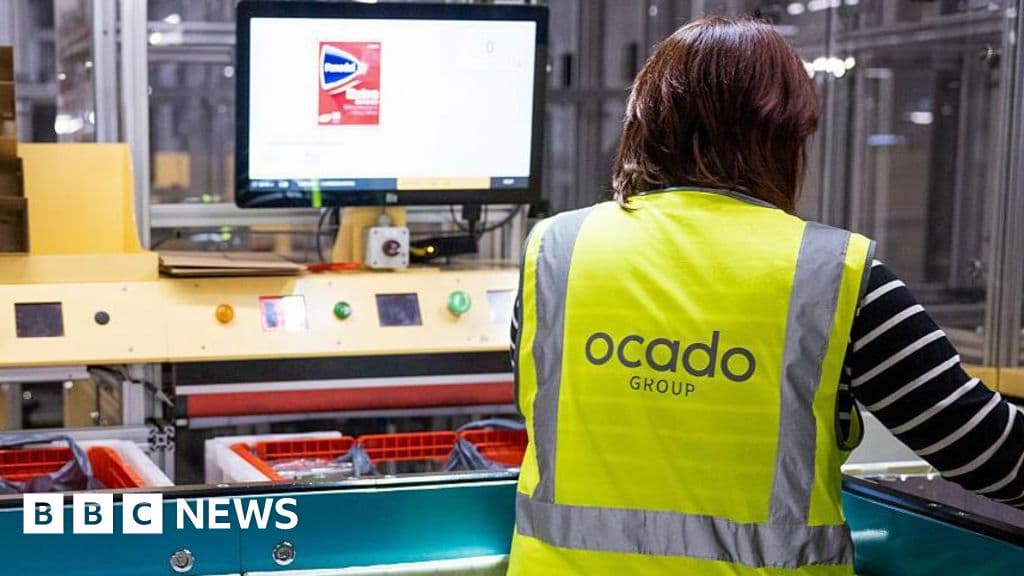
The British retail technology giant Ocado is set to slash roughly 1,000 jobs as part of an aggressive global restructuring plan aimed at saving £150 million.
Shockwaves have rippled through the tech and retail sectors as Ocado announced an unyielding workforce reduction, impacting 5% of its global staff.
This drastic cost-cutting measure follows a tumultuous year marked by severe setbacks in its international automated warehouse rollout. For the corporate world, this signals a harsh reality: even pioneering tech firms are not immune to the bruising pressures of global economic contraction and the shifting dynamics of the e-commerce landscape.
Ocado, renowned for providing state-of-the-art robotic technology to supermarket distribution centers worldwide, is executing a massive corporate pivot. Chief Executive Tim Steiner confirmed that a "significant number" of roles will be rendered obsolete as the company seeks to streamline its structural cost base. The brunt of these redundancies—approximately two-thirds—will fall on the company's UK operations, particularly its headquarters in Hatfield, Hertfordshire.
The restructuring will primarily target technology, research and development (R&D), and administrative support teams. In a strategic consolidation, the firm plans to merge its Ocado Solutions and Ocado Intelligent Automation divisions. The company cites "AI efficiencies" and rigorous "cost discipline" as the driving forces behind this brutal trimming of its workforce, projecting savings of £150 million (approx. KES 25.5 billion) over the coming year.
Ocado's aggressive expansion model has recently hit a wall of harsh market realities. The firm's valuation took a severe beating last year following devastating news from its North American partners. U.S. grocery titan Kroger announced the closure of three Ocado-run automated warehouses, scaling back plans for a wider rollout due to lower-than-expected demand. Similarly, Canadian partner Sobeys shuttered its Calgary facility, citing a sluggish grocery e-commerce market.
Despite these closures, Steiner maintained a resolute front, asserting that the North American market remains "fully open" and that vital lessons have been absorbed. The company recently reported a jump in core underlying profit, yet this financial silver lining has done little to calm nervous investors or save the livelihoods of the 1,000 affected employees.
The ruthless logic of corporate restructuring often masks profound human consequences. The sudden loss of employment for a thousand highly skilled workers highlights the precarious nature of the modern tech economy, where AI integration and automation frequently cannibalize the very jobs that created them.
While Ocado has pledged to support those impacted through the transition process, the overarching narrative is clear: the era of unchecked tech expansion has yielded to an era of ruthless operational efficiency.
"Regrettably, this means a significant number of roles will no longer be required," Steiner stated, an icy testament to the volatile intersection of technology and retail capitalism.
Keep the conversation in one place—threads here stay linked to the story and in the forums.
Sign in to start a discussion
Start a conversation about this story and keep it linked here.
Other hot threads
E-sports and Gaming Community in Kenya
Active 9 months ago
The Role of Technology in Modern Agriculture (AgriTech)
Active 9 months ago
Popular Recreational Activities Across Counties
Active 9 months ago
Investing in Youth Sports Development Programs
Active 9 months ago