We're loading the full news article for you. This includes the article content, images, author information, and related articles.
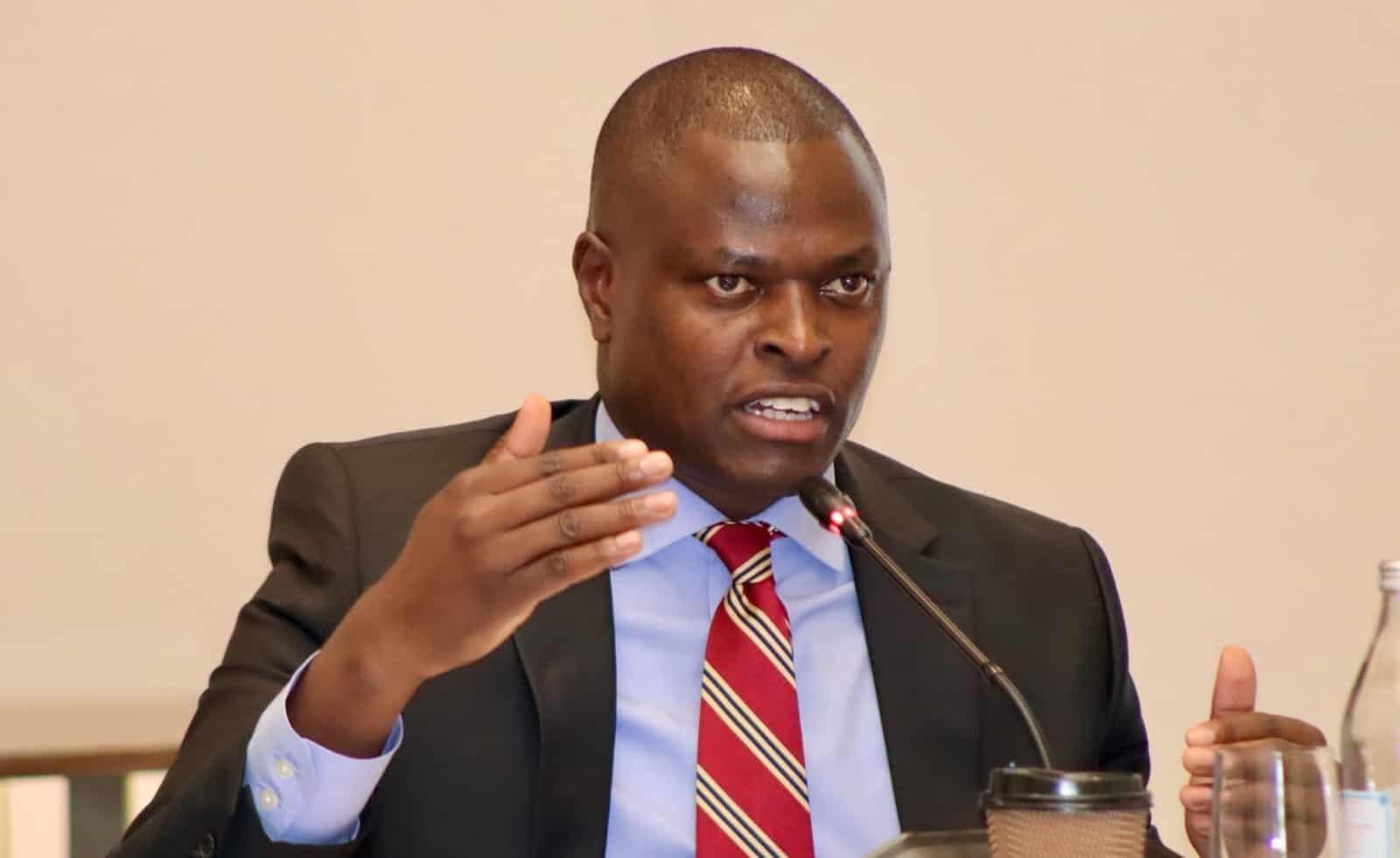
Kiharu MP Ndindi Nyoro labels President Ruto’s new KES 5 trillion Infrastructure Fund as a risky, off-the-books borrowing scheme burdening future generations.

The silence that followed President William Ruto’s announcement of the National Infrastructure Fund has been sharply broken, not by the opposition, but by one of his own former legislative lieutenants. Kiharu Member of Parliament Ndindi Nyoro, once a fervent champion of the Kenya Kwanza administration’s economic agenda, has launched a scathing critique of the newly enacted KES 5 trillion infrastructure vehicle, labeling the project as little more than a sophisticated mechanism for state borrowing.
The conflict signals a widening rift within the ruling coalition regarding the country’s fiscal trajectory. As the government attempts to pivot from a debt-heavy model to an investment-led strategy, the debate has centered on a fundamental question: Is the National Infrastructure Fund a genuine attempt to unlock private capital, or is it a high-stakes accounting maneuver designed to circumvent constitutional debt ceilings while plunging the nation deeper into liability?
The National Infrastructure Fund (NIF), recently signed into law, is structured as a corporate investment vehicle. The administration’s stated ambition is to mobilize approximately KES 5 trillion over the next decade. The core philosophy, championed by Treasury officials and National Assembly Majority Leader Kimani Ichung’wah, is to replace traditional sovereign borrowing—which has driven Kenya’s debt to precarious levels—with a blend of asset monetization, private equity, and climate finance. The government points to the recent partial privatization of the Kenya Pipeline Company as a blueprint, aiming to reinvest proceeds rather than absorbing them into the consolidated fund.
However, Nyoro, who previously chaired the influential National Assembly Budget and Appropriations Committee, rejects this narrative. Speaking in Gaturi, Kiharu, the legislator argued that the structure allows for the creation of special purpose vehicles that borrow on the government’s behalf, effectively moving debt off the central balance sheet. For Nyoro, this is a dangerous obfuscation. He contends that the fund represents “another way of borrowing,” one that bypasses the rigorous oversight typically afforded to standard national debt instruments. The Kiharu MP pointed to estimates suggesting the country is already borrowing roughly KES 1.5 trillion annually, which translates to a daily accumulation of roughly KES 4 billion, and he warns that the NIF will only accelerate this velocity.
The clash over the NIF is rooted in the harsh reality of Kenya’s current economic health. While the administration paints a picture of a nation building its way out of austerity, the lived experience of citizens suggests a different narrative. The following data highlights the pressures fueling this debate:
Economists at the Institute of Economic Affairs have noted that while the intent—to avoid the "tax-and-borrow" cycle—is theoretically sound, the execution risks creating contingent liabilities. If the infrastructure projects under the NIF fail to generate the projected commercial returns, the government—as the implicit backer—will be forced to absorb the costs. This creates a scenario where the state is on the hook for massive debts that appear to be commercial risks on paper but function as sovereign obligations in reality.
Nyoro’s vocal opposition is not merely an economic dispute it is a manifestation of his shifting political alignment. Having been removed from the chairmanship of the Budget and Appropriations Committee in 2025, the lawmaker has increasingly adopted the posture of a fiscal hawk. His critiques frequently highlight the disparity between grand infrastructure promises and the underfunding of essential services, such as education and teacher welfare. By framing the NIF as a potential liability for "future generations," Nyoro is attempting to capture the growing public fatigue regarding the cost of living and the perceived excess of political spending.
The administration, meanwhile, remains on the defensive. Supporters within the National Assembly argue that Nyoro’s critique ignores the reality that traditional borrowing has become unsustainable and that "business as usual" would lead to a total developmental standstill. They maintain that the NIF is ring-fenced by safeguards, including parliamentary oversight and independent audits, intended to prevent the very "off-the-books" borrowing that critics fear.
Yet, for many observers, the lack of transparency in how these independent boards will be appointed and how the "commercial viability" of projects will be assessed remains a critical point of concern. The promise of accountability is only as strong as the institutions enforcing it, and in a climate of high political temperature, questions about the concentration of power remain potent.
As the government moves to appoint the governing council for the fund, the burden of proof rests heavily on the executive. Whether the National Infrastructure Fund becomes a vehicle for transformative growth or a cautionary tale of creative accounting will depend on the first few quarters of operation. For now, the rift between the administration and its former ally serves as a stark reminder that in the face of mounting debt, the consensus on how to build the future is fracturing.
Keep the conversation in one place—threads here stay linked to the story and in the forums.
Sign in to start a discussion
Start a conversation about this story and keep it linked here.
Other hot threads
E-sports and Gaming Community in Kenya
Active 9 months ago
The Role of Technology in Modern Agriculture (AgriTech)
Active 9 months ago
Popular Recreational Activities Across Counties
Active 9 months ago
Investing in Youth Sports Development Programs
Active 9 months ago
Key figures and persons of interest featured in this article