We're loading the full news article for you. This includes the article content, images, author information, and related articles.
Justice Margaret Muigai denies bail to officer Klinzy Baraza, citing witness intimidation and public safety concerns in the high-profile murder trial of Boniface Kariuki.
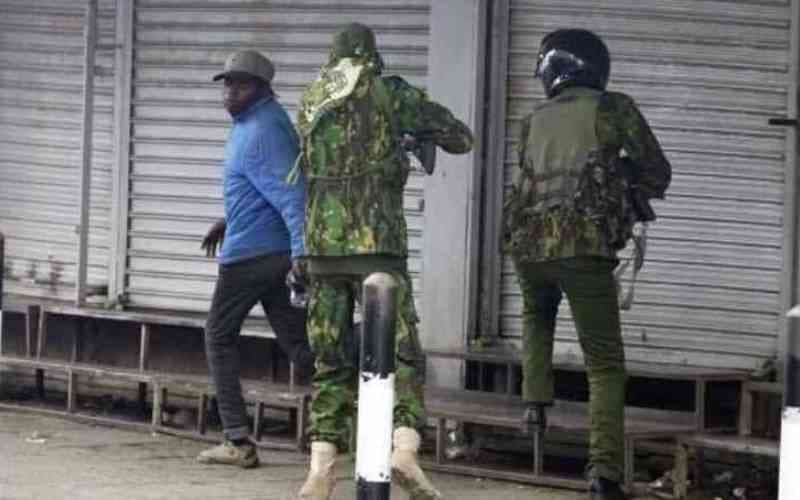
The High Court has delivered a resounding blow to impunity, refusing to release the police officer accused of the cold-blooded murder of a 22-year-old vendor in Nairobi’s CBD.
The corridors of the High Court in Nairobi reverberated with a rare sense of accountability this morning as Justice Margaret Muigai slammed the door on Officer Klinzy Baraza’s bid for freedom. In a ruling that has sent shockwaves through the National Police Service, the court categorically denied bail to the officer accused of fataly shooting Boniface Kariuki, a humble mask vendor, during the tumultuous anti-government protests that rocked the capital in June 2025. The judge’s decision was unequivocal, citing compelling reasons to keep the accused behind bars as the murder trial proceeds.
This ruling is not merely a procedural step; it is a seismic shift in a country where the badge has often served as a shield against prosecution. The death of Boniface Kariuki—who was shot in the heat of the protests and succumbed to his injuries 12 days later at Kenyatta National Hospital—became a lightning rod for public outrage. For the court to deny bail on the grounds of witness safety and public order signals a judicial system that is increasingly sensitive to the cries of victims’ families who have long suffered in silence under the boot of police brutality.
Justice Muigai’s rationale was rooted in the grim reality of the case’s context. She noted that the family of the deceased has been subjected to intimidation, receiving unsolicited calls and messages that paint a chilling picture of a cover-up attempt. “The court cannot turn a blind eye to the genuine fears of the victims,” she stated, emphasizing that releasing Baraza would jeopardize not only the safety of the witnesses but also the integrity of the trial itself.
The prosecution presented a watertight case against granting bond, arguing that Baraza’s release would disturb public order given the volatile nature of the case. The shooting of Kariuki was captured in the collective memory of the nation, a tragic symbol of the excessive force used to quell the Gen Z-led demonstrations. By keeping the accused in custody, the court has effectively acknowledged the severity of the crime and the high stakes involved in delivering justice for a life cut tragically short.
As the family of Boniface Kariuki wept quietly in the courtroom, the weight of the moment was palpable. For months, they have navigated the labyrinth of the justice system, fearing that their son’s killer would walk free like so many before him. Today’s ruling offers a glimmer of hope, a signal that the judiciary is willing to stand as a bulwark against the excesses of the executive’s armed wing. However, the road ahead remains treacherous, with the trial set to be mentioned on February 17 to set a hearing date.
“We are not celebrating yet, but we are breathing a little easier,” a family representative whispered outside the courtroom. “Boniface was selling masks to save lives, yet his own was taken by those sworn to protect it. All we ask for is the truth.” The eyes of the nation now turn to the upcoming trial, watching closely to see if this preliminary victory will translate into a final conviction that could redefine police accountability in Kenya.
Keep the conversation in one place—threads here stay linked to the story and in the forums.
Sign in to start a discussion
Start a conversation about this story and keep it linked here.
Other hot threads
E-sports and Gaming Community in Kenya
Active 9 months ago
The Role of Technology in Modern Agriculture (AgriTech)
Active 9 months ago
Popular Recreational Activities Across Counties
Active 9 months ago
Investing in Youth Sports Development Programs
Active 9 months ago