We're loading the full news article for you. This includes the article content, images, author information, and related articles.
As the United Kingdom threatens reciprocal action against Donald Trump's aggressive fifteen percent global tariff regime, developing economies across East Africa are bracing for severe collateral damage, fearing a strong dollar and disrupted supply chains could derail fragile economic recoveries.
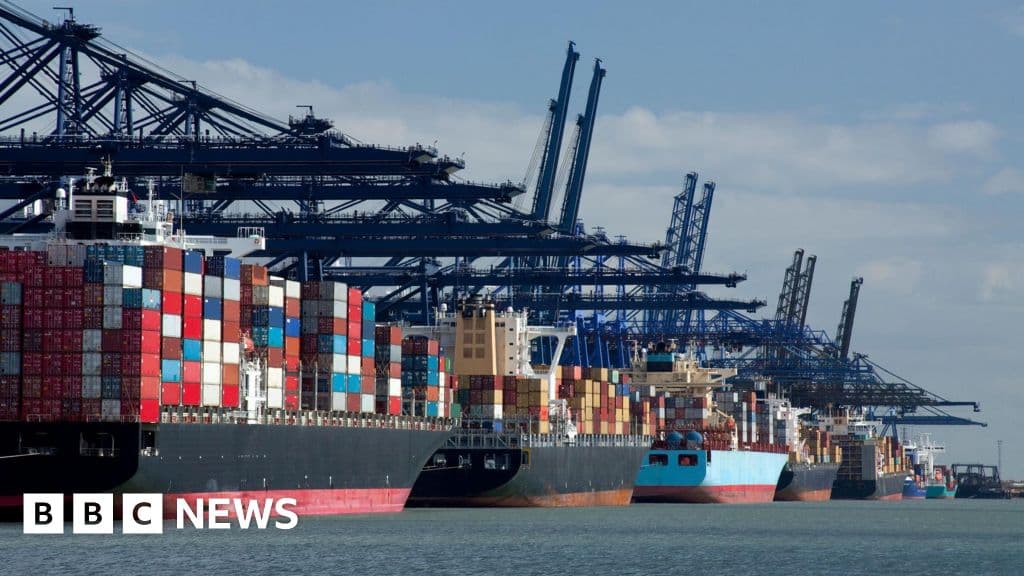
As the United Kingdom threatens reciprocal action against Donald Trump's aggressive fifteen percent global tariff regime, developing economies across East Africa are bracing for severe collateral damage, fearing a strong dollar and disrupted supply chains could derail fragile economic recoveries.
Downing Street has issued a stark warning that no reciprocal action is off the table if Washington fails to honor its trade agreements. The diplomatic standoff threatens to plunge the transatlantic alliance into an unprecedented economic war.
This escalating confrontation matters intensely because a fractured global trade network inevitably punishes emerging markets the hardest. The sudden imposition of unilateral tariffs by the world's largest economy creates a ripple effect of currency devaluation and capital flight that will swiftly land on the shores of Lake Victoria and the Indian Ocean.
The origins of this latest crisis stem from a dramatic ruling by the United States Supreme Court, which boldly outlawed the majority of the global tariffs President Trump had enacted using the International Emergency Economic Powers Act. The judicial pushback was hailed as a victory for global free trade, but the celebration was extraordinarily short-lived.
In a swift and characteristic counter-manoeuvre, the White House announced a new, temporary fifteen percent global tariff under Section 122 of the 1974 Trade Act. While certain critical minerals and pharmaceuticals remain exempt, the sweeping nature of the levy has left allies scrambling. Analysis from the Global Trade Alert think tank indicates the UK will be disproportionately devastated, prompting Number 10 to prepare a robust retaliatory strategy.
When geopolitical heavyweights clash, the collateral damage is invariably absorbed by developing nations. For Kenya and the broader East African Community, this tariff war presents a multi-faceted economic threat. First and foremost is the currency shock. As global uncertainty spikes, international investors invariably flock to the safety of the US Dollar, precipitating a sharp depreciation of the Kenyan Shilling.
A weakened Shilling translates immediately into exorbitant import costs. Essential commodities, industrial machinery, and refined petroleum products will become prohibitively expensive for Kenyan businesses. For a nation already battling inflation, this externally generated currency pressure could easily erase months of careful monetary policy management by the Central Bank of Kenya.
The fifteen percent blanket tariff casts a long, ominous shadow over the future of the African Growth and Opportunity Act (AGOA). Kenyan exporters of apparel, macadamia nuts, and cut flowers currently enjoy duty-free access to American markets. If the new blanket tariffs supersede these existing frameworks, a $10m (approx. KES 1.3bn) shipment of Kenyan textiles would suddenly face crippling new overheads.
Furthermore, if the UK economy contracts under the weight of American tariffs, British consumer demand for Kenyan tea and horticulture will inevitably slump. The Nairobi Securities Exchange is already reflecting this global anxiety, with foreign institutional investors adopting a cautious, wait-and-see approach that starves local equities of essential capital liquidity.
To navigate this treacherous geopolitical economic landscape, regional governments must implement robust defensive strategies. The era of passive reliance on Western trade stability is over. Key imperatives include:
As London and Washington engage in a high-stakes game of economic brinkmanship, Nairobi must swiftly pivot from a role of passive spectator to proactive defender of its sovereign economic interests.
Keep the conversation in one place—threads here stay linked to the story and in the forums.
Sign in to start a discussion
Start a conversation about this story and keep it linked here.
Other hot threads
E-sports and Gaming Community in Kenya
Active 9 months ago
The Role of Technology in Modern Agriculture (AgriTech)
Active 9 months ago
Popular Recreational Activities Across Counties
Active 9 months ago
Investing in Youth Sports Development Programs
Active 9 months ago