We're loading the full news article for you. This includes the article content, images, author information, and related articles.
While the risk remains low, the government urges vigilance, hygiene, and caution with fruits to keep the deadly zoonotic virus at bay.
A shadow has fallen across the Indian Ocean, prompting Kenya’s health authorities to sound the alarm. Following the confirmation of two cases of the deadly Nipah virus in India, the Ministry of Health has issued a stern advisory to Kenyans: vigilance is our best vaccine.
While the Director General of Health, Dr. Patrick Amoth, has assured the nation that there is currently no outbreak within Kenya’s borders, the government is leaving nothing to chance. The Nipah virus (NiV) is a zoonotic pathogen with a terrifyingly high mortality rate and no known cure. It spreads from animals to humans—specifically from fruit bats and pigs—and can also transmit between humans. With global travel connecting Nairobi to the world, the threat, though distant, is real.
The primary vector for Nipah is the fruit bat, a creature common in many parts of Kenya. The Ministry’s advisory focuses heavily on food hygiene, specifically the consumption of fruits. The virus can be transmitted through fruit that has been contaminated with the saliva or urine of infected bats. This means that the mango or guava you pick up from the market could be a biological time bomb if not handled correctly.
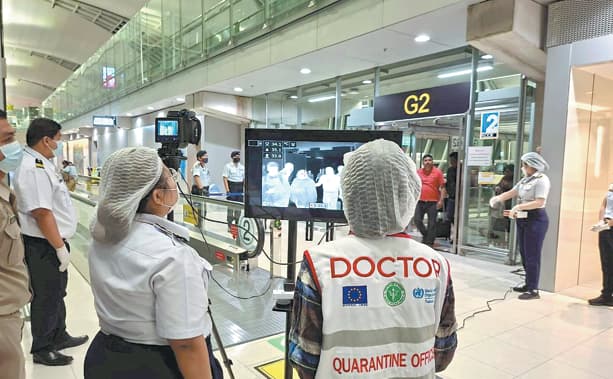
The virus is insidious. Symptoms can appear anywhere from three to 14 days after exposure and range from respiratory distress to fatal encephalitis (swelling of the brain). Dr. Amoth confirmed that the National Public Health Emergency Operations Centre has been placed on "watch mode," meaning surveillance at points of entry like Jomo Kenyatta International Airport (JKIA) has been intensified.
This is not a call for panic, but a call for prudence. In a post-COVID world, we know that viruses respect no borders. By adopting simple, rigorous hygiene practices—washing hands, peeling fruits, and reporting symptoms—Kenyans can build a firewall against this silent killer. The Ministry remains on high alert, but the first line of defense is, as always, the public.
Keep the conversation in one place—threads here stay linked to the story and in the forums.
Sign in to start a discussion
Start a conversation about this story and keep it linked here.
Other hot threads
E-sports and Gaming Community in Kenya
Active 10 months ago
The Role of Technology in Modern Agriculture (AgriTech)
Active 10 months ago
Popular Recreational Activities Across Counties
Active 10 months ago
Investing in Youth Sports Development Programs
Active 10 months ago
Key figures and persons of interest featured in this article



