We're loading the full news article for you. This includes the article content, images, author information, and related articles.
Authorities admit the decade-old deposit scheme has become an "administrative burden" rather than a solution, leaving tons of garbage rotting at the South Col.
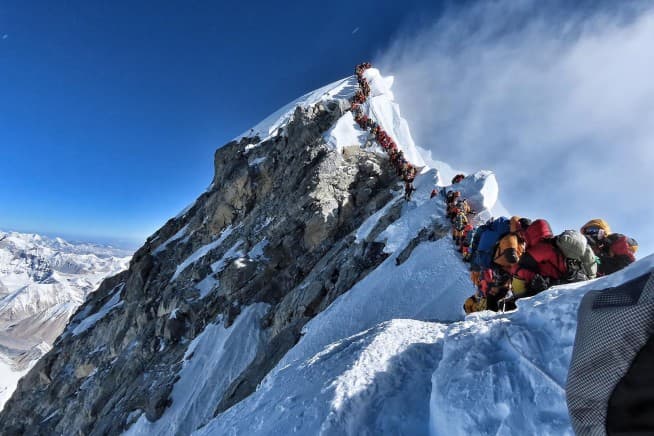
The world’s highest peak is drowning in debris, and the decade-old policy designed to save it has officially collapsed.
Since 2014, Nepal has attempted to force climbers to clean up after themselves through financial penalties, but officials have now conceded that the system is broken. For environmentalists and policymakers watching from Nairobi to Kathmandu, the reversal serves as a stark lesson: regulation without enforcement is merely paperwork.
The premise was simple: climbers scaling Mount Everest had to return with at least 8 kilograms (18 lbs) of trash or forfeit a deposit of $4,000 (approx. KES 520,000). The goal was to clear the tens of tons of oxygen bottles, torn tents, and food wrappers littering the South Col, the final camp before the summit.
However, the reality on the mountain has been far grimmer than the legislation on paper. Himal Gautam, director of Nepal’s tourism department, confirmed to the BBC that the garbage problem has "not gone away." Instead of incentivizing cleanliness, the deposit scheme morphed into what Gautam described as an "administrative burden," leading authorities to scrap it entirely in favor of a yet-to-be-detailed new strategy.
This pivot highlights a challenge familiar to Kenyan conservationists: the gap between enacting a ban—like our own restrictions on single-use plastics in national parks—and the logistical nightmare of policing it in remote, hostile environments.
While the government’s deposit scheme faltered, non-governmental efforts have exposed the sheer scale of the crisis. The Sagarmatha Pollution Control Committee (SPCC), a local waste-management NGO, reported staggering figures for the spring 2024 season:
Tshering Sherpa, CEO of the SPCC, pinpointed the structural flaw in the now-defunct policy. Speaking to the BBC, he noted that climbers often only remove waste from lower, easier-to-access camps to reclaim their KES 520,000 deposits, leaving the most ecologically fragile high-altitude zones untouched.
Furthermore, the math simply didn't add up. Sherpa revealed that the average climber generates roughly 12 kilograms of waste during an expedition—4 kilograms more than the mandatory return amount. By strictly following the old rule, climbers were legally allowed to leave trash behind.
The core issue remains a lack of eyes on the ground—or rather, on the glacier. Beyond the Khumbu Icefall, a treacherous and shifting section of the route, oversight vanishes.
"There is no monitoring of what climbers are doing," Sherpa warned, describing the upper reaches of the mountain as a regulatory blind spot. Without rangers or checkpoints at high altitudes, verified compliance is impossible. As Nepal goes back to the drawing board, the situation on Everest stands as a grim reminder that protecting nature requires more than financial disincentives; it demands rigorous, boots-on-the-ground accountability.
Keep the conversation in one place—threads here stay linked to the story and in the forums.
Sign in to start a discussion
Start a conversation about this story and keep it linked here.
Other hot threads
E-sports and Gaming Community in Kenya
Active 9 months ago
The Role of Technology in Modern Agriculture (AgriTech)
Active 9 months ago
Popular Recreational Activities Across Counties
Active 9 months ago
Investing in Youth Sports Development Programs
Active 9 months ago