We're loading the full news article for you. This includes the article content, images, author information, and related articles.
Trans Nzoia Governor George Natembeya vows to overhaul Kenya’s state honours system, targeting political patronage in a bid for the 2027 presidency.
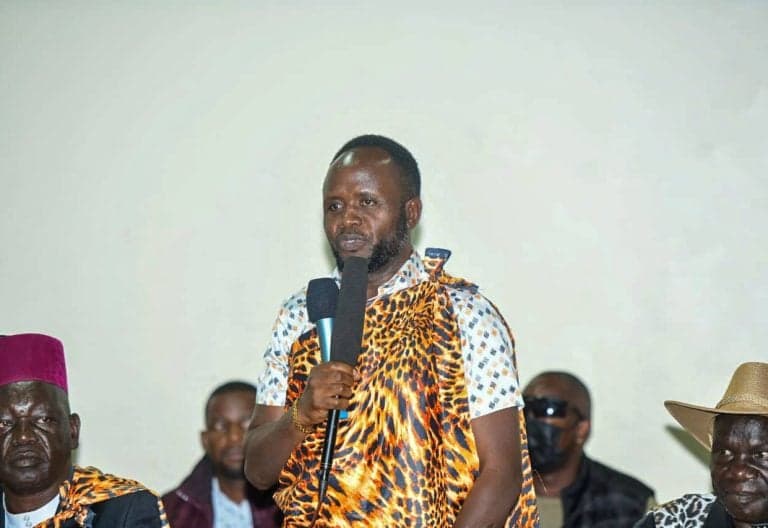
The annual announcement of Kenya’s state honours list—often a parade of political stalwarts, loyal civil servants, and well-connected business moguls—has long been a source of public cynicism. For many citizens, the medals awarded on Jamhuri and Mashujaa Days represent not the pinnacle of patriotic sacrifice, but a reward system for political patronage. Trans Nzoia Governor George Natembeya has now thrust this contentious issue into the heart of his early presidential campaign, vowing to dismantle the current nomination framework if he ascends to the highest office in the land.
The current state honours system, governed under the National Honours Act of 2013, grants the sitting President significant discretion in the selection process. While a National Honours and Awards Committee is mandated to receive nominations, the final authority remains vested in the Office of the President. Critics argue this lack of independence creates a loop where honours are distributed based on proximity to power rather than objective achievement. Natembeya, a former Rift Valley Regional Commissioner known for a hard-line, technocratic approach to administration, believes this structure undermines the moral authority of the awards.
To understand the stakes of Natembeya’s proposal, one must examine the mechanics of the current regime. The system is designed to recognize civilians and military personnel who have made distinguished contributions to the nation. However, the lack of transparency in the vetting process has historically fueled accusations of nepotism. Data suggests that the number of recipients has swelled in recent years, leading to a dilution of the prestige associated with top-tier awards like the Order of the Golden Heart.
Key issues surrounding the current state honours framework include:
Economists at the Institute of Economic Affairs have previously noted that while the direct cost to the Exchequer—comprising ceremony expenses, medals, and related logistics—is relatively small, estimated in the low millions of shillings annually, the indirect costs to national morale and institutional trust are immeasurable. When a medal loses its prestige, the incentive for genuine service diminishes, replaced by a race for political sycophancy.
Natembeya’s proposed reforms focus on shifting the power dynamic. By advocating for an independent, non-partisan Honours Commission, the Governor aims to remove the "presidential privilege" that characterizes the current selection. His platform suggests that members of such a commission should be drawn from civil society, the judiciary, and distinguished veterans, rather than political appointees. This model, while challenging to implement within the current constitutional framework, seeks to emulate systems in other Commonwealth nations, where honours committees operate with a higher degree of insulation from political pressure.
The implementation of such a system would require legislative amendments to the National Honours Act. Natembeya’s supporters argue that his background as a former security administrator provides him with the necessary understanding of how government machinery works, and how to effectively strip the politics out of it. However, legal scholars caution that constitutional hurdles remain significant. The President’s executive authority is a bedrock of the current administration’s operations, and shifting this to a committee would require a significant political consensus that is rarely easy to achieve in the adversarial environment of Kenyan politics.
Kenya is not the only nation grappling with the politicization of state recognition. Globally, many countries have faced similar challenges. In the United Kingdom, the honours system is periodically reviewed to ensure that political involvement is minimized. The UK Honours Committee system, for instance, allows for public nominations and rigorous vetting, which—while still subject to occasional controversy—provides a far more structured and transparent path to recognition than the current Kenyan model.
If Natembeya is to succeed, he must convince a cynical electorate that this is not merely campaign rhetoric. His focus on "reforming the prestige economy" is a direct challenge to the establishment. By positioning himself as a candidate who prioritizes merit over political loyalty, he is tapping into a sentiment that resonates deeply with a generation of voters tired of seeing awards handed out as favors rather than accolades for national service.
Ultimately, the reform of state honours is a symbolic proxy for a much larger conversation about the nature of the Kenyan state. It touches on the broader question of how the country rewards its best and brightest. Does Kenya value the quiet, consistent work of a rural teacher, a health worker, or an environmentalist, or does it only prioritize the loud, high-profile loyalty of political functionaries? Natembeya’s pledge is a gamble that the voting public is ready to prioritize the former. Whether this promise can survive the crucible of an election cycle and the subsequent realities of governance remains the defining question of his presidential bid.
Keep the conversation in one place—threads here stay linked to the story and in the forums.
Sign in to start a discussion
Start a conversation about this story and keep it linked here.
Other hot threads
E-sports and Gaming Community in Kenya
Active 9 months ago
The Role of Technology in Modern Agriculture (AgriTech)
Active 9 months ago
Popular Recreational Activities Across Counties
Active 9 months ago
Investing in Youth Sports Development Programs
Active 9 months ago
Key figures and persons of interest featured in this article