We're loading the full news article for you. This includes the article content, images, author information, and related articles.
Kitui Central MP Makali Mulu pushes for heightened Kenyan oversight and local expertise in the stalled Naivasha-Malaba SGR extension project.

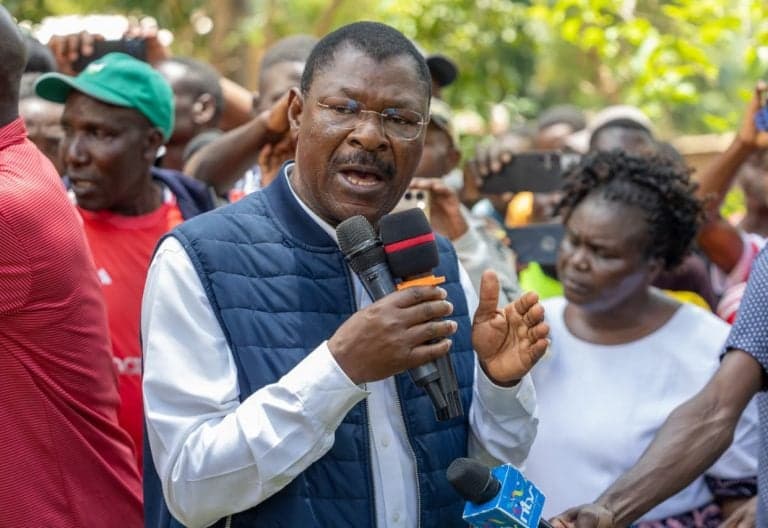
The Standard Gauge Railway (SGR), once hailed as the flagship of Kenya’s infrastructural modernization, currently stands as a monument to unfinished ambition at its Naivasha terminus. For years, the silence of the tracks beyond the Rift Valley has been a subject of fiscal and logistical debate, but a new movement is emerging within the National Assembly. Kitui Central Member of Parliament Makali Mulu has formally challenged the government to abandon the turn-key financing models of the past, calling for stringent local oversight and the integration of domestic expertise in the critical extension of the line to the Malaba border.
This intervention arrives at a volatile intersection of public debt management and regional integration imperatives. As the East African Community (EAC) accelerates its trade harmonization protocols, the inability to move goods by rail beyond Naivasha remains a systemic bottleneck. Dr. Mulu, an influential voice on parliamentary budgetary matters, argues that the next phase of the project cannot replicate the external-heavy execution models that defined the initial phases of the railway, which critics suggest left little room for Kenyan industrial participation or skills transfer.
The proposed extension from Naivasha to Malaba is not merely an engineering project it is an economic lifeline designed to traverse the Western corridor, ultimately connecting the Port of Mombasa to Uganda, Rwanda, and the eastern Democratic Republic of the Congo. Current estimates for the extension suggest costs could exceed KES 450 billion, a figure that has drawn intense scrutiny from the Public Debt and Privatization Committee. The core of the current debate, however, is not just about the cost, but about who holds the pen on the design, procurement, and management of the construction phase.
Dr. Mulu’s call for local control focuses on three specific strategic objectives:
To understand the urgency behind the demand for local control, one must look at the financial architecture of the existing SGR network. Data from the National Treasury indicates that the repayment schedule for the initial loans, largely sourced from China, exerts significant pressure on the national budget, contributing to the broader fiscal consolidation efforts currently underway. Economists note that while the railway has improved cargo throughput, the high debt service costs have constrained the government’s ability to fund other essential social services.
The previous model was a turn-key operation: external financiers provided the capital, external firms provided the technology and labour, and the Kenyan government provided the sovereign guarantee. This arrangement, while rapid in execution, resulted in minimal long-term industrial capacity building within the local private sector. Mulu argues that repeating this model for the Malaba extension would be a strategic error, trapping the nation in a cycle of debt without creating the local expertise necessary to maintain or expand the network in the future.
The significance of the Naivasha-Malaba extension extends far beyond Kenyan borders. Malaba serves as one of the busiest land ports in East Africa, and the current reliance on road freight for cross-border logistics is costly, time-consuming, and environmentally taxing. According to regional trade experts, the cost of transporting a container from Mombasa to Kampala by road is nearly triple the potential cost of rail transit if the SGR were fully operational to the border.
The delay in this connection is not just a Kenyan issue it is a regional one. Business communities in Uganda and the eastern DRC are watching the development of the Malaba extension with intense interest. If the project is delayed further or if it is executed under a model that precludes regional synergy, the East African trade bloc risks losing its competitive edge against other emerging logistics corridors in the continent. For the Kenyan government, the pressure is mounting to prove that it can manage such a massive project with both fiscal prudence and local economic empowerment.
The government now faces a difficult calibration. It must reconcile the need for rapid implementation to unlock regional trade potential with the legislative and public demand for local ownership. The administration’s response to Dr. Mulu’s call will likely define the procurement strategy for the next decade of infrastructure development in Kenya. If the state pivots toward a model that prioritizes local industrial participation, it could set a precedent for future large-scale projects, effectively shifting the economy from a model of debt-fueled consumption to one of domestic production and value addition.
As the debate moves from the floor of the National Assembly to the corridors of the Ministry of Transport, the question remains whether the government is prepared to dismantle the existing framework of foreign-led development. The railway is ready to move, but the policy framework steering its course appears to have reached a major junction. Whether that junction leads to a localized, sustainable project or a continuation of the status quo will be determined by the political will to enforce the local control that so many Kenyan stakeholders now demand.
Keep the conversation in one place—threads here stay linked to the story and in the forums.
Sign in to start a discussion
Start a conversation about this story and keep it linked here.
Other hot threads
E-sports and Gaming Community in Kenya
Active 10 months ago
The Role of Technology in Modern Agriculture (AgriTech)
Active 10 months ago
Popular Recreational Activities Across Counties
Active 10 months ago
Investing in Youth Sports Development Programs
Active 10 months ago
Key figures and persons of interest featured in this article