We're loading the full news article for you. This includes the article content, images, author information, and related articles.
A historic winter storm has battered the US Northeast, grounding thousands of flights and plunging over 600,000 homes into darkness, sending severe ripple effects across global travel networks.
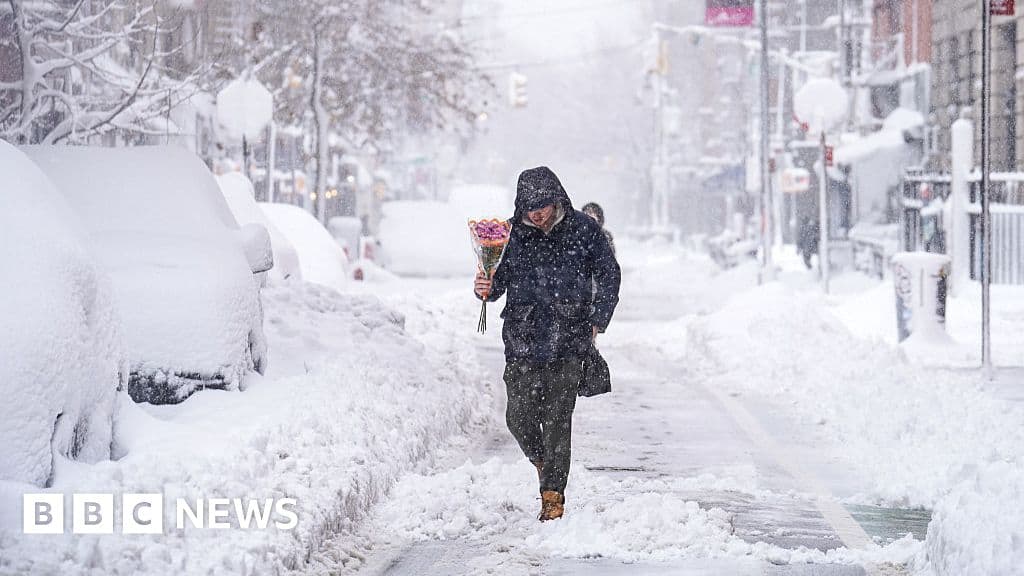
A historic winter storm has battered the US Northeast, grounding thousands of flights and plunging over 600,000 homes into darkness, sending severe ripple effects across global travel networks.
The eastern seaboard of the United States has been paralyzed by a massive, record-breaking blizzard that has completely redefined the modern understanding of a winter storm.
The immediate fallout is staggering: over 5,000 commercial flights canceled, critical infrastructure crippled, and nearly 37 inches (approximately 94 centimeters) of snow burying parts of Rhode Island and Massachusetts. For the global economy, and specifically for East African travelers relying on transit hubs like New York's JFK airport, this is an logistical nightmare. The disruption highlights the sheer fragility of global interconnectedness in the face of extreme weather events, a phenomenon increasingly exacerbated by global climate change. In New York City alone, Central Park recorded an astonishing 19 inches of snow, rendering travel "near impossible" and prompting state officials to implement strict emergency protocols. For the Kenyan diaspora and local business communities dependent on swift air cargo, the delays translate into millions of shillings in lost revenue and massive personal inconvenience.
Meteorologists with the National Weather Service have expressed profound shock at the intensity of this weather system. Providence, the state capital of Rhode Island, received 36 inches of snow, completely obliterating the previous single-storm record of 28.6 inches set during the infamous blizzard of February 1978. "It completely smashed it," noted Candice Hrencecin, a leading meteorologist based in Boston. This level of rapid accumulation overwhelms even the most robust municipal snow-clearing operations. Emergency declarations and bans on non-essential travel were immediately instituted across Rhode Island, Connecticut, and Massachusetts. The speed limit on the Massachusetts Turnpike was drastically reduced, and the military National Guard was placed on high alert to assist with potential search and rescue operations for stranded motorists.
The cancellation of more than 5,000 flights represents a massive blow to the aviation industry, which is still recovering from post-pandemic operational hiccups. Airlines are bleeding capital as planes sit idle on tarmac covered in ice. For East Africa, the implications are direct and severe. Kenya Airways (KQ), which operates direct flights between Nairobi (NBO) and New York (JFK), is deeply integrated into this disrupted network. Perishable exports from Kenya, particularly cut flowers and fresh produce destined for American markets, face the grim prospect of spoiling in transit warehouses. The estimated economic impact of this single storm runs into the billions of dollars globally, a stark reminder that an atmospheric anomaly in the Northern Hemisphere can instantly impact the livelihood of a farmer in Naivasha.
The catastrophic failure of the power grid, leaving hundreds of thousands freezing in the dark, exposes the critical underinvestment in aging infrastructure. Power lines simply snapped under the immense weight of the wet, heavy snow and gale-force winds. This event is not an isolated anomaly; climate scientists have consistently warned that rising global temperatures increase atmospheric moisture, leading to more intense and unpredictable precipitation events. The "new normal" requires a radical rethinking of urban planning and infrastructure resilience. As cities worldwide grapple with these extremes, developing nations in Africa must also take heed, ensuring their own rapid urbanization integrates climate-resilient engineering to prevent similar structural collapses.
Beyond the staggering statistics and logistical nightmares lies the profound human cost. Emergency responders are working around the clock in treacherous conditions, while ordinary citizens are forced to shelter in place, hoping their heating systems hold out. The sheer volume of snow requires days, if not weeks, of relentless clearing before a semblance of normalcy can return. "We were just as shocked as everyone else," the weather service noted, perfectly capturing the humbling power of nature. As the US east coast slowly digs itself out of this icy entombment, the world watches, recognizing that in the battle against a changing climate, even the most developed nations are entirely at the mercy of the elements.
Keep the conversation in one place—threads here stay linked to the story and in the forums.
Sign in to start a discussion
Start a conversation about this story and keep it linked here.
Other hot threads
E-sports and Gaming Community in Kenya
Active 9 months ago
The Role of Technology in Modern Agriculture (AgriTech)
Active 9 months ago
Popular Recreational Activities Across Counties
Active 9 months ago
Investing in Youth Sports Development Programs
Active 9 months ago