We're loading the full news article for you. This includes the article content, images, author information, and related articles.
Works Minister Abdallah Ulega has called upon engineering students at the University of Dar es Salaam to pioneer homegrown technological solutions to combat persistent infrastructure deficits.
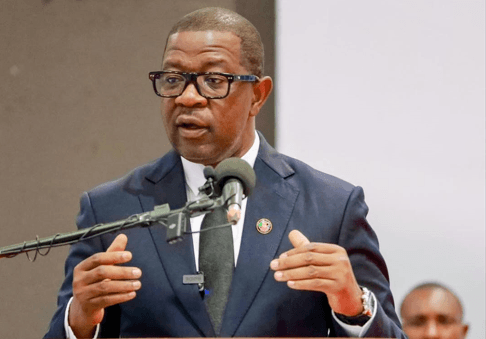
Works Minister Abdallah Ulega has called upon engineering students at the University of Dar es Salaam to pioneer homegrown technological solutions to combat persistent infrastructure deficits, including traffic congestion and endless pothole repairs.
In a direct challenge to the nation's brightest young scientific minds, the government is officially crowdsourcing highly technical solutions to age-old civic problems. The move bridges the frustrating gap between academic theory and practical, real-world public works deployment.
This initiative represents a critical turning point. For decades, East African governments have relied heavily on expensive, imported engineering expertise to solve local infrastructure issues. By incentivizing indigenous innovation, governments can dramatically slash maintenance budgets and cultivate a highly skilled, self-reliant technical workforce tailored to regional climates.
During an intensive, interactive visit to the University of Dar es Salaam (UDSM), Minister Ulega met directly with the ambitious members of the Engineering Society at the College of Engineering and Technology (CoET). He did not deliver a standard political speech; instead, he presented them with a stark, multi-billion shilling technical dilemma.
He explicitly cited crippling urban traffic congestion, severe affordable housing shortages, and the infuriating, incredibly expensive recurring cycle of annual pothole repairs as massive national crises demanding immediate, homegrown engineering solutions.
“We want the country to obtain definitive, permanent solutions through you scientists. The absolute future of global economic development lies entirely in the hands of scientists and innovators. Conduct more aggressive research, come up with radical innovations, and we will actually work on them,” the Minister challenged the students.
The genesis of this academic challenge stems directly from the highest office in the land. Minister Ulega revealed that immediately upon his official appointment, President Samia Suluhu Hassan confronted him with a deeply practical, deeply frustrating question regarding the sheer waste of public funds on temporary fixes.
“When I was appointed minister, the President asked me why we repair the exact same roads every single year. Why is there absolutely no technological innovation to permanently solve this cyclical problem? That profound question made me reflect deeply on our national engineering strategies,” he admitted to the assembly.
To fiercely encourage aggressive academic competition and genuine creativity among the student body, Mr. Ulega announced a significant financial incentive. Students who successfully submit outstanding, highly practical engineering proposals addressing these exact civic challenges will share a total prize pool of TZS 10 million (approx. KES 500,000) distributed among the top three winning teams.
This approach closely mirrors successful tech-hub incubators seen in Nairobi, Kenya, where university students frequently pitch civic-tech solutions directly to county governments and private venture capitalists. The integration of academia into active public sector problem-solving is rapidly becoming the gold standard for East African urban development.
The Minister was careful to emphasize that this is not merely an academic exercise designed to hand out certificates. The fundamental goal is active, real-world implementation of viable, highly resilient ideas. He stated that students may collaborate individually, in strategic pairs, or as a massive multi-disciplinary group to tackle the physics and logistics of road durability.
“If we are genuinely satisfied that your technical paper provides a realistic, financially viable, and implementable engineering solution, we will award you publicly and adopt your methodology,” he promised.
The era of waiting for foreign contractors to fix local roads is closing; the future of East African infrastructure is now sitting in the lecture halls of its own universities.
Keep the conversation in one place—threads here stay linked to the story and in the forums.
Sign in to start a discussion
Start a conversation about this story and keep it linked here.
Other hot threads
E-sports and Gaming Community in Kenya
Active 9 months ago
The Role of Technology in Modern Agriculture (AgriTech)
Active 9 months ago
Popular Recreational Activities Across Counties
Active 9 months ago
Investing in Youth Sports Development Programs
Active 9 months ago
Key figures and persons of interest featured in this article