We're loading the full news article for you. This includes the article content, images, author information, and related articles.
London's Royal Botanic Gardens launches its 30th annual Orchid Festival, celebrating China's biodiversity and offering crucial conservation lessons for East Africa.
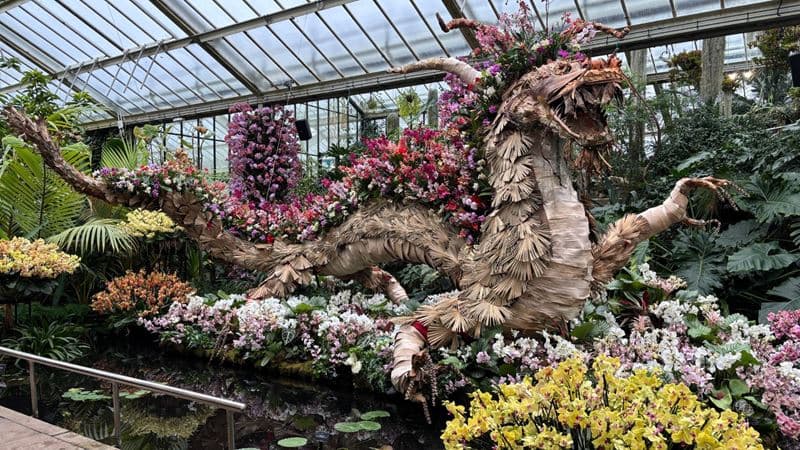
London's Royal Botanic Gardens launches its thirtieth annual Orchid Festival, celebrating China's remarkable biodiversity while offering crucial conservation lessons for East Africa and the globe.
The vibrant hues of over 1,700 exotic orchid species have dramatically transformed London's winter gloom into a breathtaking botanical paradise. For the very first time in its three-decade history, the globally renowned Kew Gardens is spotlighting the staggering biodiversity and deeply rooted cultural heritage of the People's Republic of China.
This landmark horticultural exhibition matters profoundly for international ecological conservation efforts, holding particular resonance for East African environmentalists. As climate change rapidly accelerates, the delicate survival of orchids acts as a critical ecological early warning system, demanding immediate transnational cooperation to safeguard highly endangered flora across multiple continents.
The meticulously curated event, housed within the glassy labyrinth of the Princess of Wales Conservatory, offers visitors an immersive plunge into a vibrant ecosystem. The exhibition route is intricately threaded with traditional Chinese New Year imagery, marking the transition into the Year of the Horse. Spectators are greeted by colossal, large-scale botanical installations, including a magnificent plant-crafted dragon, vivid floral tributes to giant pandas, golden snub-nosed monkeys, and red-crowned cranes. A cascading display of orchids, illuminated by traditional lantern-style lighting, creates a deeply festive atmosphere that merges natural beauty with centuries-old cultural symbolism.
Beyond the striking aesthetics, the festival serves as a profound narrative of survival and adaptation. Orchids, revered in Chinese tradition as one of the "Four Gentlemen of Flowers," embody integrity, resilience, and noble character. These very traits are essential as botanists wage a relentless battle against habitat destruction and shifting climatic zones. The visual majesty of the festival is deliberately designed to awaken a sense of urgent environmental stewardship among its international audience.
Beneath the surface of this vibrant spectacle lies a formidable foundation of rigorous scientific research and international partnership. The festival celebrates over two decades of robust collaboration between the Royal Botanic Gardens, Kew, and the Chinese Academy of Sciences (CAS). A newly formalized ten-year agreement seeks to expand shared research initiatives in critical areas such as conservation, ecology, and plant science. This partnership explicitly encompasses groundbreaking projects like the Mapping Asia Plants initiative and specialized studies focusing on the unique orchid diversity hidden within the limestone caves of Yunnan province.
Experts highlight that orchids function as the proverbial "canary in the coal mine" for planetary biodiversity due to their extreme sensitivity to microscopic environmental alterations. Scientists are continuously working on seed banking and the preservation of traditional medicinal plants, utilizing advanced genomic sequencing to understand how these species might withstand future climatic shocks. The data harvested from these collaborative efforts is shared globally, fortifying botanical defenses worldwide.
The strategic alignment between British botanical institutions and Chinese ecological bodies presents a fascinating and highly relevant case study for East African nations. Kenya, which harbors its own delicate and highly threatened floral ecosystems within the Kakamega Forest and the coastal Arabuko-Sokoke habitats, stands to benefit immensely from adopting similar collaborative conservation frameworks. By studying the successful integration of cultural heritage with biodiversity protection, local conservationists can engineer more effective strategies to protect indigenous Kenyan orchids.
Furthermore, the economic viability of eco-tourism, as demonstrated by the massive crowds drawn to Kew Gardens, offers a lucrative blueprint for the region. Leveraging Kenya's natural botanical wealth could generate significant revenue streams, directly funding further environmental protection initiatives. The translation of this model could elevate regional botanical gardens, transforming them into global epicenters for both tourism and advanced ecological research.
The financial mechanics supporting such large-scale conservation efforts are substantial, relying heavily on public engagement and international grants. The economic footprint of botanical tourism is undeniably massive, injecting millions into local economies while simultaneously funding critical research.
"It is a joyful celebration of nature, creativity, and connection during the cold winter months—and a stark reminder of the absolute importance of protecting the world's biodiversity," noted a leading Kew botanist, echoing a vital conservation sentiment that resonates powerfully from the heart of London to the savannas of East Africa.
Keep the conversation in one place—threads here stay linked to the story and in the forums.
Sign in to start a discussion
Start a conversation about this story and keep it linked here.
Other hot threads
E-sports and Gaming Community in Kenya
Active 9 months ago
The Role of Technology in Modern Agriculture (AgriTech)
Active 9 months ago
Popular Recreational Activities Across Counties
Active 9 months ago
Investing in Youth Sports Development Programs
Active 9 months ago