We're loading the full news article for you. This includes the article content, images, author information, and related articles.
At the 2026 Africa Editors Congress in Nairobi, industry leaders were challenged to leverage audience trust as a shield against mounting economic and digital uncertainties.
At the 2026 Africa Editors Congress in Nairobi, industry leaders were emphatically challenged to leverage audience trust as their ultimate shield against mounting economic and digital uncertainties.
The African media landscape is currently navigating a treacherous epoch defined by severe economic headwinds, disruptive artificial intelligence, and a rapidly fragmenting digital audience. During the 2026 Africa Editors Congress held at the Aga Khan University in Nairobi, a powerful consensus emerged: the sheer survival of journalism hinges entirely on rebuilding and fiercely guarding audience trust.
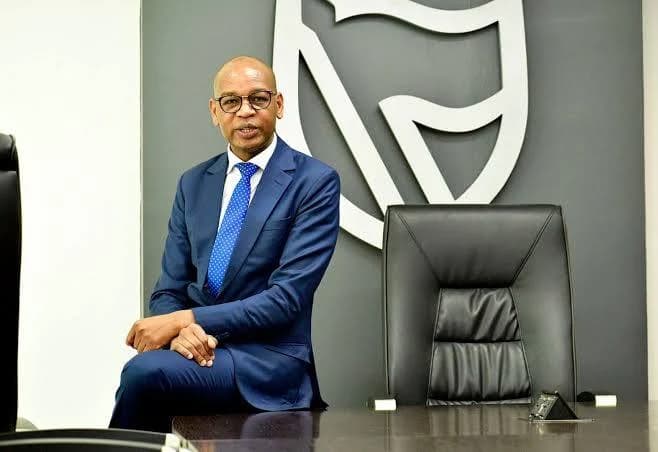
Delivering a piercing keynote address, East Africa Standard Bank Group Regional Chief Executive Joshua Oigara articulated that trust is no longer just a journalistic ideal; it is the fundamental economic bedrock required to sustain long-term capital flows into the media industry. Without it, the fourth estate risks total obsolescence.
"Steady journalism extends investment horizons. Uncertainty compresses them," Dr. Oigara warned the assembly of newsroom leaders, publishers, and policymakers. This stark financial reality perfectly encapsulates the crisis facing Kenyan and continental media houses today.
According to the recent Reuters Digital News Report, while trust in media remains comparatively high in Sub-Saharan Africa, it is incredibly fragile. The proliferation of unchecked social media algorithms, state-sponsored misinformation, and deep-fake technologies threatens to completely erode the credibility of legacy institutions. To combat this, newsrooms must pivot from a model of mere rapid content generation to one of unassailable verification and deep community connection.
To practically weather this storm of uncertainty, media executives must embrace radical transparency and innovative economic models. The congress highlighted several non-negotiable strategies:
For the Kenyan audience, the stakes could not be higher. As the nation marches toward the highly contentious 2027 General Elections, the absolute necessity for a fearless, totally independent, and deeply trusted media apparatus is paramount. If the public loses faith in journalistic institutions, the resulting information vacuum will be ruthlessly exploited by malicious political actors.
The challenge laid bare in Nairobi is existential. Editors must systematically dismantle the walls between their newsrooms and the public. Trust cannot be demanded; it must be painstakingly earned, article by article, investigation by investigation.
As the conference concluded, the mandate was crystal clear: journalism in Africa must adapt to survive, but it must never compromise its foundational ethics in the pursuit of mere digital clicks.
"The way this continent is described in the years to come will shape how it is engaged, invested in and trusted for generations. That responsibility rests entirely with you," Dr. Oigara concluded.
Keep the conversation in one place—threads here stay linked to the story and in the forums.
Sign in to start a discussion
Start a conversation about this story and keep it linked here.
Other hot threads
E-sports and Gaming Community in Kenya
Active 9 months ago
The Role of Technology in Modern Agriculture (AgriTech)
Active 9 months ago
Popular Recreational Activities Across Counties
Active 9 months ago
Investing in Youth Sports Development Programs
Active 9 months ago
Key figures and persons of interest featured in this article