We're loading the full news article for you. This includes the article content, images, author information, and related articles.
In a candid revelation that exposes the fragile ego of Western Kenya politics, the DCP Deputy Party Leader details the secret ultimatum that birthed the 2022 ‘Earthquake’ alliance—and why he now regrets the monster he helped create.
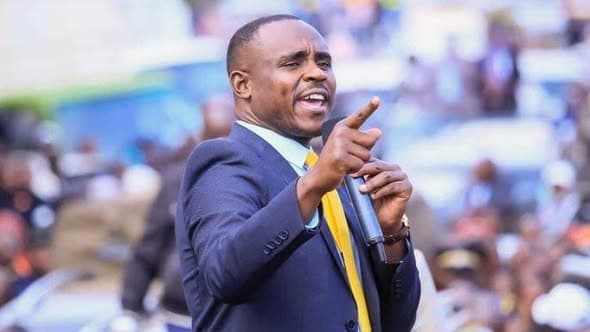
KAKAMEGA — For three years, the origins of the political "Earthquake" that rocked Kenya in January 2022 have been shrouded in the polite fiction of mutual agreement. But on Friday, Cleophas Malala, the firebrand Deputy Party Leader of the newly formed Democracy for Citizens Party (DCP), tore up the script.
Speaking at a homecoming ceremony for Kisa East MCA-elect Aduda Okwiri, Malala offered a rare, surgical dissection of the moment Prime Cabinet Secretary Musalia Mudavadi abandoned his presidential ambitions. The narrative was not one of a statesman making a sacrifice, but of a hesitant leader cornered by cold, hard mathematics.
“I sat Musalia down and asked him the uncomfortable question no one else dared to ask,” Malala told a hushed crowd, his voice cutting through the humid afternoon air. “I asked him, ‘If you run for President, and Raila runs, and Ruto runs, who wins?’ He knew the answer. He knew he would be number three.”
The revelation peels back the curtain on the high-stakes poker game that preceded the Kenya Kwanza alliance. According to Malala, Mudavadi’s initial strategy was not victory, but survival—hoping to force a run-off and auction his support to the highest bidder. Malala, then a rising star in the Amani National Congress (ANC), dismissed this as a fool’s errand.
“Nikamwambia kama wewe utakuwa number 3, jamii yetu itafaidika namna gani? (I told him, if you finish third, how does our community benefit?)” Malala recounted. He described a tense standoff where he bluntly told the veteran politician that a cabinet position negotiated after a loss was a mirage. The only path to power, Malala argued, was a pre-election pact.
This admission is significant. It reframes Malala not merely as a foot soldier, but as the architect of the Western region’s pivot to President William Ruto—a pivot he is now actively working to dismantle as the deputy to former Deputy President Rigathi Gachagua in the opposition-leaning DCP.
The timing of this confession is calculated. By casting himself as the strategic brain behind Mudavadi’s current position, Malala is subtly undermining the Prime Cabinet Secretary’s authority in Western Kenya. The subtext is clear: Mudavadi is in government because Malala did the math, but Malala is in the opposition because he has now done the math again.
“Mimi ndiye niliongea naye akutane na Ruto. Waliongea na tukakubaliana (I am the one who spoke to him to meet Ruto. They spoke and we agreed),” Malala asserted, stripping away the diplomatic veneer that usually surrounds such high-level brokering.
This historical revisionism serves a dual purpose. It elevates Malala’s stature as a kingmaker while simultaneously distancing him from the failures of the current administration. With the cost of living soaring and the shilling trading at volatile rates against the dollar, Malala’s message to the Luhya nation is that he knows when to board a ship—and more importantly, when to jump off.
As the DCP begins its aggressive recruitment drive for the 2027 race, Malala’s "confession" serves as a warning shot to his former boss. The man who claims he built the throne is now threatening to kick out the legs.
Keep the conversation in one place—threads here stay linked to the story and in the forums.
Sign in to start a discussion
Start a conversation about this story and keep it linked here.
Other hot threads
E-sports and Gaming Community in Kenya
Active 9 months ago
The Role of Technology in Modern Agriculture (AgriTech)
Active 9 months ago
Popular Recreational Activities Across Counties
Active 9 months ago
Investing in Youth Sports Development Programs
Active 9 months ago
Key figures and persons of interest featured in this article