We're loading the full news article for you. This includes the article content, images, author information, and related articles.
The Deputy President's ambitious vision, citing China's rapid growth, clashes with the pressing economic realities facing millions of Kenyans, sparking a fierce debate over national priorities.
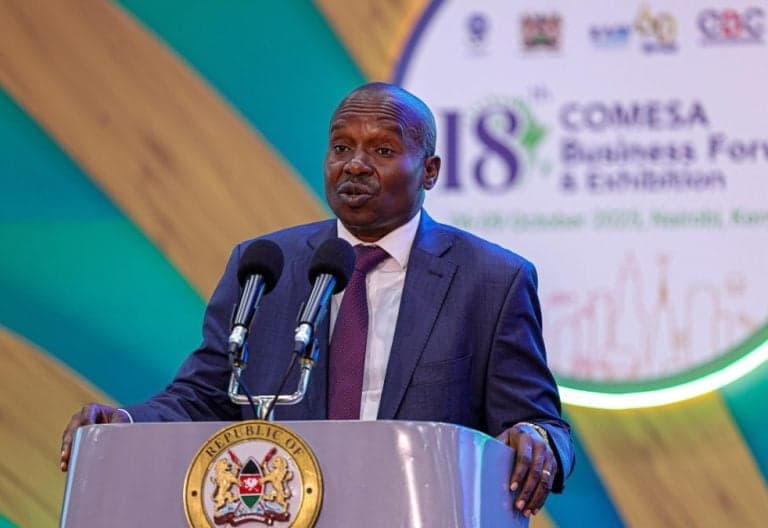
Deputy President Kithure Kindiki has mounted a spirited defense of the government's ambition to transform Kenya into a first-world nation, directly countering a wave of public skepticism. The declaration comes as many Kenyan households grapple with a high cost of living and stagnant incomes.
The debate reignites a fundamental question about Kenya's trajectory: Is the leadership's grand vision aligned with the daily struggles for food, shelter, and employment? For many, the promise of a first-world future feels distant from the immediate pressures of today's economic climate.
In a detailed rebuttal to critics, Kindiki dismissed arguments that comparing Kenya to small city-states like Singapore is unrealistic. Writing on social media platform X, he argued that Kenya's development model is broader, drawing significant inspiration from China's large-scale transformation.
"China, a 9.6 million square kilometre mega country... is almost 17 times larger than Kenya," Kindiki noted. He emphasized that China's journey from a poor, isolated country to a global power in just 40 years proves that size is not a barrier to rapid development. "Kenya will transition to the first world in our lifetime," he affirmed.
This optimistic forecast is set against a backdrop of significant economic headwinds. Analysts and opposition figures warn that such ambitions are disconnected from the nation's reality. Former Deputy President Rigathi Gachagua recently termed a similar pledge as "unrealistic," citing systemic challenges in healthcare, education, and the business environment.
Recent data underscores the financial strain on citizens:
While the government's long-term development plan, Vision 2030, aims to transform Kenya into a newly industrializing, middle-income country, critics argue that deep-seated issues like corruption and inequality must be addressed for any such vision to materialize.
As the administration champions its transformative agenda, the ultimate measure of success for most Kenyans will remain tangible: the ability to afford a decent life, secure a stable job, and build a hopeful future. The bridge between a first-world ambition and the reality on the ground is one that the government is now under immense pressure to build.
Keep the conversation in one place—threads here stay linked to the story and in the forums.
Sign in to start a discussion
Start a conversation about this story and keep it linked here.
Other hot threads
E-sports and Gaming Community in Kenya
Active 9 months ago
The Role of Technology in Modern Agriculture (AgriTech)
Active 9 months ago
Popular Recreational Activities Across Counties
Active 9 months ago
Investing in Youth Sports Development Programs
Active 9 months ago
Key figures and persons of interest featured in this article