We're loading the full news article for you. This includes the article content, images, author information, and related articles.
Kenya is the second-best innovation-ready country in Africa after South Africa, an aspect that is moving investors to East Africas economic powerhouse.
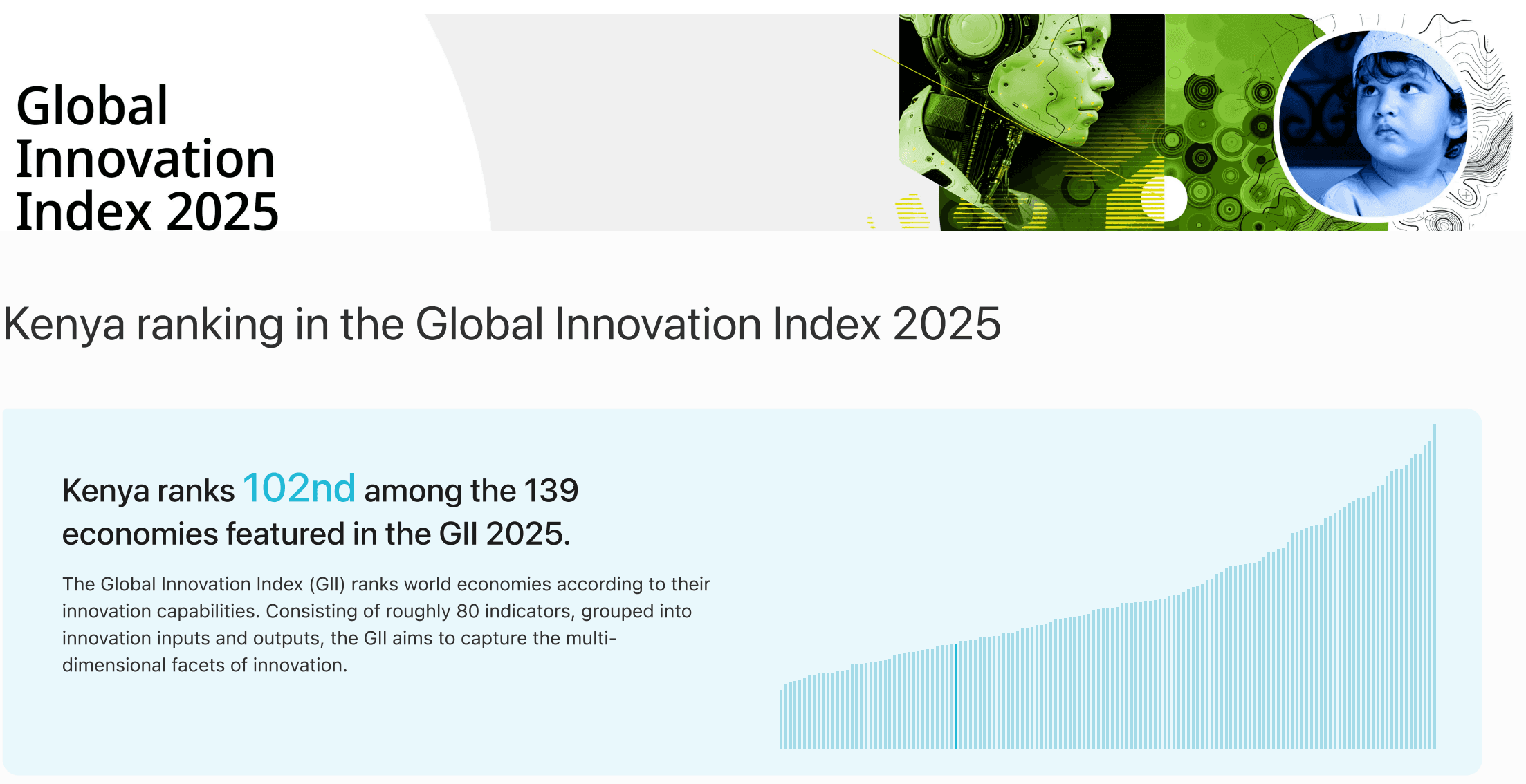
In a resounding testament to the power and resilience of the Silicon Savannah, Kenya has officially been ranked as the second-most innovative country in Africa, according to the newly released 2026 Innovators Business Environment Index (IBEI).
Compiled by the prestigious global research platform StartupBlink, the index awarded Kenya 48 points, placing it 68th globally out of 125 nations. Only South Africa, which scored 52 points to rank 61st globally, placed higher on the continent. This remarkable achievement underscores Nairobi's rapid evolution into a premier destination for global tech investment and entrepreneurial disruption.
For the Kenyan economy, this ranking is more than just a statistical badge of honor; it is a critical economic lever. It signals to international venture capitalists that East Africa's economic powerhouse possesses the structural maturity, talent pool, and digital infrastructure necessary to support high-growth technological enterprises.
The report highlighted Kenya's massive leap in innovation readiness, officially overtaking regional rivals like Nigeria and Egypt who previously dominated ecosystem indices. A total of 25 African countries featured in the global rankings, but Kenya's unparalleled access to capital set it apart.
According to the data, Kenyan startups raised a staggering $1 billion (approximately KES 130 billion) in funding during 2025. This represents the largest amount of capital secured by any single African market since the funding boom of 2022. This capital influx was overwhelmingly driven by sophisticated debt financing into the clean energy sector, healthtech, mobility, and the nation's globally renowned fintech ecosystem.
Kenya's funding landscape witnessed a massive 52 percent year-over-year surge, effectively accounting for almost one-third of the total startup funding raised across the entire African continent last year. This concentration of wealth highlights investor confidence in Kenyan regulatory frameworks and market scalability.
The IBEI report specifically commended the integration of mobile money systems, widespread internet penetration, and a uniquely adaptable consumer base as core drivers of this innovation environment. Startups in Nairobi are not merely copying Western models; they are engineering hyper-localized solutions to complex infrastructural challenges.
Despite the glowing accolades, the StartupBlink report also highlighted persistent structural challenges that require immediate governmental policy attention. Issues such as bureaucratic red tape, inconsistent taxation policies on digital services, and gaps in late-stage growth equity remain hurdles for founders attempting to scale beyond the Series B funding phase.
To dethrone South Africa and claim the absolute top spot, the Kenyan government must accelerate policies that incentivize local angel investors and streamline the integration of tech startups into public sector procurement processes. The foundation has been firmly established; the challenge now lies in optimization.
"Kenya's trajectory is undeniable; it has proven that it is not just participating in the African tech revolution, but actively writing the blueprint for its future," concluded a senior analyst from StartupBlink.
Keep the conversation in one place—threads here stay linked to the story and in the forums.
Sign in to start a discussion
Start a conversation about this story and keep it linked here.
Other hot threads
E-sports and Gaming Community in Kenya
Active 9 months ago
The Role of Technology in Modern Agriculture (AgriTech)
Active 9 months ago
Popular Recreational Activities Across Counties
Active 9 months ago
Investing in Youth Sports Development Programs
Active 9 months ago