We're loading the full news article for you. This includes the article content, images, author information, and related articles.
The government has hinted at plans to formally recognise waste pickers working in dumpsites as part of efforts to improve waste management and worker welfare.
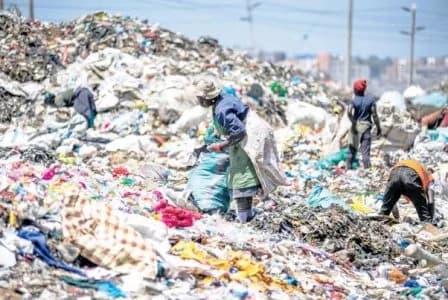
By the first light of dawn, thousands of men, women, and children are already navigating the smoldering, shifting terrain of the Dandora dumpsite. In the haze of burning plastic and decomposing organic matter, these individuals perform one of the most critical, yet historically invisible, tasks in the Kenyan economy: the extraction of recyclable materials from the country's mountains of refuse. A seismic shift in government policy now promises to drag this clandestine workforce from the shadows and into the formal economy, fundamentally altering how Kenya manages its waste and treats its most vulnerable laborers.
The government’s new commitment to recognize and formalize waste pickers is not merely a labor reform it is a vital pillar of the nation’s transition to a circular economy. As Kenya grapples with rapid urbanization and a ballooning waste crisis, policymakers have realized that the informal sector is not the problem, but the primary solution. This move, rooted in the implementation of the Sustainable Waste Management Act of 2022, seeks to integrate these workers into a structured system that guarantees occupational safety, fair remuneration, and institutional support. For the thousands of families whose livelihoods depend on the scraps of Nairobi and beyond, this represents a historic pivot from marginalization to legal standing.
For decades, waste pickers have functioned as the de facto waste management system for much of Kenya. While municipalities struggled with collection and disposal, this informal workforce diverted thousands of tons of plastic, metal, and glass from landfills every single day. Economists estimate that the informal waste sector contributes significantly to the national GDP by feeding raw materials into the manufacturing chain, effectively acting as an uncompensated environmental service.
Despite this massive economic contribution, the sector has long been plagued by exploitation and volatility. Middlemen often dictate prices, leaving the actual pickers with meager earnings that barely cover basic subsistence. The government’s formalization plan aims to dismantle these predatory structures by fostering cooperative movements. By organizing into formal groups, waste pickers can negotiate directly with off-takers and recycling companies, ensuring they receive market-aligned prices for the materials they collect.
The human cost of the status quo at sites like Dandora has been catastrophic. Occupational health data consistently points to high rates of respiratory infections, skin diseases, and chronic conditions among dumpsite workers due to prolonged exposure to dioxins, furans, and toxic particulate matter. For years, these dangers were treated as an unavoidable externality of survival.
Public health experts at the University of Nairobi have long warned that the lack of protective infrastructure at major dumpsites creates a localized health crisis that spills over into surrounding communities. The government’s new directive acknowledges this reality, shifting the responsibility from the individual worker to the state and private stakeholders. By formalizing these workers, the state commits to implementing site-specific health protocols, regular medical screenings, and the installation of basic sanitation facilities—a significant departure from the policy of neglect that has characterized the sector for decades.
This policy change arrives as Kenya aggressively implements Extended Producer Responsibility (EPR) regulations. Under this framework, companies that produce waste—particularly plastic packaging—are now legally required to take responsibility for its lifecycle. The integration of waste pickers is crucial to the success of these EPR schemes. Without the informal sector’s collection networks, the cost of implementing these recycling mandates for corporations would be exponentially higher.
By professionalizing the workforce, the government is creating a bridge between informal collection and formal processing plants. This synergy is expected to boost Kenya’s recycling rate, which currently lags behind national targets. The involvement of waste pickers provides the missing link in the supply chain, ensuring that high-quality recyclables are recovered efficiently before they are contaminated in the general waste stream.
Kenya is not the first nation to realize the necessity of this integration. The global move toward circularity has seen success stories in other emerging economies that provide a blueprint for the Nairobi administration. In cities like Bogotá, Colombia, and Pune, India, the formalization of waste pickers through municipal contracts and cooperatives has transformed waste management into a sustainable industry. In these jurisdictions, waste pickers are no longer scavengers, but employees with dignity, uniforms, and social benefits.
The challenge for Kenya will be execution. While the policy intent is clear, the transition from paper to practice requires political will and sustained funding. Critics argue that without strict enforcement of the EPR regulations and continued support for cooperative formations, these announcements risk becoming hollow political gestures. The government must ensure that the formalization process does not lead to the monopolization of waste collection by private entities that might exclude the very pickers it intends to support.
As the government prepares to roll out these registration and support frameworks, the eyes of the nation remain on the dusty paths of Dandora. The true test of this policy will not be found in legislative documents, but in the bank accounts and health records of the workers who have kept Kenya clean for decades. It is a long-overdue acknowledgement that in the fight for a sustainable future, the people who work at the bottom of the waste chain are, in fact, the industry’s most essential workers.
Keep the conversation in one place—threads here stay linked to the story and in the forums.
Sign in to start a discussion
Start a conversation about this story and keep it linked here.
Other hot threads
E-sports and Gaming Community in Kenya
Active 9 months ago
The Role of Technology in Modern Agriculture (AgriTech)
Active 9 months ago
Popular Recreational Activities Across Counties
Active 9 months ago
Investing in Youth Sports Development Programs
Active 9 months ago