We're loading the full news article for you. This includes the article content, images, author information, and related articles.
A landmark five-year agreement shifts billions from international NGOs to the national treasury, a major test of the new ‘America First’ foreign aid model after a year of chaotic funding cuts.
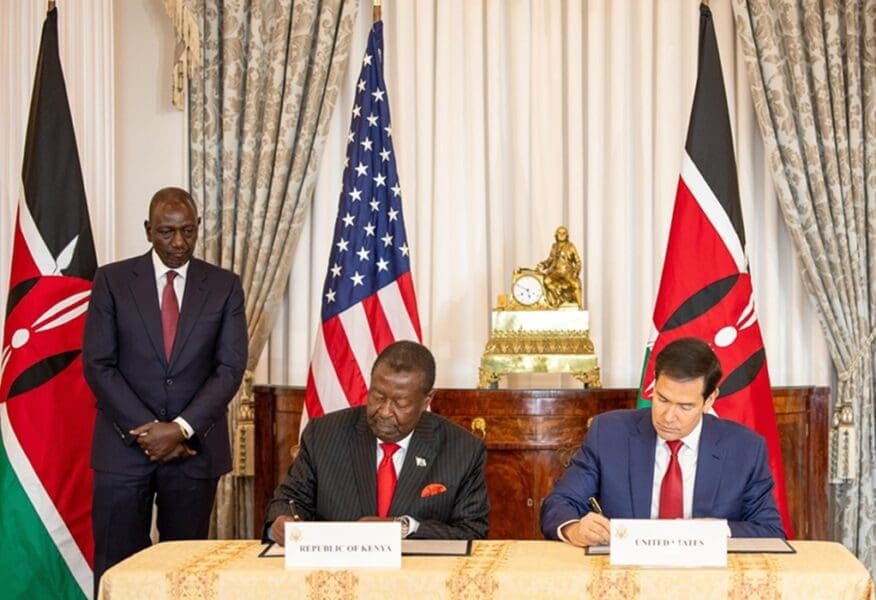
Kenya and the United States have signed a historic KES 325 billion ($2.5 billion) health agreement that fundamentally overhauls how American aid is delivered, moving funds directly to the Kenyan government instead of through international NGOs.
This five-year pact is the first of its kind under the new “America First Global Health Strategy” and represents a high-stakes pivot for Kenya’s health sector. The deal follows a tumultuous year that saw the abrupt dismantling of USAID and sweeping funding freezes that severely disrupted essential health services across the country.
Under the agreement, the U.S. will contribute approximately KES 220 billion ($1.7 billion), while Kenya will co-invest KES 110 billion ($850 million). The funds are earmarked to combat HIV/AIDS, malaria, and tuberculosis, as well as to bolster the country's emergency preparedness and national surveillance systems.
The new model intends to cut out intermediary NGOs, a move the U.S. State Department argues will reduce waste, end a “culture of dependency,” and build sustainable, self-reliant national health systems. Proponents suggest that by funding Kenyan institutions like KEMSA and the Ministry of Health directly, the money will more efficiently reach frontline clinics and healthcare workers.
This strategic shift is a core tenet of the America First strategy, which prioritizes bilateral agreements and co-investment from recipient nations. The goal is to have countries take over key functions and reduce long-term reliance on foreign assistance.
The deal comes after a period of intense uncertainty for Kenya's health system. An executive order in January 2025 paused most U.S. foreign assistance, leading to the eventual dismantling of USAID. This triggered what one report described as a system “folding in on itself,” with devastating consequences.
NGOs and health workers reported severe disruptions earlier in the year:
While the new agreement promises stability, it also places immense pressure on Kenya’s public financial management systems. Concerns about corruption and weak accounting procedures have historically been a challenge, with some donors withdrawing funds in the past. Success will depend on robust accountability to ensure the direct funding translates into better health outcomes for Kenyans.
As part of the deal, Kenya has committed to progressively increasing its own health budget and absorbing thousands of U.S.-funded health workers by 2028, a significant step toward the self-reliance envisioned by the new American strategy.
Keep the conversation in one place—threads here stay linked to the story and in the forums.
Sign in to start a discussion
Start a conversation about this story and keep it linked here.
Other hot threads
E-sports and Gaming Community in Kenya
Active 9 months ago
The Role of Technology in Modern Agriculture (AgriTech)
Active 9 months ago
Popular Recreational Activities Across Counties
Active 9 months ago
Investing in Youth Sports Development Programs
Active 9 months ago



