We're loading the full news article for you. This includes the article content, images, author information, and related articles.
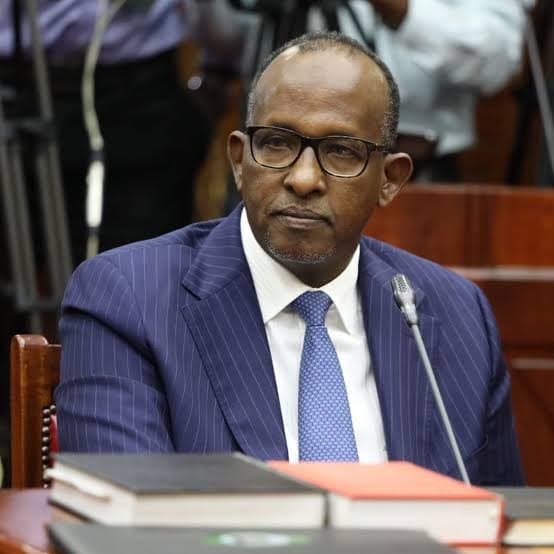
Health Cabinet Secretary Aden Duale issues a stern warning, declaring the Social Health Authority will not process payments for county doctors neglecting public duties for private clinics.

Health Cabinet Secretary Aden Duale issues a stern warning, declaring the Social Health Authority will not process payments for county doctors neglecting public duties for private clinics.
The Kenyan government has drawn a hard line against the pervasive culture of medical moonlighting. Doctors abandoning public hospitals for private gain are facing a severe financial crackdown.
For millions of Kenyans relying on public healthcare, absenteeism by specialists has been a fatal flaw in the system. This new directive is a bold, controversial attempt to enforce accountability and salvage the transition to universal health coverage.
Health Cabinet Secretary Aden Duale has escalated the war on healthcare inefficiency by targeting the wallets of rogue practitioners. In a sweeping policy directive, Duale announced that the newly established Social Health Authority (SHA) will definitively block any financial disbursements to doctors employed by county governments who are found serving private patients during their stipulated official working hours. This aggressive move aims to cure the chronic absenteeism that plagues public medical facilities, where patients frequently wait for hours, only to be redirected to the very same doctors' private clinics.
The practice of "moonlighting"—where public servants run parallel private enterprises—has deeply compromised Kenya's healthcare delivery. While doctors argue that poor remuneration and delayed salaries force them into private practice to survive, the government maintains that the ethical breach is unacceptable. CS Duale's approach strikes at the core of the issue: funding. By leveraging the SHA, which has replaced the National Health Insurance Fund (NHIF) as the primary purchaser of healthcare services, the state wields immense financial leverage over medical practitioners.
The mechanics of the crackdown will involve strict biometric monitoring at public hospitals, cross-referenced with SHA claims originating from private facilities. If a doctor is logged as being on duty at a county hospital but submits a claim for a procedure performed simultaneously at a private clinic, the SHA will flag the transaction, withhold the payment, and initiate disciplinary proceedings.
This data-driven approach is expected to expose the massive fraud that drained billions of shillings from the defunct NHIF, where ghost clinics and double-billing were rampant.
The directive has predictably sparked outrage from the Kenya Medical Practitioners, Pharmacists and Dentists Union (KMPDU). The union argues that the government is treating the symptoms rather than the disease. They highlight the severe understaffing in county hospitals, lack of essential medical supplies, and the frequent failure of county governments to remit statutory deductions or pay salaries on time.
The KMPDU has warned that the policy might backfire, leading to a mass exodus of highly specialized consultants from the public sector entirely, further crippling the ability of county hospitals to handle complex cases.
The success of the Social Health Authority depends entirely on its ability to manage funds prudently and ensure quality service delivery. CS Duale's directive is a critical stress test for the new authority's operational capabilities. Can the SHA integrate its systems with the 47 county governments seamlessly enough to track thousands of doctors in real-time?
Furthermore, the legal framework surrounding a doctor's right to private practice outside of official hours remains contentious. The government must ensure that its enforcement mechanisms do not violate labor laws or unfairly penalize doctors who manage their time legitimately.
Ultimately, the battle lines are drawn. The government is demanding total commitment to the public sector, while doctors are demanding functional hospitals and fair compensation. The patients, as always, are caught in the crossfire.
"A robust healthcare system cannot be built on the divided attention of its healers; the public purse will no longer subsidize private profit."
Keep the conversation in one place—threads here stay linked to the story and in the forums.
Sign in to start a discussion
Start a conversation about this story and keep it linked here.
Other hot threads
E-sports and Gaming Community in Kenya
Active 9 months ago
The Role of Technology in Modern Agriculture (AgriTech)
Active 9 months ago
Popular Recreational Activities Across Counties
Active 9 months ago
Investing in Youth Sports Development Programs
Active 9 months ago
Key figures and persons of interest featured in this article