We're loading the full news article for you. This includes the article content, images, author information, and related articles.
In response to escalating road fatalities and a staggering Sh450 billion annual economic cost, Kenya has launched an ambitious five-year plan to halve traffic deaths by 2028, targeting the nation's most notorious accident black spots.
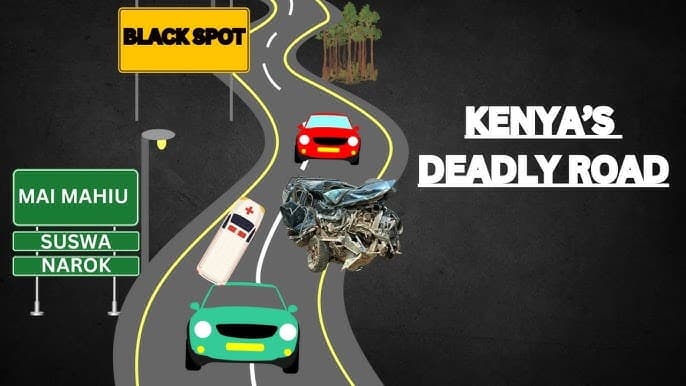
NAIROBI, Kenya - Kenya has launched a comprehensive five-year plan to combat the escalating crisis of road traffic fatalities, with a particular focus on notorious accident black spots that have claimed hundreds of lives. The "National Road Safety Action Plan 2024-2028," unveiled by the National Transport and Safety Authority (NTSA) and the Ministry of Roads and Transport, aims to halve road deaths and serious injuries by 2028 through a multi-pronged approach of enhanced enforcement, infrastructure redesign, and public awareness campaigns. This initiative comes as the country grapples with a staggering economic cost of Sh450 billion annually due to road carnage, equivalent to three percent of its Gross Domestic Product.
The urgency of the new plan is underscored by the latest statistics from the NTSA. In the 2024/2025 financial year (from June 2024 to March 2025), a total of 3,581 people lost their lives in road accidents, a 10 percent increase from the previous period. The first nine months of 2025 alone saw 3,397 fatalities, with pedestrians, motorcyclists, and passengers being the most vulnerable groups.
Investigative analysis of NTSA data and police reports reveals a harrowing map of high-risk corridors across the nation. The Nairobi-Nakuru-Eldoret highway has earned the grim moniker "highway to hell," with several sections identified as catastrophic black spots.
Key black spots on this highway include:
In the Nairobi metropolitan area, several major roads have been identified as particularly lethal. The Thika Superhighway, Outering Road, and Kangundo Road are among the most dangerous, with a high number of pedestrian deaths attributed to the failure to use footbridges. Between January and April 2024, Thika Superhighway recorded 13 fatalities, while Outering and Kangundo Roads each saw 12 deaths. Other high-risk roads in the capital include Waiyaki Way, Mombasa Road, and the Northern and Southern Bypasses.
The Nithi Bridge on the Meru-Embu road is another infamous black spot that has claimed numerous lives since its construction.
The National Road Safety Action Plan 2024-2028, launched on April 17, 2024, by President William Ruto, represents a significant shift from previous strategies by integrating road design and safety as core components. The plan is a collaborative effort involving the Ministry of Roads and Transport, the NTSA, iRAP (the International Road Assessment Programme), county governments, and international partners.
Key pillars of the action plan include:
Despite the comprehensive nature of the new action plan, experts and road safety advocates point to significant challenges that could impede its success. These include:
The success of the National Road Safety Action Plan 2024-2028 will ultimately depend on the sustained political will to implement its provisions rigorously, tackle corruption within enforcement agencies, and secure adequate funding. For the Kenyan public, the hope is that this new strategy will finally turn the tide against the daily carnage on the country's roads and make journeys safer for all.
---
FURTHER INVESTIGATION REQUIRED: While the new action plan has been launched, its on-the-ground implementation and effectiveness in reducing accidents at specific black spots will require continuous monitoring and reporting. The tangible impact of the newly installed speed cameras and the reintroduction of breathalyzers will be a key area for future journalistic scrutiny.
Keep the conversation in one place—threads here stay linked to the story and in the forums.
Sign in to start a discussion
Start a conversation about this story and keep it linked here.
Other hot threads
E-sports and Gaming Community in Kenya
Active 9 months ago
The Role of Technology in Modern Agriculture (AgriTech)
Active 9 months ago
Popular Recreational Activities Across Counties
Active 9 months ago
Investing in Youth Sports Development Programs
Active 9 months ago