We're loading the full news article for you. This includes the article content, images, author information, and related articles.
The Kenya National Highways Authority (KeNHA) has escalated its infrastructure clearance campaign, issuing a stern seven-day ultimatum to roadside traders along the Thika Superhighway.
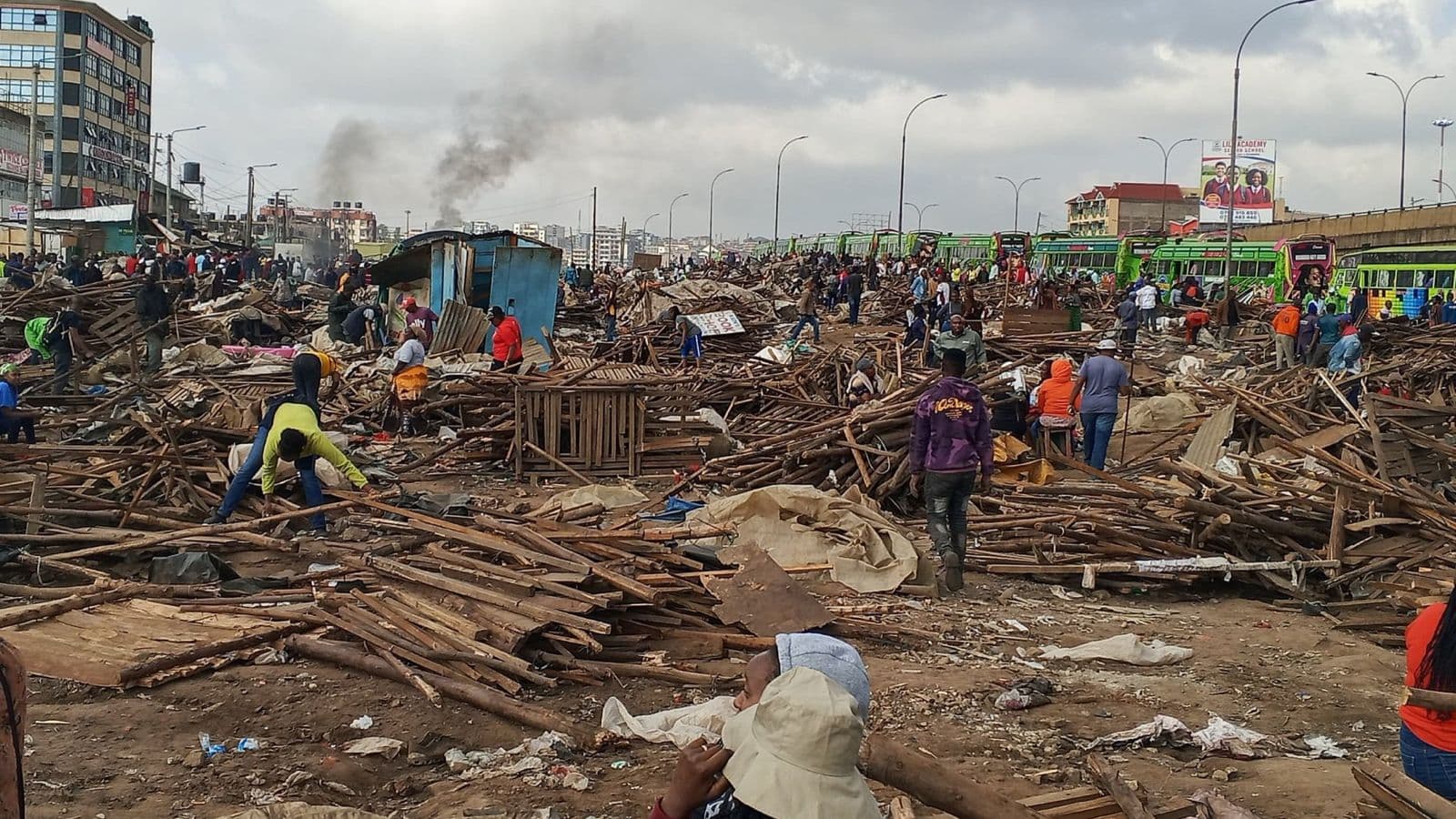
The Kenya National Highways Authority (KeNHA) has intensified its enforcement operations along the Thika Superhighway, issuing a seven-day ultimatum to roadside traders to vacate designated road reserves. The directive has triggered widespread protests, legal action, and a broader national conversation on the cost of urban development in one of East Africa’s fastest-growing cities.
Tensions escalated on the night of February 18, 2026, when KeNHA enforcement teams—accompanied by security personnel and heavy machinery—moved into Githurai 45 under floodlights, demolishing rows of informal structures. The operation followed a February 9 notice targeting traders operating in Roysambu and Githurai, instructing them to vacate within seven days.
For many traders, the demolition was abrupt and devastating. Makeshift kiosks, wooden stalls, and small businesses were flattened within hours, leaving little time to salvage goods. By dawn, hundreds had lost their primary source of income.
The response was immediate. Traders and residents barricaded sections of the Nairobi-bound lanes, lighting bonfires and clashing with anti-riot police. Traffic along the Thika Superhighway—one of the region’s busiest transport corridors—ground to a halt, exposing the volatility of the situation.
KeNHA maintains that the operation is part of a broader infrastructure upgrade aimed at improving safety and efficiency along the superhighway. According to the authority, clearing road reserves will enable:
Construction of designated bus bays to eliminate illegal public service vehicle (PSV) stops
Expansion of service lanes to ease congestion into Nairobi
Restoration of pedestrian walkways to reduce roadside accidents
From a planning perspective, these interventions align with Nairobi’s long-term mobility goals. However, for thousands operating within the informal economy, the move represents an existential threat.
Traders argue that the evictions were executed without adequate consultation, compensation, or resettlement planning. Some have also raised suspicions about the ultimate use of the cleared land, alleging that commercial interests may be driving the exercise.
“This is where we earn our daily bread,” said Grace Wanjiru, one of the affected traders. “We were given notice, but no alternative. Development should not mean displacement without dignity.”
The crackdown has now entered the courts. Lawyer and political aspirant Phyllis Wangui has filed a case seeking to halt further demolitions, representing more than 1,600 traders associated with the New Jubilee Market. The petition argues that the evictions violate constitutional protections, particularly the right to livelihood, in the absence of a clear relocation or compensation framework.
The unfolding crisis places the government in a delicate position. President William Ruto’s administration rose to power on a platform centered around empowering the informal sector—popularly framed as the “hustler” economy. The current evictions risk undermining that narrative, exposing a tension between large-scale infrastructure ambitions and grassroots economic realities.
What is happening along the Thika Superhighway reflects a broader regional challenge. Cities such as Kampala and Dar es Salaam are undergoing similar transitions, where rapid urbanization collides with deeply entrenched informal economies.
Urban planners across East Africa face a shared dilemma: how to modernize transport systems and public infrastructure without marginalizing the very populations that sustain urban life.
The Githurai evictions offer a stark reminder that infrastructure development, if not inclusively designed, can carry significant social costs—fueling unrest, deepening inequality, and eroding public trust.
As enforcement operations continue and legal proceedings unfold, thousands of livelihoods remain uncertain. The events raise a critical question for Nairobi’s future:
Can the city achieve world-class infrastructure while preserving the economic fabric that supports millions?
For traders like Wanjiku, the answer lies not in resistance to development, but in how it is executed. “We are not against progress,” she said. “But it must involve us, not erase us.”
Keep the conversation in one place—threads here stay linked to the story and in the forums.
Sign in to start a discussion
Start a conversation about this story and keep it linked here.
Other hot threads
E-sports and Gaming Community in Kenya
Active 9 months ago
The Role of Technology in Modern Agriculture (AgriTech)
Active 9 months ago
Popular Recreational Activities Across Counties
Active 9 months ago
Investing in Youth Sports Development Programs
Active 9 months ago