We're loading the full news article for you. This includes the article content, images, author information, and related articles.
Prime Minister Nchemba’s inspection of Kasanga Port underscores Tanzania’s aggressive strategy to dominate regional logistics on the Great Lakes corridor.

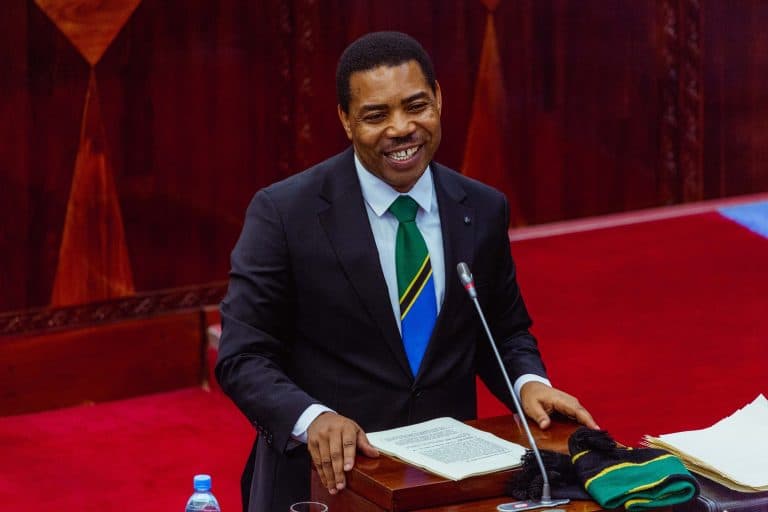
Dr. Mwigulu Nchemba stood on the newly reinforced jetty at Kasanga Port this morning, observing the rhythmic lap of Lake Tanganyika against the concrete structure that defines Tanzania's latest push for regional logistics dominance. The visit, serving as a tactical inspection of the facility in Kalambo District, underscores a broader, aggressive strategy to funnel trade through the Central Corridor, effectively positioning this remote lakeside infrastructure as a linchpin for international commerce.
This inspection acts as a vital pulse-check on the operational capacity of Tanzania's maritime infrastructure. By strengthening the port’s capacity and warehousing, Dar es Salaam is positioning itself to capture a larger share of the heavy logistics traffic destined for the Democratic Republic of Congo, Zambia, and Burundi. For regional observers and market analysts, this development represents a significant pivot in East African trade dynamics, challenging existing cargo flows and intensifying the competition for logistics supremacy between Tanzania and its northern neighbor, Kenya.
The infrastructure upgrade at Kasanga is far from cosmetic. The project, realized through the Tanzania Ports Authority, fundamentally changes the port’s utility. By extending the jetty from a restrictive 20 meters to a robust 120 meters—supported by a depth of 14 meters—the port can now accommodate larger vessels that were previously unable to berth. This engineering feat, completed at a cost of approximately 4.7 billion Tanzanian Shillings (equivalent to roughly KES 249 million), is designed to turn a localized landing site into a high-capacity logistics hub.
Beyond the jetty, the construction of a terminal building capable of handling 200 passengers simultaneously, paired with two specialized warehouses, indicates a long-term commitment to multi-modal logistics. Each warehouse offers a capacity of 2,500 tonnes, providing critical storage for the region's agricultural output. For farmers in the Rukwa region, this infrastructure is a potential game-changer, reducing post-harvest losses and streamlining the transport of maize, rice, and maize flour (sembe) to hungry markets across the lake.
While the investment is substantial, the current throughput data reveals a facility that is only beginning to wake up. Between July 2023 and December 2025, the port facilitated the following traffic:
Economists tracking the region suggest that these figures represent a baseline rather than a ceiling. The bottleneck has historically been not the port itself, but the lack of integrated road networks connecting the port to the wider agricultural heartlands of Southern Tanzania. The recent launch of the 107.14 km Sumbawanga-Matai-Kasanga Port Road is the missing link that finally connects the production zones to the maritime gateway. Without this road, the port warehouses would have remained empty monuments to government ambition with it, the facility can begin to act as a genuine export terminal.
The expansion of Kasanga Port cannot be viewed in isolation from the broader East African Community (EAC) trade wars. Kenya’s Mombasa port and the Northern Corridor have historically dominated the transit trade into the Great Lakes region. However, Tanzania’s persistent investment in the Central Corridor—incorporating rail, road, and now upgraded lake ports—is a direct challenge to the supremacy of the northern route.
Logistics firms operating in the region note that importers and exporters in the eastern DR Congo are increasingly weighing the costs of the Northern Corridor against the Central Corridor. While the Northern Corridor offers established road networks and efficiency, the Central Corridor offers shorter transit distances for goods moving into the southern and western parts of the Congo. Kasanga Port is the crucial interface for this transit as the port increases its operational efficiency, the total cost of landed goods in Lubumbashi or Bujumbura decreases, potentially shifting traditional trade volumes away from Kenyan transit hubs.
The success of Kasanga will ultimately depend on more than concrete and steel. It requires a sustained commitment to port management efficiency and the regulatory harmonization of cross-border trade. Stakeholders are watching closely to see if the administrative processes at the port—customs clearance, phytosanitary inspections, and weighbridge procedures—can match the speed of the physical infrastructure.
For the residents of the Rukwa region, the stakes extend beyond macroeconomics. The port is an employer and a market. As operations scale, the demand for local labour, logistics support services, and hospitality infrastructure will surge. The transformation of Kasanga from a quiet landing point into a bustling port authority jurisdiction offers a template for how Tanzania aims to leverage its geography to drive rural economic development. Whether these investments will yield the expected return on capital remains the question that will define the success of this infrastructure project over the coming decade.
As Dr. Nchemba concluded his inspection, the message to regional stakeholders was clear: the gateway is open, and the competition for the Great Lakes market has officially intensified.
Keep the conversation in one place—threads here stay linked to the story and in the forums.
Sign in to start a discussion
Start a conversation about this story and keep it linked here.
Other hot threads
E-sports and Gaming Community in Kenya
Active 9 months ago
The Role of Technology in Modern Agriculture (AgriTech)
Active 9 months ago
Popular Recreational Activities Across Counties
Active 9 months ago
Investing in Youth Sports Development Programs
Active 9 months ago
Key figures and persons of interest featured in this article