We're loading the full news article for you. This includes the article content, images, author information, and related articles.
Harry Kane praises manager Vincent Kompany’s tactical revolution at Bayern Munich, as the German giants push for a historic treble this season.

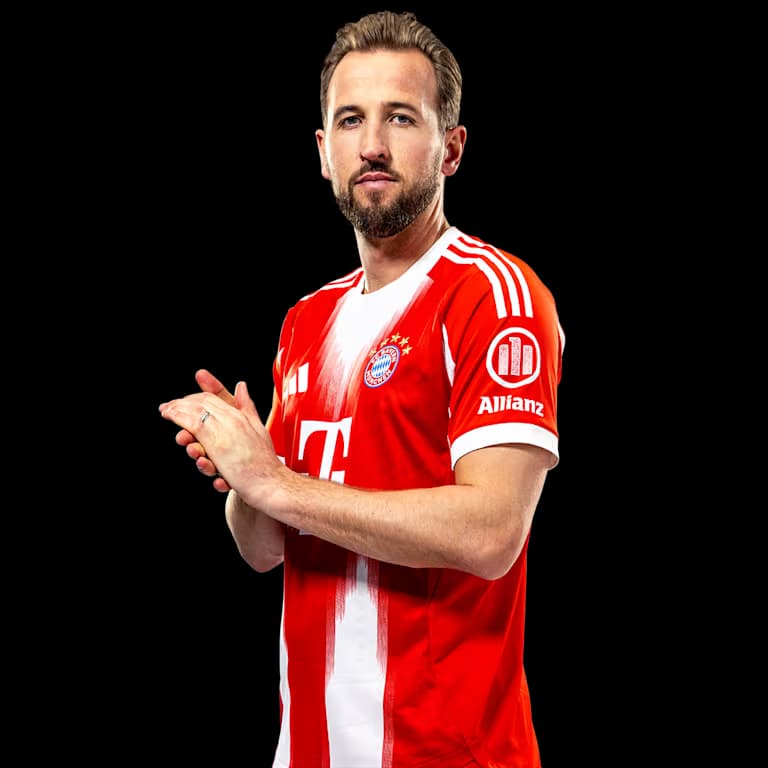
The heavy, suffocating pressure that has defined Bayern Munich’s recent seasons has evaporated, replaced by a clinical, high-intensity rhythm that is rewriting the club’s DNA. At the center of this transformation stands Harry Kane, the England captain who has found not just his scoring touch, but a new lease of professional life under the stewardship of head coach Vincent Kompany.
This shift is not merely a matter of improved results it represents a fundamental overhaul of how the Bavarian giants approach the game. As the club enters the business end of the 2026 season, with a historic treble firmly in their sights, the partnership between Kompany’s tactical rigidity and Kane’s individual brilliance has become the most compelling story in European football. For fans across the globe, from the pubs of Munich to the passionate viewing centers in Nairobi, the question is no longer whether Bayern will compete, but whether any opponent can match their current, relentless trajectory.
When Vincent Kompany arrived in Munich, skeptics questioned whether his philosophy—rooted in possession-based dominance and aggressive pressing—would translate to a squad that had grown accustomed to a more fluid, sometimes chaotic, style of play. The transition was far from immediate. In the early months of the season, the defense looked exposed, and the transition from attack to defense felt disjointed. However, data from the current Bundesliga season reveals a marked improvement in defensive stability and ball recovery times.
Kompany has enforced a structure that demands total discipline. His system prioritizes the vertical movement of the ball, forcing opponents into errors deep in their own half. This is a departure from the previous reliance on individual wingers to create something out of nothing. The modern Bayern is a machine that relies on collective movement, where the positioning of the fullbacks dictates the shape of the attack. It is a demanding, exhausting style, but one that has yielded a level of consistency not seen in the Allianz Arena for several years.
Harry Kane has been the primary beneficiary of this evolution. Freed from the burden of deep-lying playmaking, Kane has been repositioned as the apex of the team’s spearhead. Statistics from the current campaign illustrate a player operating at the peak of his powers:
Kane describes this evolution as a return to the basics of elite football. In recent post-match commentary, he noted that the structure allows him to focus on movement inside the box, rather than chasing the game in the midfield. It is a symbiotic relationship: Kompany provides the framework, and Kane provides the clinical execution required to convert tactical dominance into tangible victories.
With the Bundesliga title race nearing its conclusion and deep runs in both the DFB-Pokal and the UEFA Champions League, the possibility of a treble is no longer a distant dream but a statistical reality. The challenge for Kompany now is managing player fatigue. European football in 2026 is played at a breakneck speed, and the depth of the squad will be tested in the coming weeks.
Historically, Bayern has struggled to maintain intensity across three competitions simultaneously. However, the current medical and sports science data suggests a lower injury rate than the previous three seasons. This is largely attributed to Kompany’s rotation policy, which has seen fringe players given significant minutes, keeping the core squad fresh for high-stakes matches. The psychological impact of this rotation is palpable players who might otherwise feel marginalized are integrated into the match-day rhythm, fostering a collective belief that every member of the squad has a role to play in the pursuit of silverware.
The success of the Kompany-Kane dynamic resonates far beyond the borders of Germany. In markets like Kenya, where interest in European football remains unparalleled, the story serves as a case study in leadership and adaptation. Amateur coaches and youth academies in Nairobi and beyond often struggle with the balance between individual talent and tactical structure. The Bayern model demonstrates that even the most talented individuals—like a world-class striker such as Kane—must align with a broader tactical philosophy to achieve consistent success at the highest level.
Moreover, the rise of African coaches in elite European management, embodied by Kompany’s journey, provides a powerful narrative for aspiring tacticians across the continent. It challenges outdated perceptions of what a manager from an African background can achieve in the highest echelons of global sport. The technical discipline instilled by Kompany is now being studied by analysts worldwide, offering a blueprint for how a disjointed team can be rebuilt into a title-contending unit through rigorous attention to detail and unwavering adherence to a singular vision.
As the final months of the season approach, the pressure will only intensify. The treble chase is a gauntlet that has claimed many great managers and squads before. Whether Bayern Munich secures the trifecta of trophies or ends the season with empty hands, the evolution of the team under Kompany has already shifted the landscape of European football. For now, the machine remains in motion, and the world is watching to see if this revolution holds until the final whistle.
Keep the conversation in one place—threads here stay linked to the story and in the forums.
Sign in to start a discussion
Start a conversation about this story and keep it linked here.
Other hot threads
E-sports and Gaming Community in Kenya
Active 10 months ago
The Role of Technology in Modern Agriculture (AgriTech)
Active 10 months ago
Popular Recreational Activities Across Counties
Active 10 months ago
Investing in Youth Sports Development Programs
Active 10 months ago
Key figures and persons of interest featured in this article