We're loading the full news article for you. This includes the article content, images, author information, and related articles.
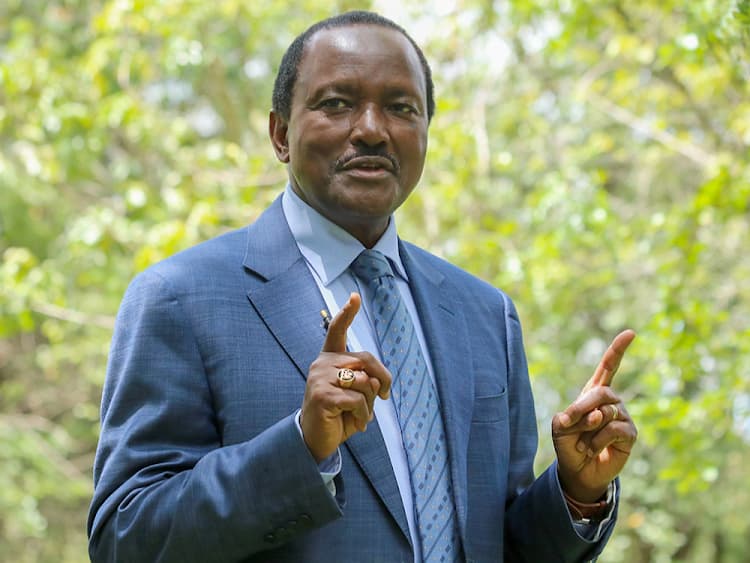
Wiper leader Kalonzo Musyoka has accused senior state officials of widespread interference in recent by-elections, announcing a formidable legal challenge to contest results in Mbeere North and Malava constituencies.

Wiper Leader Kalonzo Musyoka has leveled grave accusations against the government, alleging a coordinated scheme of state interference marred the November 27th by-elections. Speaking in Machakos County, Musyoka declared the opposition's intent to file a robust legal petition to challenge the outcomes in Mbeere North and Malava constituencies, asserting the results do not reflect the people's will.
The allegations strike at the heart of Kenya's democratic process, coming at a time when public trust in key institutions is waning. With many households already squeezed by rising food and transport costs, the controversy raises critical questions about electoral integrity and its impact on the nation's governance and stability. The dispute sets the stage for a high-stakes legal and political battle, testing the resilience of the judiciary and the electoral commission ahead of the 2027 general elections.
The opposition's claims are specific and serious. Musyoka alleged that President William Ruto personally telephoned a local police commander in Mbeere North to sway the vote in favour of the United Democratic Alliance (UDA) candidate, Leo Wamuthende. "William Ruto knows that UDA did not win in Mbeere and UDA did not win in Malava," Kalonzo stated, adding that the coalition possesses evidence of this "direct interference." The planned petition will reportedly name specific Cabinet Secretaries and public servants who allegedly misused their positions during the campaigns.
These accusations follow a tense campaign period where the opposition repeatedly warned of a plot to compromise the vote. Claims included the improper serialization of ballot papers, creating loopholes for ballot stuffing, and the deployment of state resources and security apparatus to intimidate voters and opposition agents. In Malava, the contest was particularly fierce, with DAP-K candidate Seth Panyako also rejecting the results after UDA's David Ndakwa was declared the winner, alleging his victory was stolen across 54 polling stations.
The Independent Electoral and Boundaries Commission (IEBC) has found itself in the crossfire. While the commission dismissed generalized claims of ballot stuffing as 'misleading and inaccurate' before the vote, its response has been described by Musyoka as "weak and insufficient." The Law Society of Kenya (LSK) also weighed in, condemning the violence and "worrying level of ill-preparedness" by electoral stakeholders, urging prompt investigations and prosecutions.
Independent observers have presented a mixed but concerning picture. The Election Observation Group (ELOG) noted in a preliminary report that while 93.4% of polling stations observed had good or very good conduct, significant issues were present. These included:
These findings, coupled with a low voter turnout that dipped below 50% in many areas, paint a complex picture of the electoral environment.
These electoral disputes do not occur in a vacuum. For the average Kenyan, the integrity of an election is directly linked to their future economic well-being. Recent data from the Kenya National Bureau of Statistics (KNBS) shows that the cost of living remains a primary concern, with prices for food and transport rising by 7.7% and 5.1% respectively over the past year. This economic pressure is compounded by a documented decline in public trust. An Afrobarometer survey from May 2024 revealed that only 45% of Kenyans trust the President, and a mere 36% trust the IEBC. Similarly, the 2025 Edelman Trust Barometer found that trust in the government had fallen to 38%, with a staggering 80% of Kenyans worried that government leaders intentionally mislead the public.
President Ruto has dismissed the opposition's stance, hailing the by-election victories as a sign that Kenyans are focused on a development agenda rather than divisive politics. However, with the opposition preparing its legal arsenal and observer groups flagging systemic gaps, the controversy over the November polls is far from over. As the nation watches, the ultimate verdict will rest not just on court rulings, but on whether faith in Kenya's democratic process can be restored.
Keep the conversation in one place—threads here stay linked to the story and in the forums.
Sign in to start a discussion
Start a conversation about this story and keep it linked here.
Other hot threads
E-sports and Gaming Community in Kenya
Active 9 months ago
The Role of Technology in Modern Agriculture (AgriTech)
Active 9 months ago
Popular Recreational Activities Across Counties
Active 9 months ago
Investing in Youth Sports Development Programs
Active 9 months ago
Key figures and persons of interest featured in this article