We're loading the full news article for you. This includes the article content, images, author information, and related articles.
In a ceremony presided over by Donald Trump, the leaders of Rwanda and the Democratic Republic of Congo signed the 'Washington Accord,' a historic pact aimed at ending decades of bloodshed in the Great Lakes region.
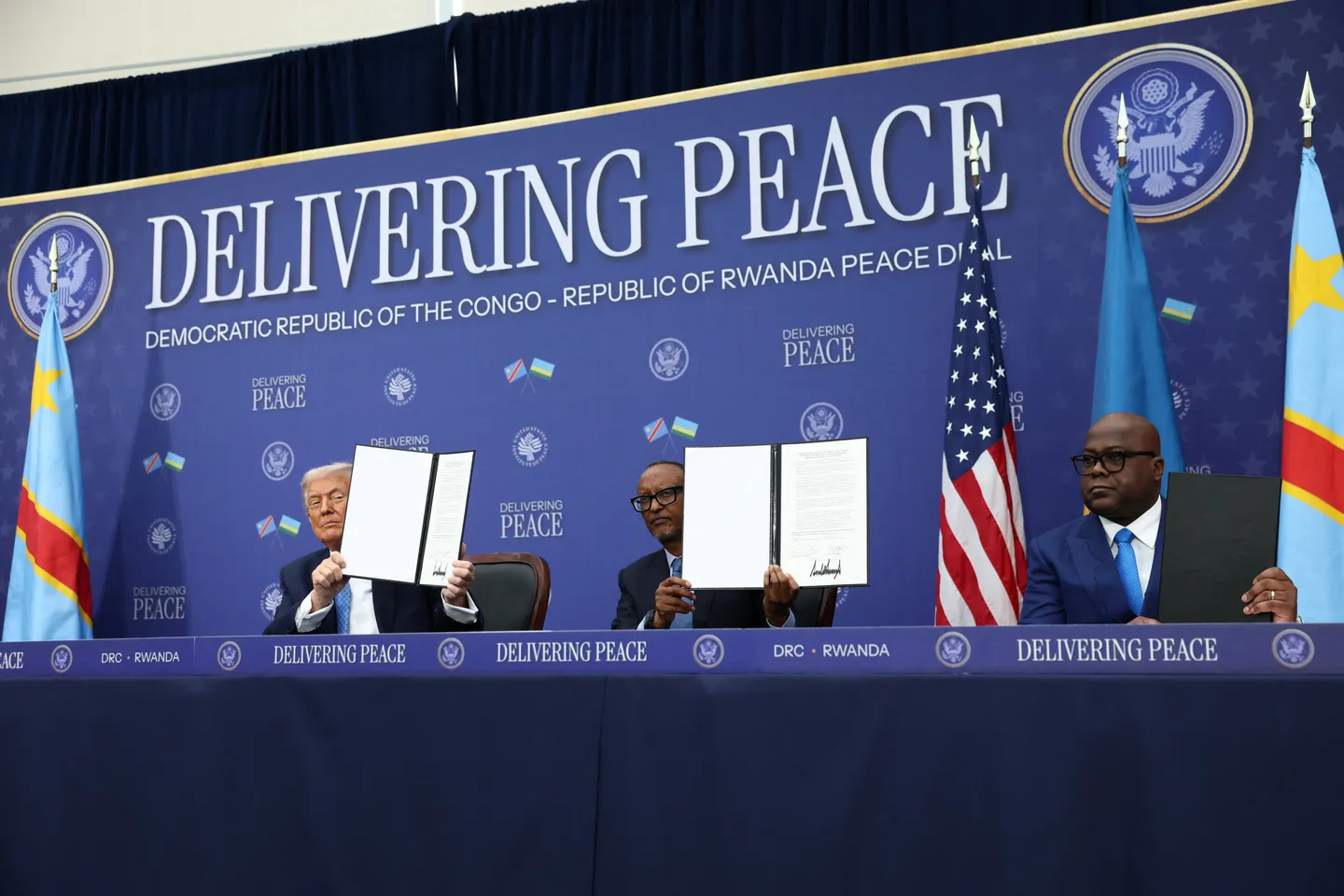
Rwandan President Paul Kagame and his Congolese counterpart, Félix Tshisekedi, signed a landmark peace agreement in Washington, D.C., on Thursday, committing to end a conflict that has ravaged eastern Congo for nearly three decades. The deal, brokered by the United States, was formalized in a ceremony hosted by President Donald Trump.
This agreement, dubbed the 'Washington Accord,' represents the most significant diplomatic push to resolve a crisis that has claimed millions of lives and displaced countless others. For Kenya, the stability of its western neighbour is not just a matter of continental solidarity; it is crucial for national economic and security interests, including protecting Kenyan businesses and trade routes.
The accord compels Rwanda to withdraw its troops from eastern DRC and for the Congolese government to cease its support for the Democratic Forces for the Liberation of Rwanda (FDLR), a militia group with roots in the 1994 genocide. The pact also establishes a framework for regional economic integration, with a focus on the trade of critical minerals like cobalt, copper, and lithium, in which the U.S. has a vested interest.
President Trump hailed the agreement as a "glorious triumph for the cause of peace," warning of "big penalties" for any violations. The ceremony was attended by several African leaders, including Kenyan President William Ruto, who praised the deal as a "decisive act to end a devastating conflict."
Despite the optimistic pronouncements in Washington, the reality on the ground remains volatile. Clashes between Congolese forces and the M23 rebel group, which is widely believed to be backed by Rwanda, continued even as the deal was being signed. The M23 was not a party to the Washington agreement, and separate negotiations with the rebels in Doha, Qatar, have stalled.
Analysts note that the success of the accord is entirely dependent on its implementation and the sincerity of all parties. Rwandan President Kagame himself acknowledged that the responsibility for the deal's success ultimately lies with the African leaders. "If this agreement falters and things do not work out as they are supposed to, the responsibility will not lie with President Trump, but with ourselves," he stated.
For millions in the war-torn region, this agreement is a fragile beacon of hope. The coming months will prove whether the Washington Accord is a true turning point or just another document in a long history of failed peace initiatives.
Keep the conversation in one place—threads here stay linked to the story and in the forums.
Sign in to start a discussion
Start a conversation about this story and keep it linked here.
Other hot threads
E-sports and Gaming Community in Kenya
Active 9 months ago
The Role of Technology in Modern Agriculture (AgriTech)
Active 9 months ago
Popular Recreational Activities Across Counties
Active 9 months ago
Investing in Youth Sports Development Programs
Active 9 months ago
Key figures and persons of interest featured in this article