We're loading the full news article for you. This includes the article content, images, author information, and related articles.
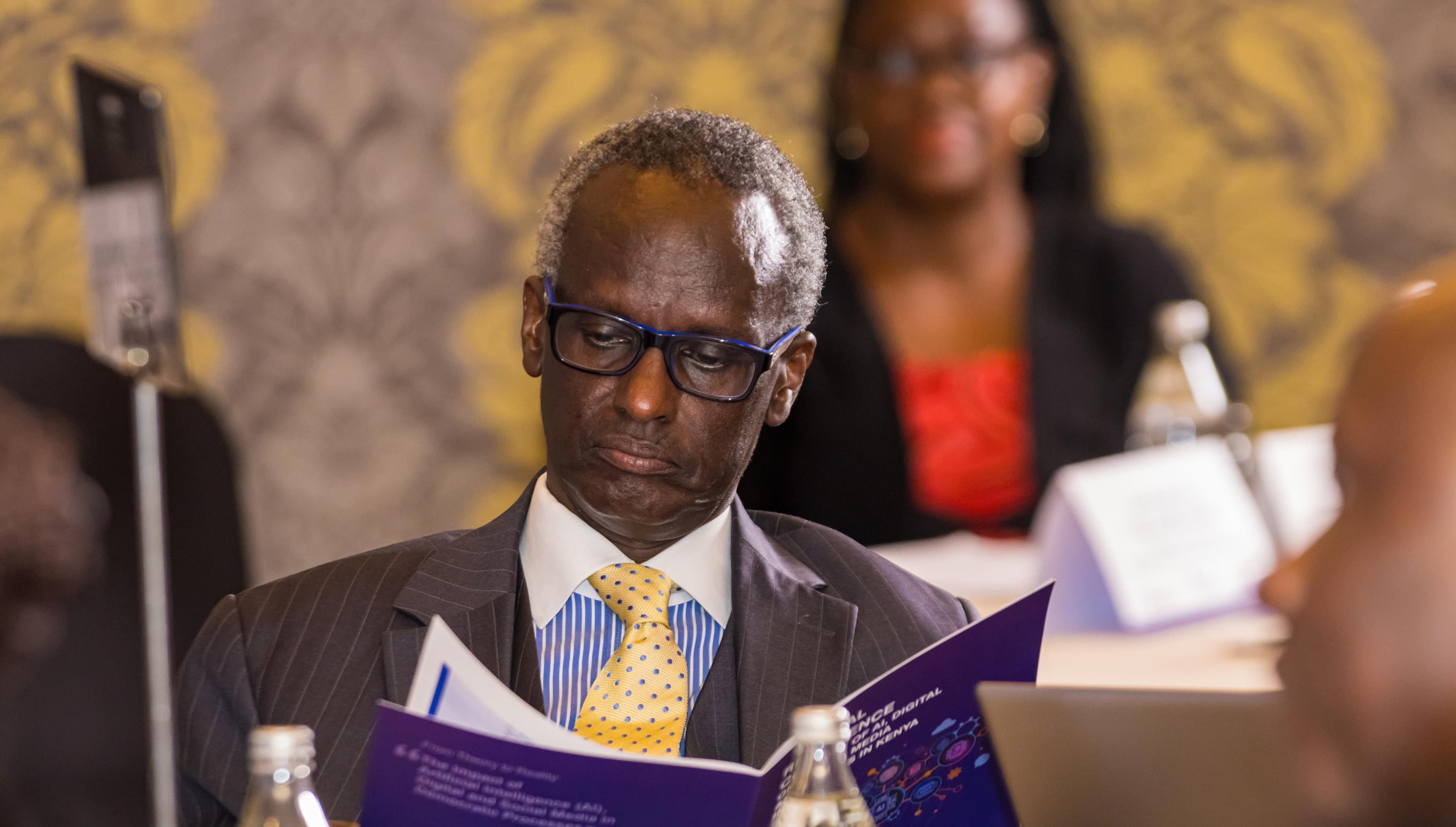
Supreme Court Judge Isaac Lenaola argues that bridging the gap between academic theory and courtroom reality requires hiring experienced former judges.

A young advocate stands before a High Court bench, fumbling with a procedural filing that should be rudimentary, while the presiding judge sighs in disappointment. This scene, repeated daily across Kenya’s courts, illustrates a widening chasm between academic legal training and the harsh realities of courtroom practice.
Supreme Court Judge Isaac Lenaola has issued a stark ultimatum to the nation’s legal academies: the current theoretical model is failing the next generation of lawyers. Speaking during a recent consultative forum in Nairobi, Justice Lenaola argued that law schools must fundamentally transform their faculties by integrating experienced, retired judges into the teaching process. The proposal aims to bridge the disconnect that forces newly admitted advocates to learn the art of litigation through trial and error, often at the expense of their clients.
For decades, Kenya’s legal education has leaned heavily on the doctrinal approach—the study of law as a static collection of statutes, precedents, and theories. While essential for building a conceptual foundation, this methodology often leaves graduates ill-equipped for the dynamic, often unpredictable environment of the courtroom. Justice Lenaola highlighted that while recent graduates possess an encyclopedic knowledge of constitutional interpretation, they frequently lack the procedural acumen required to navigate the practical intricacies of civil and criminal litigation.
This disconnect is not merely an academic concern it carries tangible consequences for the administration of justice. Inefficiencies in filing, poor preparation of pleadings, and a misunderstanding of judicial temperament contribute to the massive backlog of cases that plagues the Kenyan judiciary. The Supreme Court judge posited that the solution lies in experiential learning, specifically by leveraging the reservoir of institutional knowledge held by retired members of the bench.
Retired judges represent a unique category of legal professionals: they have served as both the final arbiters of disputes and the managers of courtrooms. Justice Lenaola argued that their value to law schools extends far beyond teaching evidence law or civil procedure. These individuals possess a nuanced understanding of judicial ethics, the psychology of judging, and the unspoken norms of courtroom decorum—qualities that textbooks simply cannot replicate.
Integrating retired judges into faculty positions would provide students with a mentor-driven learning environment. By analyzing past rulings not just for their legal outcome, but for the procedural journey that led to them, students could gain insights into the strategic considerations that define high-stakes litigation. This shift from passive learning to interactive, practitioner-led analysis mirrors successful models used in clinical legal education programs in jurisdictions like the United States and the United Kingdom.
The Kenyan legal fraternity is not alone in grappling with this transition. Worldwide, the trend in legal education is shifting toward "clinical legal education," where law schools function less like ivory towers and more like teaching hospitals. In countries such as South Africa and Canada, retired judges and senior practitioners are increasingly appointed as "professors of practice." This designation allows them to bring real-world complexity into the classroom, forcing students to apply the law to messy, real-world problems.
However, the implementation of such a model in Kenya faces structural resistance. Traditional academic law schools often prioritize research output, publication history, and PhD credentials over actual years spent on the bench. There is a palpable tension between the academic establishment, which values theoretical rigor, and the practitioners, who value functional competence. Justice Lenaola’s intervention is a call to recalibrate this hierarchy, suggesting that in a developing economy where legal services are in high demand, practical competence must be held in equal esteem to theoretical scholarship.
For this proposal to move from discourse to reality, several hurdles must be cleared. Funding remains a primary concern private universities and even some public institutions operate on tight budgets that may struggle to accommodate the salary expectations of retired judicial officers. Furthermore, the Council of Legal Education would need to revise accreditation standards to recognize and incentivize the presence of practitioner-led faculties.
The cultural shift required within the legal academy is equally significant. Academia must be willing to cede a portion of its traditional authority to those from the bench. If Kenya is to build a legal system that is both efficient and robust, it must treat the training of advocates not just as an academic exercise, but as a form of apprenticeship. Until the law schools open their gates to the wisdom of those who have sat on the bench, the chasm between the lecture hall and the courtroom will only continue to widen, leaving the next generation of lawyers to learn their lessons at the expense of the public they are sworn to serve.
As the legal community reflects on these words, the onus now shifts to university deans and policymakers to determine whether they will embrace a model that prioritizes the practical evolution of the law over the static tradition of the past.
Keep the conversation in one place—threads here stay linked to the story and in the forums.
Sign in to start a discussion
Start a conversation about this story and keep it linked here.
Other hot threads
E-sports and Gaming Community in Kenya
Active 10 months ago
Popular Recreational Activities Across Counties
Active 10 months ago
The Role of Technology in Modern Agriculture (AgriTech)
Active 10 months ago
Investing in Youth Sports Development Programs
Active 10 months ago
Key figures and persons of interest featured in this article