We're loading the full news article for you. This includes the article content, images, author information, and related articles.
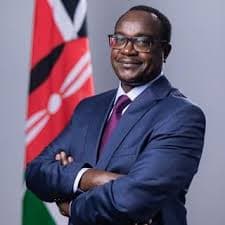
Breaking: Education CS Julius Ogamba releases the 2025 KCSE results in Eldoret, ending anxiety for nearly 1 million candidates and revealing the fate of 418 flagged for cheating.

ELDORET, Kenya, Jan. 9 — After weeks of mounting anticipation, the 2025 Kenya Certificate of Secondary Education (KCSE) results were officially released today, Friday, January 9, 2026, by Education Cabinet Secretary Julius Migos Ogamba at AIC Chebisas High School in Eldoret, Uasin Gishu County. The announcement concludes the exam cycle for 996,078 candidates and marks one of the final cohorts examined under the traditional 8-4-4 system as Kenya transitions to the Competency-Based Education (CBE) framework.
The decision to hold the release in Eldoret — far from the usual Nairobi venue — underscores the government’s push toward decentralising key national events. President William Ruto received preliminary briefing figures from CS Ogamba at the Eldoret State Lodge shortly before the public announcement, a standard protocol reinforcing leadership oversight prior to public dissemination.
The Ministry provided detailed statistics showing performance trends and gender parity for the 2025 KCSE cohort:
Total candidates: ~996,000 sat the exam between October 21 and November 21, 2025.
Gender representation: Girls accounted for 50% of the candidature, reflecting balanced gender participation.
Top achievers: 1,932 candidates scored grade A, placing them at the top tier of academic performance.
University qualification: 270,000 candidates attained C+ and above, meeting the minimum entry requirement for direct university admission.
Day school performance: Around 72,000 candidates from day schools scored C+ and above, underscoring the strengthening performance of public day learners.
Examination integrity: A total of 418 candidates had their results cancelled due to malpractice and irregularities, in line with the Ministry’s strict enforcement.
National grade distribution, subject-specific performance, and detailed county rankings are expected from KNEC’s comprehensive statistical release in the coming days.
The KCSE 2025 exam cycle included theory, practical, and oral assessments, administered over a one-month period. KNEC completed marking by December 13, 2025, deploying over 32,500 examiners across 40 marking centres nationwide to handle the unprecedented candidate volume.
The marking phase experienced minor disruptions in some centres due to logistical and pay-related concerns, but these were resolved swiftly, allowing the process to stay on course.
Candidates can access their provisional results instantly through the KNEC online portal (results.knec.ac.ke) by entering their index number and examination year. The portal was activated ahead of time to ensure seamless access and mitigate system overload, though results only become visible after the formal release.
The Ministry reiterated that only official channels should be trusted for results to avoid misinformation and scams circulating on social media.
Ahead of the release, President Ruto — briefed on the results — hailed the performance figures as a positive indicator of expanding access to higher education, particularly in extending opportunities for girls and ensuring broader equity.
With 270,000 candidates eligible for direct university placement, pressure on tertiary institutions will rise. The Kenya Universities and Colleges Central Placement Service (KUCCPS) is expected to open its placement portal immediately, expediting placement into universities, technical institutions, and other post-secondary pathways. In the previous cycle, KUCCPS placed over 310,000 students across universities, colleges, and TVET institutions, reflecting diverse pathways beyond degree programmes.
The 2025 KCSE cohort represents a pivotal moment in Kenyan education: it closes one of the last examination cycles under the long-standing 8-4-4 curriculum, with upcoming cohorts fully transitioning into CBE-aligned assessments. This shift aims to emphasise competencies over rote learning and provide a broader array of educational pathways.
As celebrations and reflections unfold nationwide, educators, families, and policymakers will now turn toward placements, subject performance insights, and regional trends, providing deeper understanding of the strengths and gaps in this year’s national performance.
Keep the conversation in one place—threads here stay linked to the story and in the forums.
Sign in to start a discussion
Start a conversation about this story and keep it linked here.
Other hot threads
E-sports and Gaming Community in Kenya
Active 9 months ago
The Role of Technology in Modern Agriculture (AgriTech)
Active 9 months ago
Popular Recreational Activities Across Counties
Active 9 months ago
Investing in Youth Sports Development Programs
Active 9 months ago
Key figures and persons of interest featured in this article