We're loading the full news article for you. This includes the article content, images, author information, and related articles.
In a race against erratic rainfall and a changing climate, Isiolo County has launched a massive borehole rehabilitation and drilling programme, offering a lifeline to thousands of pastoralists and their livestock across the arid region.
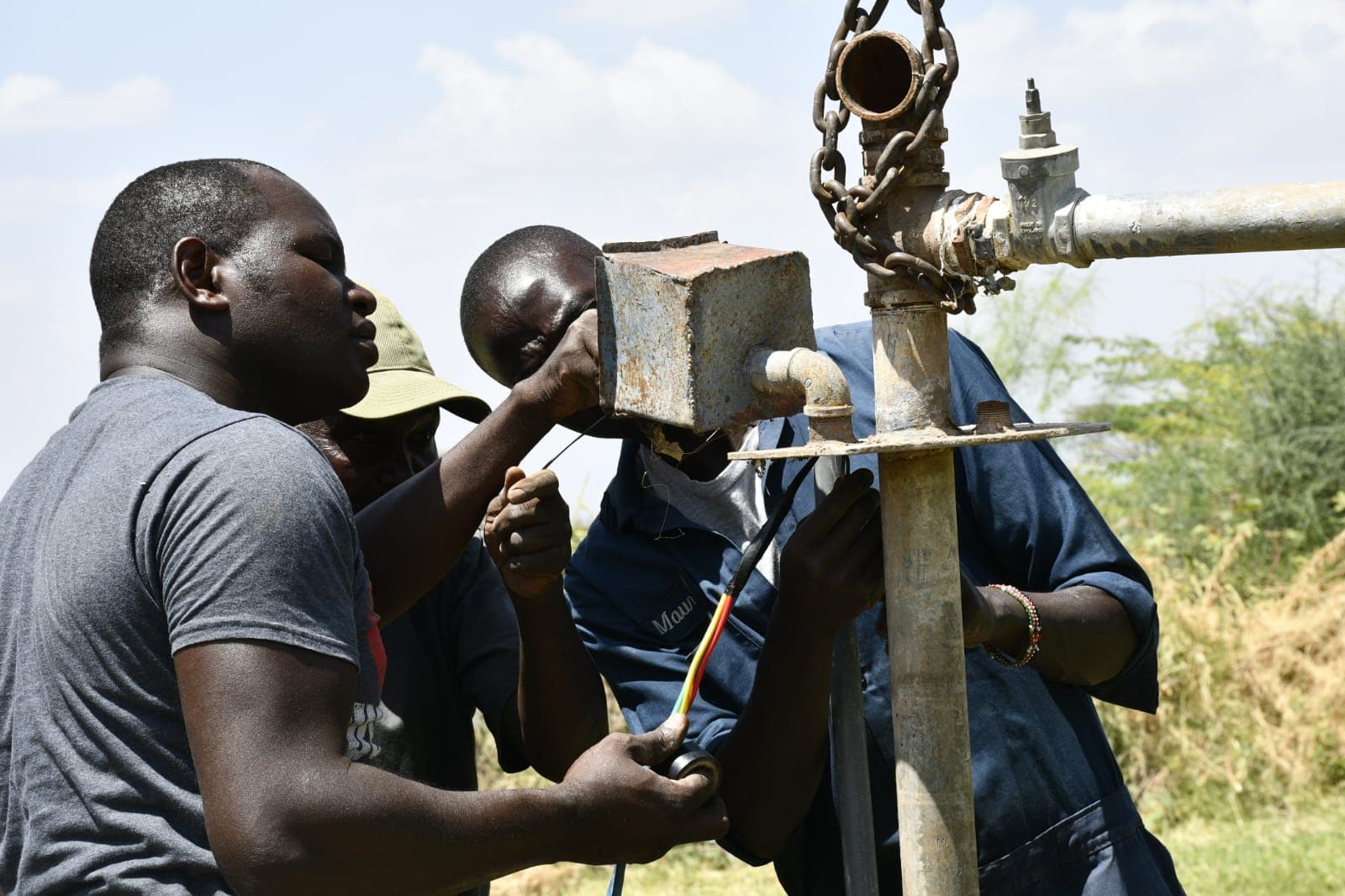
Deep in the sun-baked plains of Ngaremara, the steady hum of a solar-powered water pump cuts through the dry air. Clean water courses into a concrete trough, drawing thirsty camel herds that have trekked for days.
This is the frontline of climate adaptation in Northern Kenya. By restoring eleven strategic boreholes and drilling five new ones, the Isiolo County government is preemptively tackling a drought crisis that has historically decimated pastoral livelihoods and fueled violent resource conflicts.
Isiolo County, characterized by its vast, arid and semi-arid lands (ASALs), stands at the epicenter of East Africa's escalating climate emergency. With over 65 percent of the territory classified as hyper-arid, water is not a mere utility; it is the definitive currency of survival. Successive seasons of erratic, below-average rainfall have routinely triggered catastrophic droughts, severely depleting natural pastures and shrinking accessible surface water points.
For the predominantly pastoralist communities—comprising Borana, Somali, Turkana, and Meru ethnic groups—this environmental degradation translates into immediate economic ruin. As water sources vanish, herders are forced to migrate immense distances with their livestock. These grueling treks drastically weaken the animals, depress market values, and frequently push desperate communities into bloody, resource-based conflicts with neighboring territories.
Furthermore, the scarcity forces women and girls to expend countless hours journeying to unsafe, contaminated water pans. This daily struggle severely compromises household hygiene, drives up rates of acute malnutrition, and systemically excludes children from educational opportunities.
Recognizing the existential threat posed by these climatic shifts, the Isiolo County administration, under the leadership of Governor Abdi Hassan Guyo, has initiated a robust, multi-million-shilling intervention. Moving away from reactive emergency water trucking, the county is heavily investing in sustainable groundwater extraction and modern distribution networks.
To finance this ambitious agenda, the county dramatically augmented its water sector budget, approving a 24 percent increase from KES 143.8 million in the previous cycle to KES 178.3 million for the 2024-2025 financial year. This capital has been rapidly deployed across the most severely underserved wards.
The modernization efforts extend beyond mere extraction. The Department of Water and Sanitation has installed advanced power and water level sensors to facilitate real-time monitoring. Elevated steel storage tanks, sprawling sanitation blocks, and dedicated community water kiosks have been erected, all secured within robust perimeter fencing to deter vandalism and wildlife interference.
The impact of this infrastructure revolution is already reverberating through the local economy. The stabilization of water supplies has drastically reduced the migration radius for pastoralists, allowing livestock to remain closer to established settlements. This proximity preserves the health of the herds, directly bolstering the financial resilience of the community.
Crucially, the availability of reliable, clean water has enabled a transition toward agricultural diversification. Empowered by joint initiatives with international partners like USAID, residents are establishing micro-irrigation systems and kitchen gardens. These plots are now yielding nutritious, drought-resistant crops such as green grams and sweet potatoes, providing a critical buffer against localized food insecurity.
The health metrics reflect this profound transformation. Improved sanitation and consistent access to uncontaminated water have contributed to a measurable decline in acute malnutrition rates across the county, offering a tangible return on the infrastructure investments.
While the immediate relief is undeniable, the county government acknowledges that sustainable water management requires continuous innovation. The administration is currently finalizing the procurement of a dedicated county drilling rig, an asset that will significantly reduce the capital required for future subterranean exploration.
By integrating modern technology with community-led resource management protocols, Isiolo is attempting to future-proof its population against an increasingly hostile climate. It is a slow, arduous process, but the flowing taps represent a definitive triumph of engineering over adversity.
“Reliable water points will keep livestock closer to settlements, improve hygiene, and allow economic activities such as small-scale trade to thrive,” a senior county engineer affirmed, mapping out a resilient future for the arid frontier.
Keep the conversation in one place—threads here stay linked to the story and in the forums.
Sign in to start a discussion
Start a conversation about this story and keep it linked here.
Other hot threads
E-sports and Gaming Community in Kenya
Active 9 months ago
The Role of Technology in Modern Agriculture (AgriTech)
Active 9 months ago
Popular Recreational Activities Across Counties
Active 9 months ago
Investing in Youth Sports Development Programs
Active 9 months ago