We're loading the full news article for you. This includes the article content, images, author information, and related articles.
Iranian ballistic missiles struck Israeli towns near the Dimona nuclear site, injuring 160 and raising urgent questions about regional security architectures.
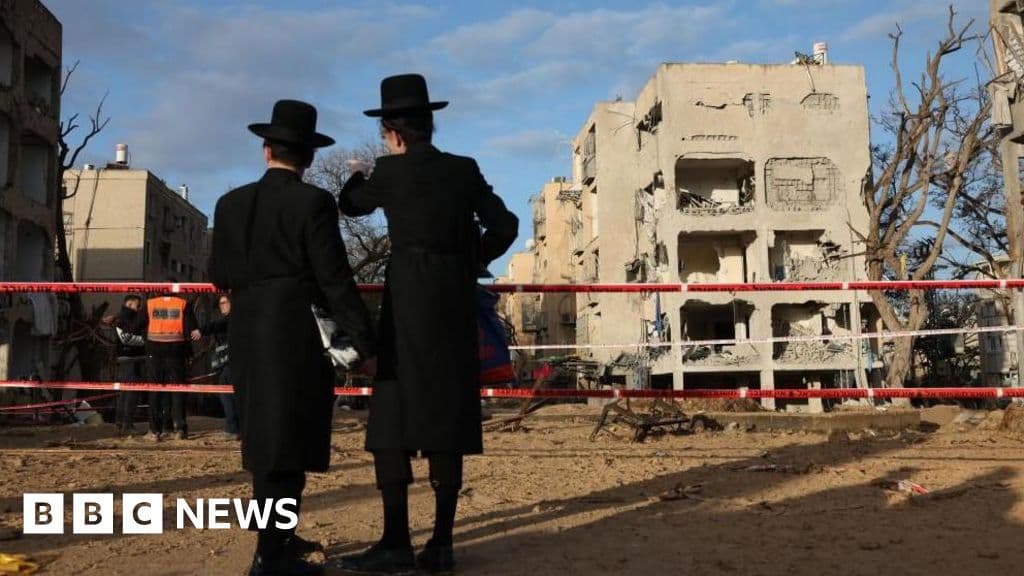
The night sky above the Negev Desert, usually a quiet expanse of arid darkness, was violently illuminated on Saturday evening by the streak of ballistic trajectories and the subsequent thunderous impacts of a coordinated missile barrage. For the residents of Arad and Dimona, the relative safety of the southern Israeli hinterlands shattered in minutes, as intercepted and errant munitions plummeted into residential sectors, marking a dramatic and dangerous escalation in the protracted conflict between Tehran and Tel Aviv.
This kinetic escalation, which resulted in at least 160 reported injuries and significant infrastructure damage, signals a shift in the regional security paradigm. The penetration of Israel's multi-layered air defense systems—historically touted as some of the most sophisticated in the world—has forced analysts to reconsider the tactical capabilities currently at the disposal of Iranian forces. With the Dimona nuclear research facility located a mere 13 kilometers (eight miles) from one of the strike zones, the implications extend far beyond the immediate humanitarian crisis, threatening to pull the broader Middle East into a state of open, high-intensity conflict that holds severe consequences for global energy markets and international diplomacy.
The operational success of the Iranian strike package raises urgent questions regarding the efficacy of Israel's aerial protection umbrella, which comprises the Iron Dome, David's Sling, and the Arrow weapon systems. Preliminary reports from security analysts suggest that the barrage likely employed a saturation tactic, designed to overwhelm the radar tracking and interceptor capacity of the local batteries. The fact that projectiles struck populated areas in two distinct municipalities indicates that the penetration was not an isolated technical failure but a calculated operational breach.
The impact in Arad was particularly severe, with multiple residential apartment blocks sustaining catastrophic structural damage. Emergency medical technicians on the ground described scenes of chaos and significant trauma, noting that the injuries sustained by the 84 victims in Arad and 78 in Dimona ranged from blast-related shrapnel wounds to severe acoustic trauma. The following data highlights the immediate aftermath of the strike:
The Iranian government has publicly framed these strikes as a direct response to an alleged attack on its own Natanz nuclear facility, which occurred earlier on Saturday. By targeting the proximity of Israel's primary nuclear research hub, Tehran appears to be signaling a shift from shadow warfare to direct, retaliatory deterrence. This tit-for-tat escalation mirrors the classic security dilemma: actions intended to bolster defense are perceived as aggression, prompting a counter-strike that necessitates further escalation.
The International Atomic Energy Agency (IAEA) has maintained a presence at the Natanz site, and while they have confirmed no off-site radiation increases, the geopolitical instability is palpable. For the international community, the challenge lies in preventing this bilateral confrontation from metastasizing into a regional war. Diplomats in Brussels and Washington are currently engaged in emergency consultations, seeking to de-escalate rhetoric before the next cycle of retribution begins.
While the craters in the Negev are thousands of kilometers from Nairobi, the economic and security reverberations will be felt immediately across East Africa. The Middle East remains the primary supplier of refined petroleum products to Kenya, and any sustained instability in the region invariably places upward pressure on global oil benchmarks. Local economists are already warning that if the Strait of Hormuz—a crucial chokepoint for global oil transit—is threatened by further hostilities, Kenya could see a sharp, sudden increase in the price per liter of fuel, effectively fueling domestic inflation and raising the cost of transportation and manufacturing.
Furthermore, the disruption to air corridors and shipping routes creates a logistics nightmare. For a Kenyan export economy that relies heavily on efficient supply chains to move agricultural produce to European and Middle Eastern markets, sustained volatility creates an environment of insurance premium hikes and flight cancellations. The Ministry of Foreign Affairs in Nairobi has yet to release a formal statement, but regional analysts argue that the Intergovernmental Authority on Development (IGAD) and the East African Community (EAC) will need to navigate this with extreme caution to protect the regional economic corridor.
Behind the political maneuvering and the abstract discussions of ballistic trajectories are the residents of Arad and Dimona, whose lives have been upended by the sudden arrival of war on their doorsteps. The sight of damaged apartment complexes and the presence of dark-suited emergency responders in the Negev desert serve as a visceral reminder of the human cost of these policies. The psychological toll on these communities will likely last long after the debris is cleared, as residents grapple with the reality that their homes are no longer shielded from the regional firestorm.
As the sun sets on a weekend of unprecedented escalation, the questions remain unanswered. Will this serve as a singular, albeit devastating, exchange, or is it the opening salvo of a prolonged regional campaign? For the 160 injured, the immediate focus is recovery. For the world, the focus must shift to whether the diplomatic architecture of the 21st century is robust enough to contain a conflict that is rapidly outpacing the capacity for negotiation.
Keep the conversation in one place—threads here stay linked to the story and in the forums.
Sign in to start a discussion
Start a conversation about this story and keep it linked here.
Other hot threads
E-sports and Gaming Community in Kenya
Active 10 months ago
Popular Recreational Activities Across Counties
Active 10 months ago
The Role of Technology in Modern Agriculture (AgriTech)
Active 10 months ago
Investing in Youth Sports Development Programs
Active 10 months ago



