We're loading the full news article for you. This includes the article content, images, author information, and related articles.
The telco’s debut sustainability note attracted nearly three times the target amount, signaling a massive appetite for tax-free, green investments on the Nairobi bourse.

Safaricom has shattered market expectations with its debut green bond, attracting a staggering KES 41.4 billion in bids against an initial target of KES 15 billion.
This 175 percent oversubscription is more than just a financial win for the region’s most profitable company; it serves as a litmus test for Kenya’s capital markets, proving that local institutional investors are hungry for assets that marry solid returns with environmental responsibility.
Faced with an avalanche of demand, the telecommunications giant has opted to exercise its 'greenshoe' option—a clause allowing it to absorb excess demand. Safaricom will now take up KES 20 billion, the maximum permissible under this tranche of its Medium-Term Note Programme.
Consequently, KES 21.4 billion will be refunded to investors, a move that indicates significant liquidity is still looking for a home in the Nairobi Securities Exchange (NSE).
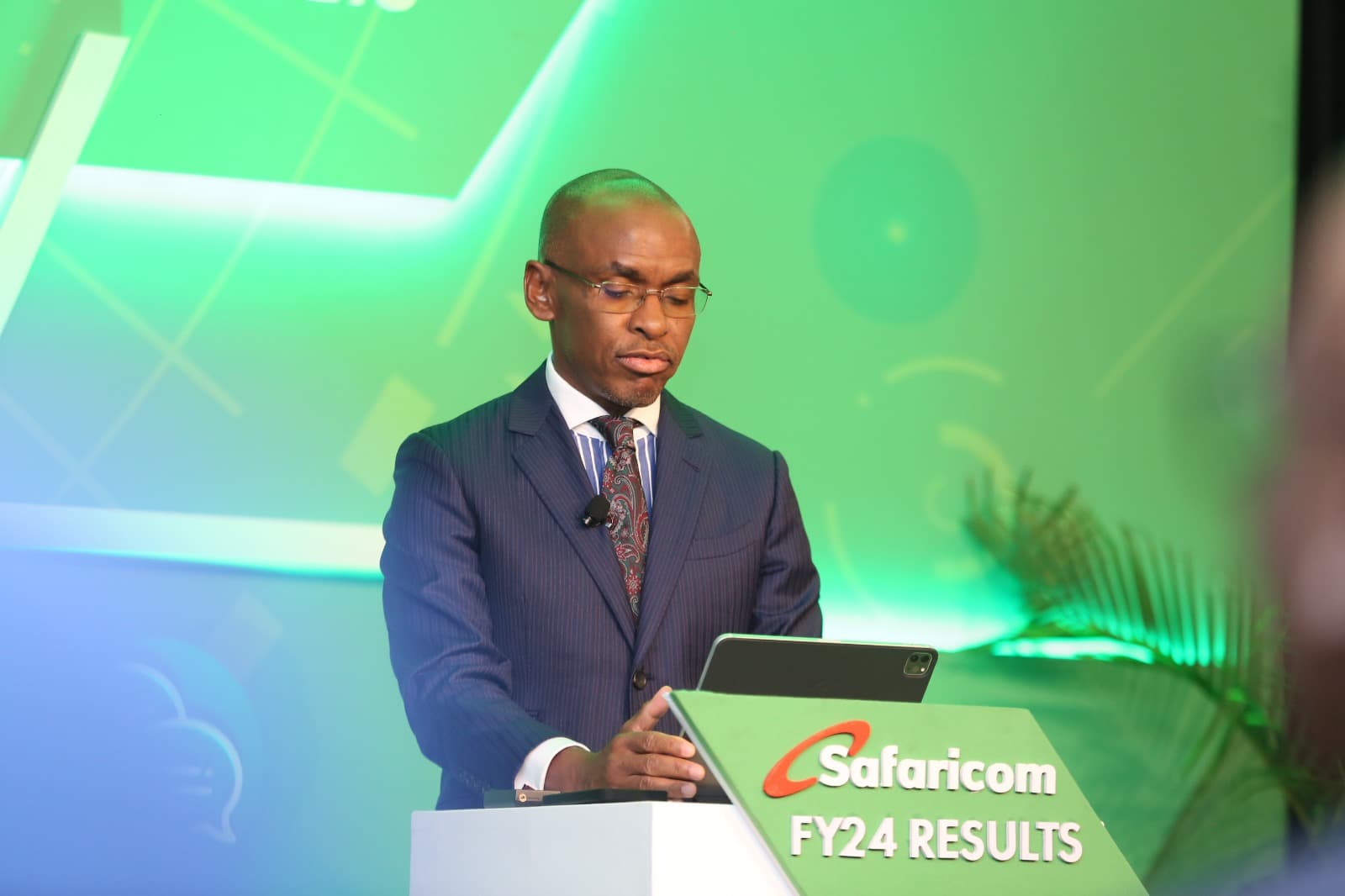
“We are pleased with the market’s response. It signals confidence not only in our balance sheet, but also in the vision and strategy we are executing,” said Safaricom CEO Peter Ndegwa.
Ndegwa noted that taking up the additional KES 5 billion through the greenshoe option was a strategic decision to allow a broader base of investors to participate in the company's growth trajectory rather than locking them out.
For the Kenyan investor, the allure of this bond lies in its structure. Unlike standard corporate bonds, this instrument is tax-exempt, effectively boosting the real return on investment.
The capital raised is strictly ring-fenced for green projects. Safaricom intends to channel these funds into renewable energy infrastructure, specifically to reduce its carbon footprint.
Key projects include the solarization of its vast network of base stations and the overhaul of power-management systems. For the average Kenyan, this transition is critical; moving base stations to solar power reduces reliance on the national grid and diesel generators, potentially leading to a more reliable network with fewer outages during blackouts.
The bond will officially list on the NSE on December 16, offering a secondary market for investors who missed the initial offering.
“The strong uptake comes as institutional investors increasingly seek sustainable, high-yielding assets amid tight credit conditions,” the firm stated, acknowledging the recovering pulse of the local capital markets.
Keep the conversation in one place—threads here stay linked to the story and in the forums.
Sign in to start a discussion
Start a conversation about this story and keep it linked here.
Other hot threads
E-sports and Gaming Community in Kenya
Active 9 months ago
The Role of Technology in Modern Agriculture (AgriTech)
Active 9 months ago
Popular Recreational Activities Across Counties
Active 9 months ago
Investing in Youth Sports Development Programs
Active 9 months ago
Key figures and persons of interest featured in this article